Michael Hollister

Michael Hollister

UPDATE: Russia-Ukraine Conflict – May 21, 2026
The military balance in the Russia-Ukraine war is shifting visibly for the first time in years: Russia is losing net territory while Ukraine reports limited battlefield gains. Politically, however, the war remains structurally blocked. The failed Victory Day ceasefire shows that short-term pauses have largely lost their diplomatic function. At the same time, Kyiv is building a long-war defense architecture: arms exports, Gulf security agreements, and drone production partnerships inside Europe. Germany is no longer merely a supporter, but increasingly part of the war-production chain. This situation report shows a central contradiction: the front is moving – diplomacy is not.

UPDATE – US AND ISRAEL ATTACK IRAN – May 20, 2026

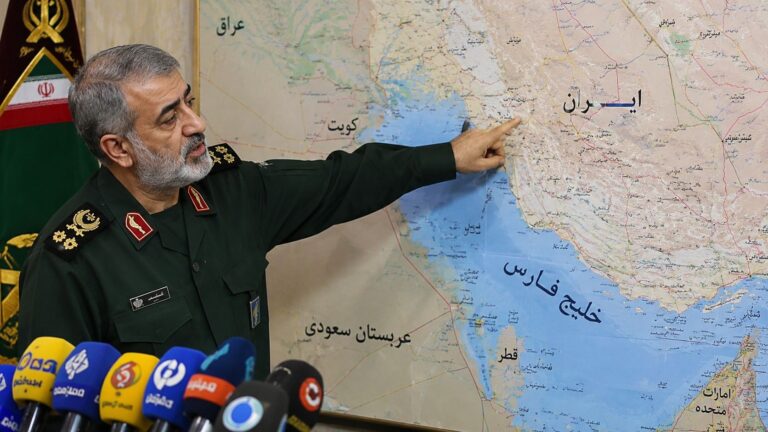
Trump says he was “one hour” away from launching a new large-scale strike on Iran - then called it off. Not because the crisis was resolved, but after appeals from Gulf leaders and under the continued threat of renewed attacks. As Tehran repeats its core demands, Washington counters with terms close to surrender, and the US Senate shows its first visible cracks over the war, another case moves to the center: the US strike on the Minab girls’ school. This update traces a week in which the war did not fully escalate - but the underlying power structures became clearer: in Washington, in Beijing, in Lebanon, and in the unresolved shadow of a strike whose investigation may reveal more than a single operational failure.

What Trump and Hegseth Will Reach For Next

The Trump administration's toolbox is not empty. What has been deployed so far - Venezuela, Iran, Hormuz, Panama - are the fast tools. The heavy ones are still waiting: Cuba, Kharg Island, Taiwan. Those who understand the selection logic of Trump and Hegseth know the sequence - and why the real driving force is not geopolitics, but a currency that does not yet exist.

Twelve Think Tanks, Thirty Studies – One Mission

What the Trump administration has been executing since January 2025 - in Venezuela, Iran, the Strait of Hormuz, and the Indo-Pacific - looks like the improvisation of an unpredictable president. It is the opposite: the systematic implementation of a recommendation list written by twelve American think tanks between 2014 and 2026 in more than 30 studies. An analysis of how think tank language becomes Pentagon doctrine - and why the window is closing in 2026.

UPDATE – US AND ISRAEL ATTACK IRAN – May 17, 2026

Day 77. Trump calls Iran's negotiating proposal "a piece of garbage" and declares the ceasefire clinically dead. The New York Times reports intensive strike preparations for "next week." Energy Secretary Wright says Iran is "weeks" from weapons-grade uranium - his own CIA says months. Saudi Arabia and the UAE have been secretly fighting all along. And Iran is formalizing control of the Strait of Hormuz as a permanent institutional reality - regardless of how the war ends.

UPDATE – US AND ISRAEL ATTACK IRAN – May 13, 2026

Day 74. The US-Iran ceasefire exists on paper - and is broken daily. Tehran has for the first time publicly named weapons-grade uranium enrichment at 90 percent as an option. Saudi Arabia struck Iran covertly and then denied the US military access to its bases. The IRGC has expanded its Hormuz control zone tenfold. In Lebanon, 380 people have been killed since the April 17 ceasefire - among them children, rescue workers, a father and his twelve-year-old daughter. Trump calls the war a "6-week excursion" and says Americans' financial situation doesn't concern him "not even a little bit." Full situation report - with source list.

Mali Burns, Russia Bleeds

Mali is no longer merely facing an internal security crisis. The coordinated offensive by Tuareg separatists and JNIM, the withdrawal of Russia’s Africa Corps from Kidal, and the growing pressure on Bamako point to a new phase of war in the Sahel. What may look like a French attempt to regain lost influence is, in fact, a far more complex proxy structure: Ukrainian drone expertise, Algerian border depth, French strategic interests, and a Russian security model beginning to fracture in public. This article explains why Mali has become an African secondary front in the wider Russia-West conflict - and why the outcome may reshape the entire western Sahel.

A World in Flames – Part 9

What happens when the world does not collapse through one great war, but through many smaller fires that no one can extinguish?
In the final part of the series “Europe Prepares for War”, Michael Hollister examines a scenario built not on fantasy, but on existing fault lines: Korea, Taiwan, India and Pakistan, Iran and Israel, Turkey and Greece, the Balkans, the Caucasus, Myanmar, the South China Sea, and Africa.
Until now, many of these conflicts have been contained by great powers - through pressure, mediation, deterrence, or military presence. But what happens when the United States, China, and Russia are all tied down by their own major conflicts? A global power vacuum emerges. And in power vacuums, states rarely act according to morality. They act according to opportunity.

Three Levers, Four Counters

On April 24, 2026, Washington sanctioned a Chinese Fortune Global 500 company over Iranian oil purchases - triggering an escalation that reaches far beyond Iran. Three US pressure levers, deployed weeks before a planned Trump-Xi summit: a naval blockade, an OFAC designation, and a Strait of Hormuz toll trap. Beijing's response came without press conferences - but on four structural levels simultaneously. An analysis of the invisible escalation between Washington and Beijing, using Iran as a stage while the real decision falls elsewhere.

“Money Is No Object”

47,000 procurement contracts, 111 billion euros, four years of Germany's so-called Zeitenwende - and the Federal Ministry of Defence cannot centrally account for what has actually been delivered and is combat-ready. The Federal Audit Office has been warning about exactly this in writing since 2022. The political response is not a course correction but a doubling down: the defence budget is set to reach 180 billion euros by 2030, with the debt brake effectively suspended for military spending. An analysis of how uncontrolled expenditure becomes institutional architecture.