
by Michael Hollister
Exclusive published at Michael Hollister on May 12, 2026
4.628 words * 22 minutes readingtime
Exclusive Analysis for Supporter
The Internationalized Proxy Structure Behind the Sahel Offensive
On April 25, 2026, armed men stormed the private residence of Mali’s Defense Minister in Kati, a garrison town fifteen kilometers outside Bamako. Sadio Camara was killed, along with his wife and two of his children. At the same hour, coordinated attacks hit military bases in Kidal, Gao, Mopti, Sévaré, and the capital itself. Two days later, the Russian Africa Corps officially confirmed its withdrawal from Kidal. A Tuareg separatist coalition and an Al-Qaeda affiliate had attacked together, in concert, with a precision that international analysts are calling unprecedented.
The junta in Bamako is now under assault from an alliance that, by all logic, should not exist. The Azawad Liberation Front (FLA) is fighting for a secular Tuareg homeland in the north. Jama’at Nusrat al-Islam wal-Muslimin (JNIM) wants a Salafist caliphate across the entire Sahel. Between 2019 and 2020, both movements were engaged in bloody territorial fighting against each other. In April 2026, they are coordinating their operations for the first time officially – with a striking power that is shaking the Malian army, the Africa Corps, and Russia’s entire Africa strategy to its foundations.
The obvious question is: who made this alliance possible? The obvious answer offered by Western European commentary pages is: France. Paris was expelled from Mali in 2022, has lost Niger and Burkina Faso, and now watches Russia operating in a space it considered its own sphere of influence for decades. Cui bono – therefore Paris.
That answer is wrong. Not entirely wrong, but it misses the actual picture. Mali in spring 2026 is not the stage for a French act of revenge – it is the second front of a global conflict. The primary external support burden is carried not by Paris but by Kyiv. The regional enabler is not France but Algeria. France benefits strategically, but France is not directing. This article shows why that distinction matters – and what it reveals about the internationalized proxy structure that is now shaping the security situation in the West African Sahel.
What Actually Happened on April 25
The operation began in the early hours of Saturday morning with synchronized strikes on multiple Malian military bases. The FLA took the north; JNIM operated in the center and west. In Kidal – the symbolic heart of the Tuareg movement – the Malian garrison came under pressure alongside approximately 1,000 Africa Corps fighters. Following negotiations in which Algeria reportedly participated, according to Al Jazeera, the Russian fighters were permitted to withdraw from Kidal. Wounded personnel and heavy equipment were evacuated first. On April 27, the Africa Corps confirmed the withdrawal via its Telegram channel, stating it had taken place in coordination with Bamako. Reuters documented that the Africa Corps statement explicitly described a coordinated attack by the FLA together with West Africa’s Al-Qaeda affiliate.
In Kati – the garrison town at the gates of Bamako where the president, several ministers, and the Malian army’s general command are based – attackers entered the home of Defense Minister Sadio Camara. Camara, his wife, and two children were killed. At least 16 others were wounded. Skirmishes continued in Bamako itself, including fighting near Senou International Airport.

Junta leader Assimi Goita personally assumed control of the Defense Ministry. He has not appeared in public since the weekend of the attacks.
JNIM declared the siege of Bamako on May 1 and called for a nationwide uprising. A so-called economic jihad campaign has been underway since September 2025: fuel convoys are being burned, supply roads blocked, mining sites attacked. In November 2025, AP reported refugee flows from Mali into Mauritania. As of early May 2026, fuel and food supplies in the capital are minimal. In parallel, the FLA seized the strategically significant military base at Tessalit in the north.
On April 30, the Alliance of Sahel States – Mali, Burkina Faso, Niger – launched joint airstrikes in the Gao region. Niger canceled public events on security grounds and accused foreign powers of complicity, with an explicit reference to France. Côte d’Ivoire reinforced its border security in anticipation of refugee movements.
Reuters reported on May 2 that Malian authorities are investigating three active soldiers, one retired soldier, and one discharged soldier killed in fighting near Kati. The charge: participation in the coordinated operation. If these investigations hold up, the crisis runs deeper than a front-line crisis – it reaches into the interior of the security apparatus itself.
The Impossible Alliance: FLA and JNIM
The Azawad Liberation Front is a young organization with old roots. It was founded on November 30, 2024, in Tinzaouatène on the Algerian-Malian border, when four Tuareg movements broke away from the Strategic Framework for the Defense of the People of Azawad (CSP-DPA) and merged into a unified front. The constituent groups were the National Movement for the Liberation of Azawad (MNLA), the High Council for the Unity of Azawad (HCUA), the Arab Movement of Azawad (MAA), and the Imghad Tuareg Self-Defense Group (GATIA). The FLA’s commander is Tuareg leader Alghabass Ag Intalla.
The FLA was born through an act of violence. On December 1, 2024 – less than 24 hours after its founding – Malian Bayraktar drones struck the assembly in Tinzaouatène. Eight senior FLA members were killed, among them Fahad Ag Almahmoud, the commander of GATIA’s rebel wing, and Choguibe Ag Attaher, a Tuareg tribal elder. From December 2024 onward, Mali increasingly relied on Turkish Bayraktar Akıncı drones to compensate for its personnel disadvantage against the rebels.
In April 2025, the FLA claimed the shootdown of a Malian aircraft. Algeria subsequently confirmed it had downed a Malian Akıncı reconnaissance drone over its own territory near Tin Zaouatine – the Algerian twin city of Tinzaouatène. In June 2025, a Malian Su-24 fighter jet crashed in the Niger River; the FLA claimed the hit. The Malian army reported that the two surviving pilots were Africa Corps members.
The FLA’s demand is unambiguous: full independence for an Azawad state in the northern regions of Gao, Kidal, Ménaka, Gossi, and Timbuktu – approximately 822,000 square kilometers, an area larger than France.
JNIM is an entirely different organization. It was formed in 2017 through the merger of four Salafist-jihadist groups – Ansar Dine, Al-Qaeda in the Islamic Maghreb, the Macina Liberation Front, and Al-Mourabitoun – under the leadership of Iyad Ag Ghaly. JNIM is estimated to field approximately 10,000 fighters across the Mali-Niger-Burkina Faso border zone. It is the official West African affiliate of Al-Qaeda. Its goal is the imposition of Sharia governance across the entire Sahel.

The worlds that separate FLA and JNIM are vast. One is secular, ethnonational, and regionally bounded. The other is religiously fundamentalist, multiethnic, and expansionist. Between 2019 and 2020, both movements engaged in bloody territorial fighting in northern Mali. In 2012, they briefly cooperated when the MNLA and Ansar Dine overran northern Mali together – that alliance collapsed within months under the weight of ideological conflict.
The coordination of April 25, 2026, is analytically a new phenomenon. At Tinzaouaten in July 2024, JNIM had claimed involvement in the ambush that destroyed a Wagner column; the then-CSP-DPA spokesman Mohamed Elmaouloud Ramadane denied it. The Belgian insurance analytics platform Credendo describes the FLA-JNIM coordination in April 2026 as “unprecedented in Mali’s history.” Al Jazeera writes that the attacks of the April weekend mark “the first time JNIM and the FLA officially coordinated their operations.”
Brussels-based analyst Nina Wilen of the Egmont Institute told France 24 the coordination showed months of planning and goes “much further than what we have seen in the past.” Her assessment: “They have a common enemy, but not a common project.” Beverly Ochieng of Control Risks added: “The FLA cannot defeat the Malian army alone.” The alliance is tactically advantageous for both sides – the FLA brings local legitimacy and territorial roots; JNIM brings firepower and operational experience.
What both analysts leave open is this: how a coalition that must bridge a secular nationalism and an Al-Qaeda affiliate can suddenly coordinate drone strikes, reconnaissance, radio communications, and multi-front attacks capable of pressuring a regular army. The answer is not found in Tinzaouatène. It is found in Kyiv.
The Internationalized Proxy Structure
In July 2024, a Wagner column was lured into an ambush near the Algerian border and destroyed. In the fighting around Tinzaouaten, the CSP-DPA reported 84 Russian mercenaries and 47 Malian soldiers killed, among them Anton Yelizarov – the Wagner commander of the assaults on Soledar and Bakhmut in 2023 – and Nikita Fedyanin, administrator of the Wagner-affiliated Telegram channel Grey Zone. It was the heaviest Russian loss in Africa since Wagner operations began.
On July 29, 2024, Andriy Yusov, spokesman for Ukraine’s military intelligence directorate HUR, appeared on a national telethon broadcast and stated that the rebels had “received the necessary information that allowed them to conduct a successful military operation against Russian war criminals.” Yusov added that “more would follow,” that cooperation would continue, and that Russian forces would “be punished wherever they are in the world.”
Mali severed diplomatic relations with Ukraine within days. Niger and Burkina Faso followed. ECOWAS condemned “any external interference in the region that could threaten peace and security in West Africa.” The Ukrainian ambassador in Senegal was summoned by that country’s foreign ministry after a Ukrainian embassy Facebook page appeared to celebrate the “terrorist attack” in Mali. Kyiv subsequently denied Yusov’s statement and claimed no involvement in the Mali conflict.
On August 1, 2024, Le Monde revealed the backstory. The French daily documented that cooperation between HUR and the CSP-DPA had begun in early 2024, after the Malian army expelled the rebels from Kidal in November 2023. Tuareg fighters traveled to Ukraine, where they learned to build and fly FPV drones. Ukrainian agents traveled to Mali in March and September 2024. A source from within HUR circles told Le Monde that the public acknowledgment of involvement had been “a diplomatic mistake” – “but there is no going back.” HUR remained committed to hunting Wagner personnel “wherever they are.”
In June 2025, Malian forces engaged in a counteroffensive and discovered Ukrainian-produced FPV drones and documents referencing HUR, left behind by JNIM fighters. A Malian government military communiqué formally accused Ukrainian operators of supplying and operating unmanned aerial vehicles for JNIM. Prime Minister Abdoulaye Maiga accused Kyiv of having delivered Kamikaze drones directly to JNIM cells. Logistical support, he claimed, had been routed through the Ukrainian embassy in Nouakchott, Mauritania.
A Reason investigation published in April 2026 – running parallel to the current offensive – found that drone operators trained in Ukraine are providing direct air support to the ongoing offensive. Fighters who had learned FPV operations on Ukrainian soil were “reinforcing the combat capabilities of groups advancing alongside JNIM.” The FLA publicly declared it was “partnered with JNIM, jointly engaged in protecting the population from the military regime in Bamako.”
In March 2026, Kyrylo Budanov – former HUR chief and now head of the Ukrainian Presidential Office – publicly announced that Ukraine intends to “exert comprehensive influence on the situation on the African continent.” It was an unusually candid statement about an operation that officially does not exist.
Exclusive Analysis for Supporter
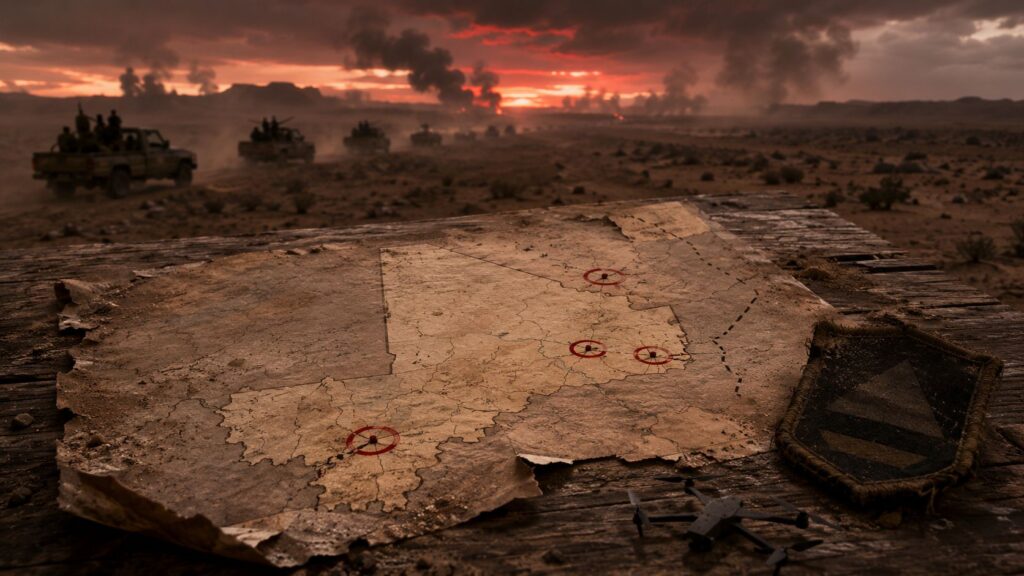
Mali is no longer merely facing an internal security crisis. The coordinated offensive by Tuareg separatists and JNIM, the withdrawal of Russia’s Africa Corps from Kidal, and the growing pressure on Bamako point to a new phase of war in the Sahel. What may look like a French attempt to regain lost influence is, in fact, a far more complex proxy structure: Ukrainian drone expertise, Algerian border depth, French strategic interests, and a Russian security model beginning to fracture in public. This article explains why Mali has become an African secondary front in the wider Russia-West conflict – and why the outcome may reshape the entire western Sahel.
Readers who support my work will receive this article exclusively as a PDF by email on the day of publication.
If you support my work after publication and would also like to read the article, simply send a short message to:
I will be happy to send you the PDF afterwards.

Michael Hollister
is a geopolitical analyst and investigative journalist. He served six years in the German military, including peacekeeping deployments in the Balkans (SFOR, KFOR), followed by 14 years in IT security management. His analysis draws on primary sources to examine European militarization, Western intervention policy, and shifting power dynamics across Asia. A particular focus of his work lies in Southeast Asia, where he investigates strategic dependencies, spheres of influence, and security architectures. Hollister combines operational insider perspective with uncompromising systemic critique – beyond opinion journalism. His work appears on his bilingual website (German/English) www.michael-hollister.com, at Substack and in investigative outlets across the German-speaking world and the Anglosphere.
Sources
- AP – Mali junta leader takes over defense ministry after minister killed: https://apnews.com/article/0ebf3f9c1aa623a41ff780cd1d30e273
- AP – Militants ambush fruit trucks on the road to Bamako: https://apnews.com/article/a312c70a1b660de91783076bf69484cd
- Reuters – Russia’s Africa Corps confirms withdrawal from Mali’s Kidal: https://www.reuters.com/world/africa/russias-africa-corps-confirms-withdrawal-malis-kidal-2026-04-27/
- Reuters – Mali investigates soldiers over role in coordinated insurgent attacks: https://www.reuters.com/world/africa/mali-investigates-soldiers-over-role-coordinated-insurgent-attacks-2026-05-02/
- Reuters – Mali turmoil threatens Russian push for influence and mineral wealth: https://www.reuters.com/world/africa/mali-turmoil-threatens-russian-push-influence-mineral-wealth-africa-2026-04-29/
- Reuters Graphics – Mali / Sahel security situation: https://www.reuters.com/graphics/MALI-SECURITY/SAHEL/zgvolldmopd/
- Reuters – Mali starts construction of Russia-backed gold refinery: https://www.reuters.com/world/africa/mali-starts-construction-russia-backed-gold-refinery-2025-06-17/
- Reuters – Russia vows military backing for Sahel juntas’ joint force: https://www.reuters.com/world/africa/russia-vows-military-backing-sahel-juntas-joint-force-2025-04-04/
- Kyiv Post – Tuareg Rebels in Mali Reject Ukraine Assistance Claims: https://www.kyivpost.com/post/37427
- Reuters – France’s Orano loses control of uranium mine in Niger: https://www.reuters.com/markets/commodities/frances-orano-says-it-has-lost-control-uranium-mine-niger-2024-12-04/
- Al Jazeera – What is the Azawad Liberation Front, part of the Mali attacks?: https://www.aljazeera.com/news/2026/4/28/what-is-the-azawad-liberation-front-part-of-the-mali-attacks
- Al Jazeera – Rival armed groups join forces against the Malian state: https://www.aljazeera.com/news/2026/4/27/rival-armed-groups-join-forces-against-the-malian-state-what-next
- Al Jazeera – Wagner vs Africa Corps: The future of Russian paramilitaries in Mali: https://www.aljazeera.com/news/2025/6/16/wagner-vs-africa-corps-the-future-of-russian-paramilitaries-in-mali
- France 24 – A common enemy, but not a common project: A fragile jihadist-separatist alliance in Mali: https://www.france24.com/en/africa/20260501-common-enemy-but-not-common-project-fragile-jihadist-separatist-alliance-in-mali
- CNN – Mali severs diplomatic relations with Ukraine for providing intelligence to rebels: https://www.cnn.com/2024/08/04/africa/mali-ukraine-wagner-intelligence-intl-latam/index.html
- Kyiv Post – Rebels in Mali Display Ukrainian Flag After Wagner Defeat: https://www.kyivpost.com/post/36557
- Kyiv Independent – Ukrainian special services train Mali rebels to operate drones, media reports: https://kyivindependent.com/ukrainian-special-services-train-mali-rebels-to-operate-drones-commander-says/
- Military Africa – Ukraine provided Intel to Mali’s Tuareg Rebels that killed soldiers: https://www.military.africa/2024/07/ukraine-provided-intel-to-malis-tuareg-rebels-that-killed-soldiers/
- Credendo – Mali: Coordinated Tuareg rebel and jihadist assaults push regime to the brink of collapse: https://credendo.com/en/knowledge-hub/mali-coordinated-tuareg-rebel-and-jihadist-assaults-push-regime-brink-collapse
- West Africa Maps – Azawad Liberation Front (FLA): the challenges facing the new separatist coalition: https://westafricamaps.com/en/analysis/azawad-liberation-front-fla-the-challenges-facing-the-new-separatist-coalition
- The Arab Weekly – Creation of Azawad Liberation Front deepens crisis in Sahel region: https://thearabweekly.com/creation-azawad-liberation-front-deepens-crisis-sahel-region
- Grey Dynamics – Africa Corp: Russia’s Intelligence-tied Paramilitary: https://greydynamics.com/africa-corp-russias-intelligence-tied-paramilitary/
- Daily Sabah – Sahel on fire: Mali’s crisis of legitimacy and limits of military solutions: https://www.dailysabah.com/opinion/op-ed/sahel-on-fire-malis-crisis-of-legitimacy-and-limits-of-military-solutions
- SWP – Lessons to be learned: Germany’s crisis management in Mali: https://www.swp-berlin.org/publikation/lessons-to-be-learned-germanys-crisis-management-in-mali
- SWP / Megatrends Afrika – Resource nationalism in the Sahel: https://www.swp-berlin.org/en/publication/mta-spotlight-69-resource-nationalism-in-the-sahel
- AP – France ends permanent military presence in West Africa: https://apnews.com/article/57d150687e18cd20ac6a6d7194821208
- Wikipedia – Azawad Liberation Front https://en.wikipedia.org/wiki/Azawad_Liberation_Front
- Wikipedia – Mali War: https://en.wikipedia.org/wiki/Mali_War
- RT DE – Le Monde: Kiew hat Tuareg-Rebellen in Mali ausgebildet, October 10, 2024 (10. Oktober 2024) https://de.rt.com/afrika/222066-le-monde-kiew-hat-tuareg/
© Michael Hollister – All rights reserved. Redistribution, publication or reuse of this text requires express written permission from the author. For licensing inquiries, please contact the author via www.michael-hollister.com.
Newsletter
🇩🇪 Deutsch: Verstehen Sie geopolitische Zusammenhänge durch Primärquellen, historische Parallelen und dokumentierte Machtstrukturen. Monatlich, zweisprachig (DE/EN).
🇬🇧 English: Understand geopolitical contexts through primary sources, historical patterns, and documented power structures. Monthly, bilingual (DE/EN).