The Situation Room consolidates current geopolitical developments in a compact format.
Here you will find ongoing updates, situation reports, and concise assessments of international crises, military escalations, and strategic shifts.
The goal is not speed at any cost, but the most precise and fact-based overview possible of relevant events.

-
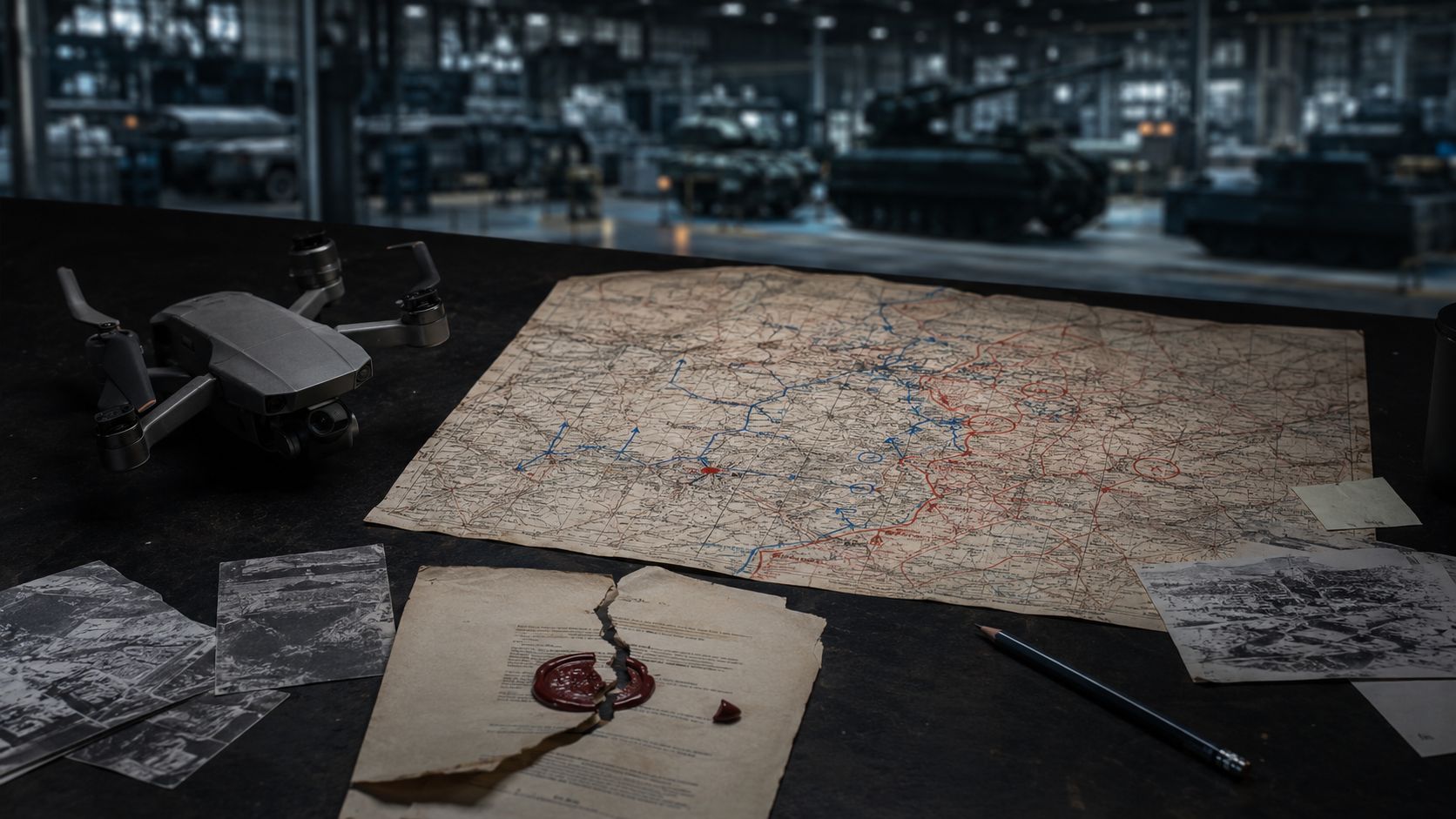
UPDATE: Russia-Ukraine Conflict – July 17, 2026
Ukraine is increasingly striking Russia’s war economy where it is most vulnerable: at sea, in its ports and across its fuel infrastructure. Yet at the very moment Kyiv claims operational momentum, Zelenskyy dismisses Defense Minister Mykhailo Fedorov, triggering the first wartime street protests over one of his personnel decisions. This weekly update examines the expanding maritime war in the Black Sea and Sea of Azov, Russia’s deepening refinery crisis, Lindsey Graham’s sanctions bill as a political legacy, and mirrored warnings of a possible provocation in the Baltic region.
-
Hollister’s Geopolitics Compass * June 2026
Brussels is confronting Russia, the United States, the Gulf states and China at the same time – putting at risk the very energy supplies, raw materials and export markets on which Europe’s economic stability depends. As China tightens its grip on rare earths, Iran imposes its own rules on the Strait of Hormuz and Germany moves deeper into military production for Ukraine, new winners are emerging along the margins of the Western order. Hollister’s Geopolitical Compass for June 2026 connects seven seemingly separate crises into one recurring pattern: states are no longer losing power only because of their adversaries, but…
-
UPDATE: US AND ISRAEL ATTACK IRAN – July 15, 2026
Five consecutive nights of U.S. strikes, a reinstated naval blockade, and Iranian retaliation across several Gulf states have brought the Islamabad Memorandum to the point of effective collapse. As Donald Trump declared himself the “Guardian of the Hormuz Strait,” demanded a 20 percent fee, and withdrew it within 24 hours, the Houthis’ attack on Saudi Arabia brought Bab al-Mandab into the conflict as a second strategic chokepoint. The escalation is no longer confined to Iran and the United States – it now reaches across the critical infrastructure of the entire Arabian Peninsula.
-
UPDATE: US AND ISRAEL ATTACK IRAN – July 12, 2026
While Washington and Tehran continue to talk about negotiations, escalation is already unfolding simultaneously on the military, economic, and strategic levels. This update shows how new US strikes, Iranian retaliation, the effective erosion of the memorandum, tensions around Hormuz, and visible fractures inside Tehran are creating a system in which both sides are shooting and negotiating at the same time.
-
UPDATE: Russia-Ukraine Conflict – July 10, 2026
Ukraine can now strike Russian refineries deep inside Siberia – yet it is increasingly unable to intercept ballistic missiles over Kyiv. While the NATO summit promises €70 billion and future Patriot production, the immediate crises on both sides are intensifying: Russia is rationing fuel, while Ukraine is running out of interceptor missiles. The war is becoming a struggle to destroy the opponent’s most vulnerable lifelines.
-
UPDATE: US AND ISRAEL ATTACK IRAN – July 08, 2026
The Islamabad Memorandum is facing its most severe stress test yet: Iran is shelling Qatari and Saudi ships – the very states that have spent months acting as mediators in the conflict. The United States responds with retaliatory strikes and the revocation of the oil sales authorization, while Trump, in Ankara, simultaneously speaks of progress and elevates Turkey as a new key partner. Behind the scenes, an even deeper shift is becoming visible: Mojtaba Khamenei remains invisible, the IRGC is creating facts on the ground, Israel is losing influence in Washington, and Hamas is handing over Gaza’s administration, but not…
-
UPDATE: US AND ISRAEL ATTACK IRAN – July 05, 2026
As Iran buries Ali Khamenei in an unprecedented state ceremony, his son and successor Mojtaba remains conspicuously absent. At the same time, IRGC commander Ahmad Vahidi is emerging as the country’s effective centre of power, the Kurdish front is escalating, and negotiations with Washington have produced no tangible breakthrough. The war may be paused, but behind the diplomatic façade, uncertainty is growing over who truly governs Iran and how long the fragile ceasefire can hold.
-
UPDATE: Russia-Ukraine Conflict – July 03, 2026
Ukraine is increasingly targeting the vulnerabilities that keep Russia’s war machine running: fuel, logistics, and infrastructure. As Crimea faces growing isolation and Moscow begins importing gasoline from India, Russia responds with one of the heaviest attacks on Kyiv since the start of the war. At the same time, Gripen purchases, possible Ukrainian long-range missiles, and newly approved arms exports signal a strategic shift. Both sides can inflict serious damage, but neither is achieving a decisive breakthrough.
-
UPDATE: US AND ISRAEL ATTACK IRAN – July 01, 2026
The guns have fallen silent – but peace remains nowhere in sight. While Washington and Tehran portray the pause in fighting as a success, the central conflicts remain unresolved: the Doha talks have barely moved beyond technical contacts, the dispute over the Strait of Hormuz is intensifying, the Lebanon framework is already collapsing, and resistance within Iran’s leadership is growing. Meanwhile, devastated US bases, soaring war costs and Iranian inflation approaching 90 percent reveal the true price of this supposed ceasefire.
-
UPDATE: US AND ISRAEL ATTACK IRAN – June 28, 2026
Ten days after the memorandum was signed, the shooting has resumed: the United States is bombing Iranian coastal positions, Iran is launching drone attacks against ships and Bahrain, and the Israel-Lebanon framework is already threatening to collapse over Hezbollah’s refusal to comply. Oman is caught between Tehran’s claim to regional control and demands for unrestricted navigation, the IAEA remains locked out of damaged nuclear sites – and Washington is requesting $87.6 billion for a war it officially says is over. The ceasefire has not simply collapsed. It is being renegotiated under fire.
-
UPDATE: Russia-Ukraine Conflict – June 26, 2026
The war is shifting its centre of gravity away from major territorial gains and towards refineries, power grids, logistics hubs and military infrastructure far behind the front. While Russia continues its large-scale air campaign against Ukrainian cities, Ukrainian long-range strikes are increasingly affecting Russia’s energy system and occupied Crimea, producing fuel restrictions, power curbs and industrial shutdowns now acknowledged by Moscow’s own authorities. At the same time, US support is deepening, Kyiv has launched a 40-day pressure campaign, and diplomacy remains trapped in the same unresolved positions.
-
UPDATE: US AND ISRAEL ATTACK IRAN – June 24, 2026
The Buergenstock talks were meant to chart a path out of war. Yet only days after the memorandum was signed, Washington and Tehran are already presenting fundamentally different versions of what was agreed. Nuclear inspections, frozen Iranian assets, the future management of regional shipping and Iran’s missile programme remain disputed in four crucial areas. At the same time, the ceasefire in southern Lebanon is eroding, Donald Trump is again threatening Iran with military force, and the US Congress is challenging the president’s unauthorized conduct of the war. This update reconstructs what was actually decided in Switzerland – and why the…
-
Sixteen Wars in the Shadow of the Headlines
While Ukraine, Gaza and Iran dominate the headlines, at least sixteen other wars and armed conflicts are escalating beyond the focus of global public attention. From Sudan, Myanmar and the Congo to Mexico, Pakistan and the Red Sea, this global situation report reveals how resources, trade routes, state collapse and the retreat of Western power are reshaping the world’s map of violence. What appears to be a collection of isolated regional crises is, in fact, the visible pattern of a historic transition from a unipolar to a multipolar world order.
-
UPDATE: US AND ISRAEL ATTACK IRAN – June 21, 2026
The Islamabad Memorandum has entered into force, but its first days already expose the gap between paper and reality: while Washington and Tehran try to establish a new framework, the war in Lebanon keeps escalating, Israel challenges the deal’s political logic, and implementation is stalled before real negotiations have even begun.
-
UPDATE: Russia-Ukraine Conflict – June 19, 2026
Moscow burns, the Lavra is in flames, and while the G7, the EU and the Ramstein group announce fresh commitments, the boundary of the war is moving inward: Ukraine strikes the Russian capital itself, Russia hits a UNESCO World Heritage site in Kyiv, and diplomacy still produces no ceasefire. Update No. 5 shows how long-range strikes, Western rearmament and political hardening combined within a single week to push the conflict into a new stage of escalation.
-
UPDATE: US AND ISRAEL ATTACK IRAN – June 17, 2026
The memorandum has been digitally signed and the formal ceremony is being prepared – yet peace remains out of reach. While Washington and Tehran open a 60-day window for negotiations, Israel continues its strikes in Lebanon, refuses to withdraw and insists that it is not bound by the agreement. The supposed breakthrough therefore carries the seeds of its own collapse: the decisive front no longer runs between the United States and Iran, but through Beirut.
-
UPDATE: US AND ISRAEL ATTACK IRAN – June 14, 2026
Within 48 hours, the crisis shifted from a threatened U.S. move against Iran’s oil infrastructure to the announced Islamabad Declaration. But the emerging deal is not a peace settlement; it is a fragile interim framework, still unsigned, interpreted differently by Washington, Tehran and Jerusalem, and burdened by unresolved disputes over Hormuz, Lebanon and frozen Iranian assets. The same text is being read in three directions – and that built-in ambiguity may already contain the next escalation.
-
UPDATE: Russia-Ukraine Conflict – June 12, 2026
While the front line in Ukraine remains largely frozen, the war is moving ever deeper: Kyiv is striking refineries, defense plants and logistics hubs far inside Russian territory, while Moscow is publicly rejecting any political opening. Putin’s dismissal of Zelensky’s outreach, renewed strikes reaching as far as St. Petersburg, and incidents spilling toward NATO territory all suggest that this war is not moving toward resolution, but toward a more dangerous and strategically volatile phase.
-
UPDATE – US AND ISRAEL ATTACK IRAN – June 10, 2026
Beirut ignites the chain, Iran fires, Israel strikes back – and in the Gulf, the conflict shifts into a direct U.S.-Iran exchange. Between June 7 and June 10, several fronts converged into a new escalation pattern: Israeli strikes in Lebanon and Iran, Iranian missiles targeting Israel, CENTCOM operations near Hormuz, and retaliatory attacks on U.S.-linked bases in Bahrain, Kuwait, and Jordan. While Washington keeps the negotiation track open, the military facts are moving faster than diplomacy.
-
Hollister’s Geopolitics Compass * May 2026
May 2026 was the month in which supply itself became a weapon. What appeared in the headlines as separate crises – Hormuz, Ukraine, Europe, the Sahel, Cuba, the South Caucasus – reveals a deeper common logic: energy, raw materials, sea lanes and military power are once again being used as one integrated pressure system. Hollister’s Geopolitical Compass does not sort events by noise, but by impact: who gains room to maneuver, who loses it, and which global chains begin to break when supply, security and geopolitics merge.
-
UPDATE – US AND ISRAEL ATTACK IRAN – June 07, 2026
The war over Iran is no longer a regional exchange of fire. While Washington speaks of negotiations, U.S. bases in the Gulf come under attack, a Lebanon ceasefire collapses before it can take hold, and frozen Iranian billions are being claimed both as the price of peace and as a reconstruction fund for Gulf allies. Behind the drones, missiles and diplomatic language, a larger logic emerges: a conflict that may weaken Iran, give Israel room to expand, and put pressure on China’s energy lifelines.
-
UPDATE: Russia-Ukraine Conflict – June 06, 2026
Russia is intensifying its air campaign while the front line on the ground remains largely frozen. The major strike of 2 June, Ukrainian long-range attacks on St. Petersburg and Kronstadt, a drone impact on NATO territory and Zelensky’s open letter to Putin mark a week in which military escalation and diplomatic signalling unfolded side by side. This update reconstructs the key events, separates verified facts from one-sided claims, and shows why the war is currently being shaped less by territorial movement than by air defence, logistics, arms production and political endurance.
-
UPDATE – US AND ISRAEL ATTACK IRAN – June 03, 2026
Between May 31 and June 3, the confrontation between the United States, Israel, and Iran entered a new phase of operational routine: U.S. blockade enforcement in the Gulf, Iranian retaliation against Kuwait and Bahrain, renewed CENTCOM strikes on Qeshm Island, and negotiations whose real status remains deeply contradictory. While Washington publicly sets conditions for reopening Hormuz and Tehran threatens additional choke-point pressure, Israel’s expanding operations in Lebanon add another front to the crisis. This update documents the key military, diplomatic, and regional developments in a conflict where war and negotiation no longer exclude each other, but now proceed in parallel.
-
UPDATE – US AND ISRAEL ATTACK IRAN – May 31, 2026
While Washington speaks of a deal within reach, the reality points in the opposite direction: no signed MoU, continued military strikes, an escalating war in Lebanon, and open threats against Oman. The Iran war is entering a new phase in which diplomacy and military coercion no longer run in parallel but actively undermine each other. This update examines why the alleged agreement remains politically blocked – and why the real escalation is already unfolding far beyond the formal negotiation track.
-
UPDATE: Mali Situation Report – 29. May 2026
By late May 2026, Mali has reached a strategic breaking point. Russia’s Africa Corps has abandoned the entire north, JNIM is choking key supply routes into Bamako, the Islamic State is exploiting the vacuum, and the junta is already looking for new partners in Ankara, Tehran and Beijing. What Moscow once sold as its successful Sahel security model is collapsing under pressure: Kidal has fallen, the capital is being economically squeezed, and the Alliance of Sahel States is facing its first existential stress test. This situation report explains why Mali is not merely burning – but why its breakdown could…
-
UPDATE: Russia-Ukraine Conflict – May 29, 2026
By late May 2026, the Russia-Ukraine war has entered a new operational phase. While Moscow is losing ground, manpower and refinery capacity, Ukraine is shifting the center of gravity toward drones, logistics disruption and systematic pressure on Russia’s supply chains. At the same time, Russia is escalating diplomatically, warning Western embassies to leave Kyiv while still withholding its promised negotiation memorandum. This situation report explains why drones, fuel, mobilization, Belarus, China and Trump’s mediation problem are no longer separate issues, but parts of one strategic picture.
-
Ukraine-Russia-Insight: Starobilsk and Kiew – What Really Happened
On the night of May 23-24, 2026, Western media reported a massive Russian strike on Kyiv. What was largely missing from the coverage: three days earlier, a student dormitory in Starobilsk had been hit, young people were killed, Russia announced retaliation – and then acted. This article reconstructs the Starobilsk-Kyiv chain of events, separates documented facts from unresolved questions, and shows how selective reporting on both sides turns war coverage into propaganda.
-
UPDATE – US AND ISRAEL ATTACK IRAN – May 27, 2026
Four days after Trump declared a deal with Iran was “largely negotiated,” no agreement has been signed. As Washington and Tehran continue to haggle in Doha over Hormuz, sanctions, and highly enriched uranium, new US strikes on Iran and Israel’s major escalation in southern Lebanon are pushing the conflict in the opposite direction. The real test of these talks is therefore no longer confined to Tehran or Washington, but unfolding in Lebanon, where diplomacy and military realities collide in real time.
-
UPDATE: Russia-Ukraine Conflict – May 21, 2026
The military balance in the Russia-Ukraine war is shifting visibly for the first time in years: Russia is losing net territory while Ukraine reports limited battlefield gains. Politically, however, the war remains structurally blocked. The failed Victory Day ceasefire shows that short-term pauses have largely lost their diplomatic function. At the same time, Kyiv is building a long-war defense architecture: arms exports, Gulf security agreements, and drone production partnerships inside Europe. Germany is no longer merely a supporter, but increasingly part of the war-production chain. This situation report shows a central contradiction: the front is moving – diplomacy is not.
-
UPDATE – US AND ISRAEL ATTACK IRAN – May 20, 2026
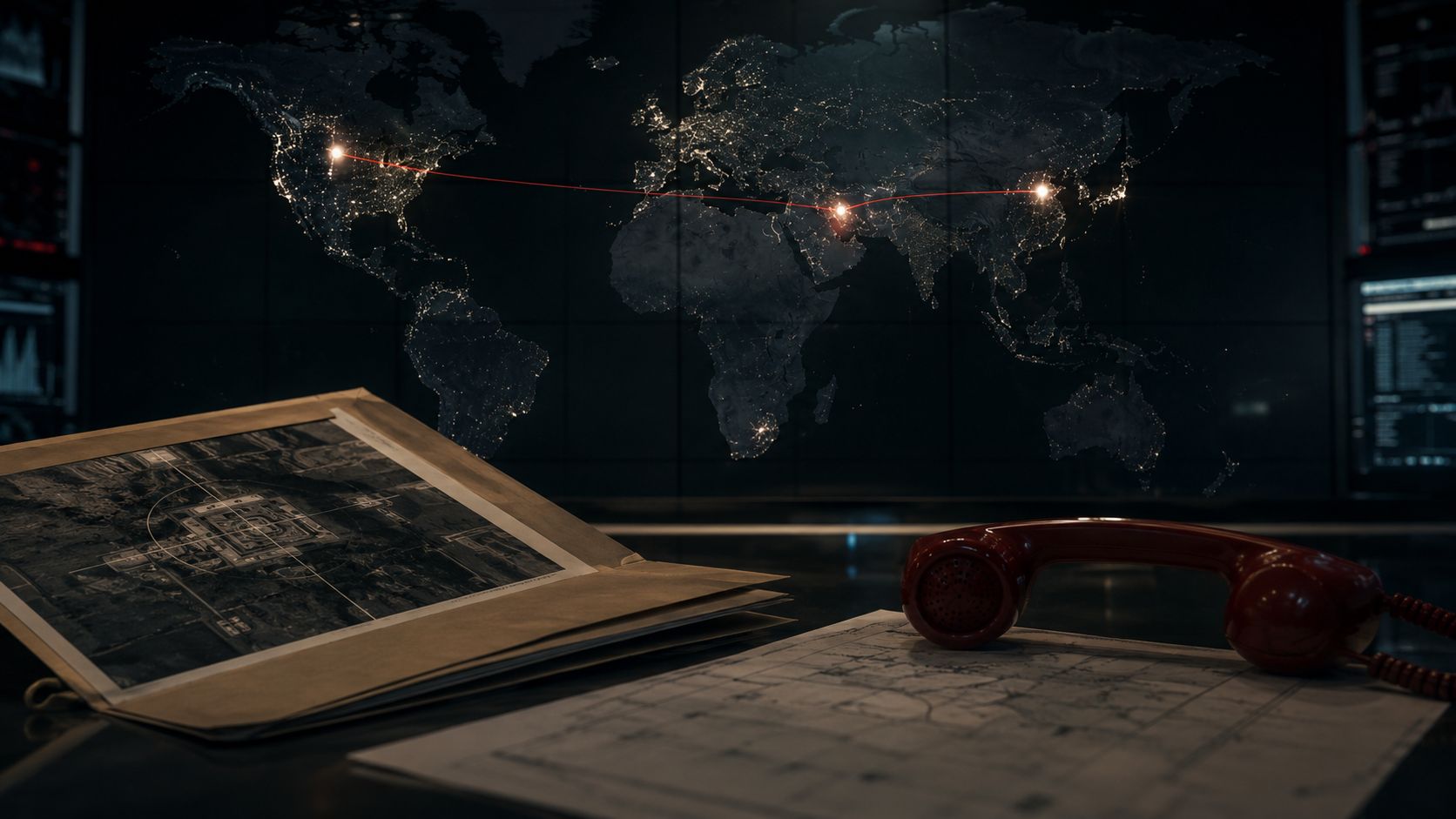
Trump says he was “one hour” away from launching a new large-scale strike on Iran – then called it off. Not because the crisis was resolved, but after appeals from Gulf leaders and under the continued threat of renewed attacks. As Tehran repeats its core demands, Washington counters with terms close to surrender, and the US Senate shows its first visible cracks over the war, another case moves to the center: the US strike on the Minab girls’ school. This update traces a week in which the war did not fully escalate – but the underlying power structures became clearer:…
-
UPDATE – US AND ISRAEL ATTACK IRAN – May 17, 2026
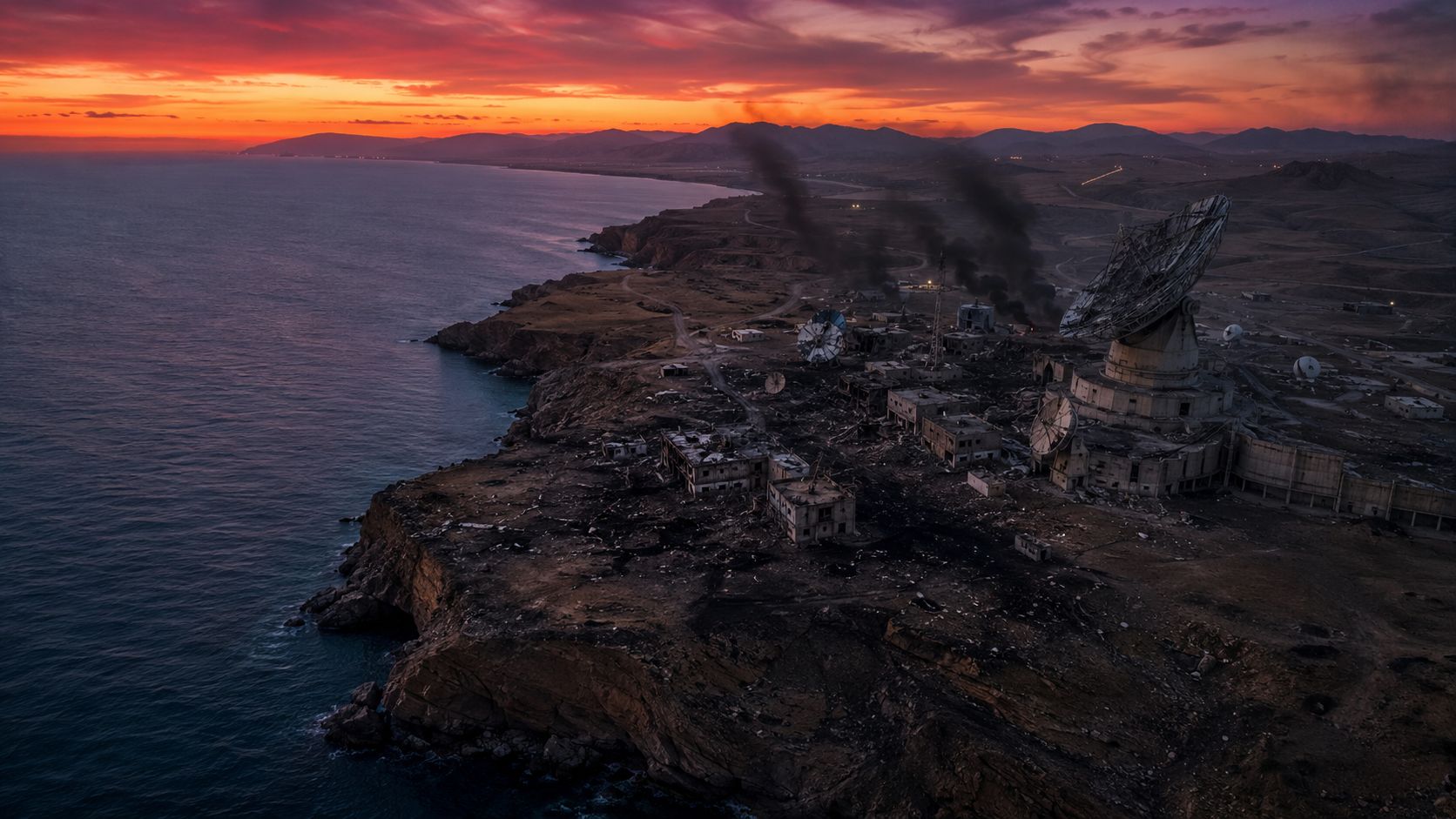
Day 77. Trump calls Iran’s negotiating proposal “a piece of garbage” and declares the ceasefire clinically dead. The New York Times reports intensive strike preparations for “next week.” Energy Secretary Wright says Iran is “weeks” from weapons-grade uranium – his own CIA says months. Saudi Arabia and the UAE have been secretly fighting all along. And Iran is formalizing control of the Strait of Hormuz as a permanent institutional reality – regardless of how the war ends.
-
UPDATE – US AND ISRAEL ATTACK IRAN – May 13, 2026
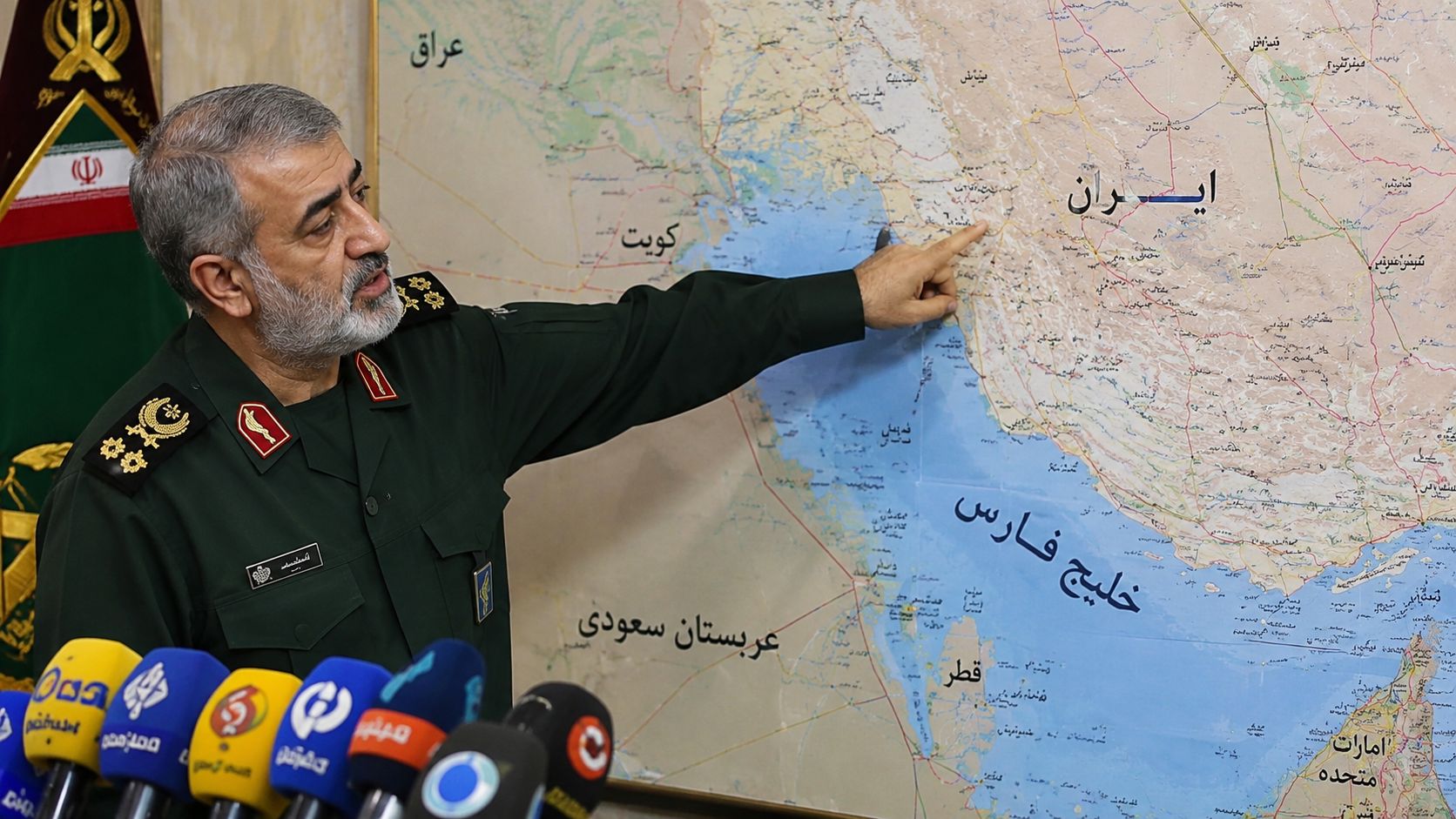
Day 74. The US-Iran ceasefire exists on paper – and is broken daily. Tehran has for the first time publicly named weapons-grade uranium enrichment at 90 percent as an option. Saudi Arabia struck Iran covertly and then denied the US military access to its bases. The IRGC has expanded its Hormuz control zone tenfold. In Lebanon, 380 people have been killed since the April 17 ceasefire – among them children, rescue workers, a father and his twelve-year-old daughter. Trump calls the war a “6-week excursion” and says Americans’ financial situation doesn’t concern him “not even a little bit.” Full situation…


