Michael Hollister

Michael Hollister

Nine Billion No One Asked About

An inconspicuous parliamentary inquiry revealed a list of more than 450 overseas projects totaling approximately €9.8 billion. Development loans, federal guarantees, and funding programs whose actual impact even government evaluators often cannot adequately measure. Meanwhile, Germany has forgiven €15.56 billion in debt over 25 years. As bridges deteriorate, municipalities struggle financially, and social benefits face cuts at home, billions continue to flow abroad. Michael Hollister raises a fundamental question: Should a government distribute money it does not have?


Terafab – Part 4: The Swarm

A data center in space cannot be a data center in the conventional sense. The physics of low Earth orbit dictates a swarm of thousands of standardized nodes: small enough to radiate heat, agile enough to evade debris, expendable enough to absorb failures, and modular enough to grow with demand. Part 4 examines why SpaceX, Google, Starcloud, and independent researchers are converging on the same architecture - and where civilian resilience begins to acquire military significance.

Ten Percent, Once, Without Warning – Part 2

A ten percent capital levy, imposed once and preferably without warning - what the International Monetary Fund calculated in 2013 has historical precedents. From Germany's Weimar Republic and the 1952 postwar wealth levy to Cyprus's banking crisis, government intervention in private wealth is far from hypothetical. Concrete political resolutions and legislative proposals have also emerged in Germany. Yet the IMF itself warned about the consequences. Michael Hollister examines why one-off wealth levies repeatedly return to the political agenda despite their historical failures - and the two obstacles that have prevented their widespread implementation.

WEEKLY CONFLICT UPDATE No. 7 – October 25, 2026

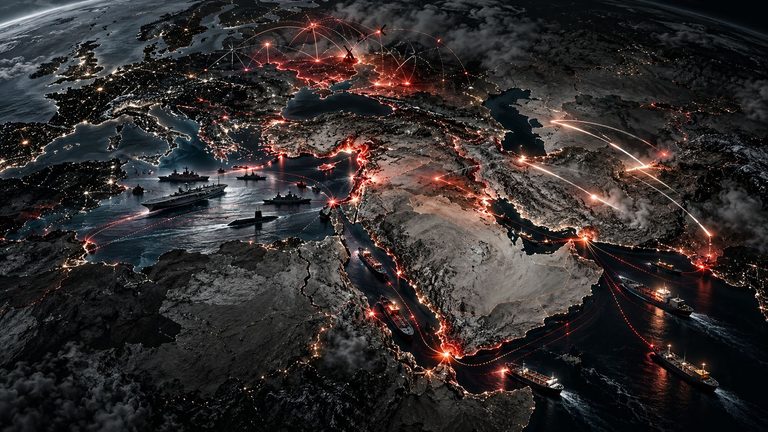
Military alliances are tightening, transport routes are becoming instruments of coercion, and even defensive systems are being used as political leverage. This Global Conflict Update examines the growing confrontation between Israel and Turkey, the escalation linking Yemen, Saudi Arabia and Iran, and mounting US pressure on Ukraine - revealing where strategic preparations could develop into the next open war.

Minsk II – Findings, Not Reflexes

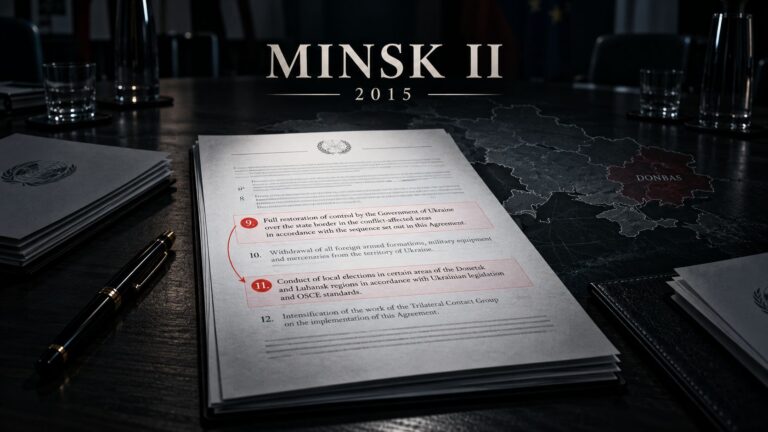
"Russia violated Minsk II." For years, this claim has been repeated as an established fact. But what does the February 12, 2015, agreement actually say? Who signed it, who were the parties to the conflict, and who was responsible for implementing its provisions? An examination of the agreement's 13 points reveals a striking gap between the prevailing narrative and the document's wording. The prescribed sequence of constitutional reform, local elections, and restoration of border control raises particularly important questions. Documented Western military deployments and subsequent statements by Angela Merkel and François Hollande add another dimension. This dossier examines Minsk II through its original documents, including the complete agreement for readers to examine themselves.

Ten Percent, Once, Without Warning – Part 1

Ten percent of private net wealth - collected once, without warning, to bring government debt under control. What sounds like a political nightmare was actually modeled by the International Monetary Fund back in 2013. It was not an official proposal, but an economic calculation with a remarkable condition: For the levy to work as intended, people would have to be caught by surprise. Since then, global public debt has climbed from roughly $60 trillion to more than $100 trillion. Europe faces economic stagnation, renewed borrowing, and mounting financial obligations. How relevant is a calculation made thirteen years ago? Part 1 examines the original IMF documents, the numbers, and the economic conditions that have changed since.

A Backbone Built on Nepotism – How Washington Hands Its China Deterrence to the President’s Family

A call from the White House, a $620 million Pentagon loan, and an investment firm with ties to Donald Trump Jr. What looks like another case of potential nepotism reaches into the heart of America's national security strategy. Washington wants to break its military dependence on China, yet the very financing mechanism designed to achieve that goal is coming under scrutiny over political connections and family ties. The documented events raise a question that extends far beyond the Trump family: How resilient can a deterrence strategy be when the industries supporting it are increasingly selected through personal networks?

Energy, Debt, AI – The IMF Warns of the Bill No One Wants to Pay

Energy shocks, record public debt, and a multitrillion-dollar AI investment boom: The International Monetary Fund is warning of three forces putting simultaneous pressure on the global economy. As rising energy prices fuel inflation and governments face mounting interest costs, trillions are flowing into artificial intelligence and military expansion. The IMF is calling for fiscal discipline and restrictive monetary policy. But how can governments simultaneously finance rearmament, cushion energy costs, sustain social spending, and keep pace in the technology race? Behind the economic figures lies a fundamental question of distribution: Who benefits from these investments - and who ultimately pays the bill?

Terafab – Part 3: Escape Upward

Elon Musk is planning a computing infrastructure in space on a scale that could surpass anything built before. But whose laws govern millions of satellites operating beyond national territory? The 1967 Outer Space Treaty provides a surprisingly clear answer: Space is anything but lawless. While Europe's Digital Services Act continues to apply to services targeting the European market, the ability to physically enforce regulations against orbital hardware changes dramatically. SpaceX, the U.S. Federal Communications Commission, and international space law form a framework in which technological infrastructure becomes geopolitical power. Part three of the Terafab series examines why moving into orbit does not free Musk from the law - it places his infrastructure under a different legal jurisdiction.

WEEKLY CONFLICT UPDATE No. 6 – October 18, 2026

This week’s conflicts are moving beyond their established boundaries. Houthi attacks have reached Aden and Saudi Arabia, while unverified maritime incidents in the Strait of Hormuz are threatening international shipping. Ethiopian forces have reached the Eritrean border, commercial vessels are becoming targets in the Black Sea, and Washington has temporarily suspended new sanctions against Russia.
At the same time, new alliances, military commitments, and strategic flashpoints are emerging. This Global Conflict Update examines how wars are increasingly spreading into trade routes, energy supplies, data connections, and regional security structures - and why the next escalation may not begin on a conventional battlefield.