Category Power Structures

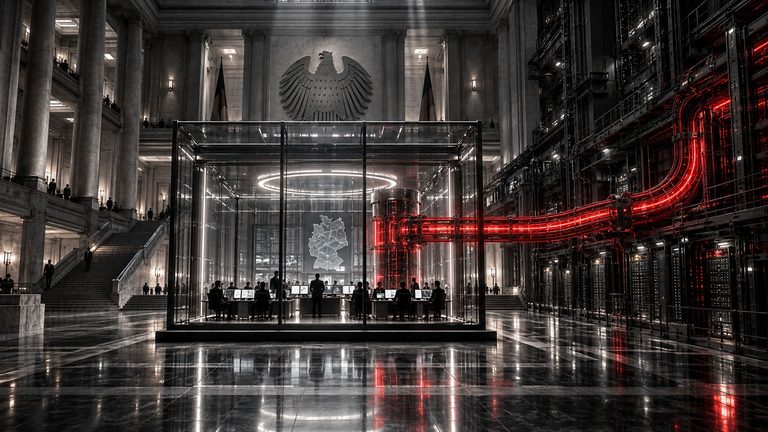
TerraFab – Part 5: The Militarization of Orbit

Space is no longer a peaceful sanctuary. It is becoming the next military battleground - with private technology corporations at the center of it.
On September 14, 2026, the U.S. government publicly confirmed for the first time that American weapons were already deployed in orbit. While Washington declares military superiority in space a strategic objective, China and Russia are advancing their own counterspace capabilities. Meanwhile, a once-familiar distinction is becoming increasingly difficult to maintain: the boundary between civilian infrastructure and military systems.
Elon Musk's Starlink has already become part of modern warfare. Starshield and multibillion-dollar Pentagon contracts reveal how deeply commercial satellite technology is becoming intertwined with military operations. Terafab could eventually extend this transformation to computing power itself.
But this raises a question with consequences far beyond the technology industry: When civilian data centers support military operations, can they become legitimate military targets? And who bears responsibility when an attack simultaneously disrupts services for millions of civilians?
Part five of the Terafab series examines the accelerating arms race in orbit, the convergence of private infrastructure and military power, and the unresolved legal questions that could define the next frontier of warfare.

Voluntary, Uncertified, Unlawful: Germany’s Illegal Wallet Before Launch

Voluntary, uncertified, unlawful - yet Germany is moving ahead anyway. On January 2, 2027, Germany plans to launch its digital identity wallet, “d-you.” But a privacy protection explicitly required under EU law will be missing. While the government promises a modern, convenient identity system, a little-noticed experimental clause grants the Digital Ministry far-reaching powers: automated decisions affecting digital identities, AI-assisted procedures, interconnected government processes, and the involvement of private companies. Meanwhile, a fundamental question emerges: How voluntary can digital identity remain when physical alternatives gradually disappear? Austria already provides a revealing example. Michael Hollister examines the legal foundations, technical vulnerabilities, and one crucial question: Who will ultimately control our digital identities - citizens themselves or the state?

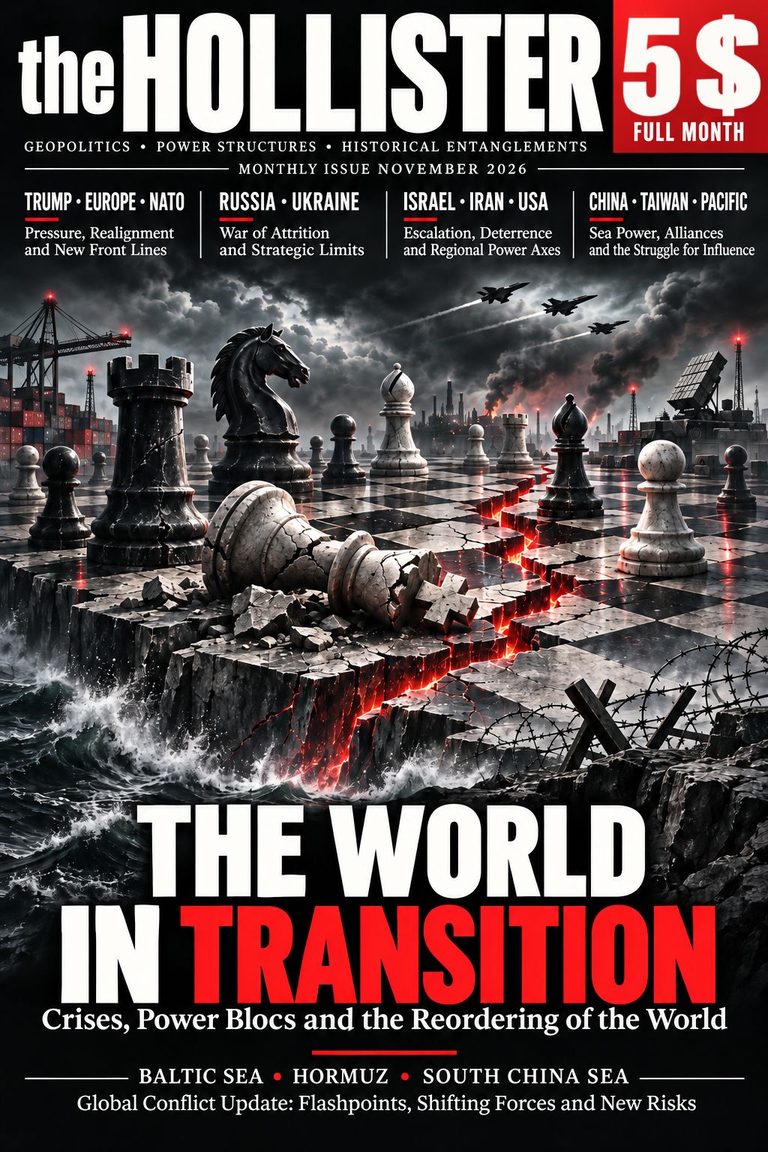
the HOLLISTER – November 2026

The world is undergoing a profound transformation. Traditional alliances are coming under pressure, geopolitical power blocs are realigning, and international conflicts are reshaping the global balance of power. From Washington to Moscow, Tehran to Beijing, today's decisions are defining tomorrow's world order. "the HOLLISTER" – November 2026 examines the underlying forces, analyzes geopolitical interests, and reveals connections often overlooked in daily news coverage. Independent, critical, and focused on the bigger picture. For just $5.

Public Office and Personal Networks

Political offices control appointments, public contracts, and government funding. But how often do people with personal ties to officeholders benefit from these structures? From the Graichen affair to relatives employed in government ministries, publicly funded organizations, and parliamentary offices, documented cases span political parties, German states, and decades. Meanwhile, Germany's public sector has expanded continuously since 2010, adding approximately 794,000 employees to reach 5.38 million. Annual personnel costs now amount to roughly €357 billion. "Office and Connections" examines the relationships between political power, personal networks, and public money. Not every documented case involves unlawful conduct. Yet a fundamental question remains: Where does legitimate public administration end, and where does favoritism toward personal associates begin?

The Third Operating System of Power – Part 3B: The Sovereign Shell

Germany is paying a premium for digital sovereignty without leaving Microsoft’s technological ecosystem. The Delos Cloud promises German data centers, vetted personnel, and protection from foreign access - yet the application layer remains proprietary US software, the CLOUD Act remains relevant, and even German authorities concede that complete sovereignty cannot be guaranteed. Is this genuine independence, or merely a more expensive shell around the same dependency?

The Third Operating System of Power – Part 3A: The Foundational Layer

BlackRock's Aladdin underpins the global financial system, while Palantir's Gotham connects data across government security agencies. But whose machines actually run these systems? The answer leads to Microsoft, Amazon, and Google - three American corporations that together control roughly 70 percent of Europe's cloud market. Whoever provides the computing infrastructure determines the technical conditions under which others operate. And under the US CLOUD Act, American legal authority can extend far beyond national borders. Part 3A of "The Third Operating System of Power" examines the invisible infrastructure upon which financial markets, security agencies, and increasingly entire governments are building their digital futures. The decisive question is: Who owns the foundation of digital sovereignty?

Nine Billion No One Asked About

An inconspicuous parliamentary inquiry revealed a list of more than 450 overseas projects totaling approximately €9.8 billion. Development loans, federal guarantees, and funding programs whose actual impact even government evaluators often cannot adequately measure. Meanwhile, Germany has forgiven €15.56 billion in debt over 25 years. As bridges deteriorate, municipalities struggle financially, and social benefits face cuts at home, billions continue to flow abroad. Michael Hollister raises a fundamental question: Should a government distribute money it does not have?

Terafab – Part 4: The Swarm

A data center in space cannot be a data center in the conventional sense. The physics of low Earth orbit dictates a swarm of thousands of standardized nodes: small enough to radiate heat, agile enough to evade debris, expendable enough to absorb failures, and modular enough to grow with demand. Part 4 examines why SpaceX, Google, Starcloud, and independent researchers are converging on the same architecture - and where civilian resilience begins to acquire military significance.

Ten Percent, Once, Without Warning – Part 2

A ten percent capital levy, imposed once and preferably without warning - what the International Monetary Fund calculated in 2013 has historical precedents. From Germany's Weimar Republic and the 1952 postwar wealth levy to Cyprus's banking crisis, government intervention in private wealth is far from hypothetical. Concrete political resolutions and legislative proposals have also emerged in Germany. Yet the IMF itself warned about the consequences. Michael Hollister examines why one-off wealth levies repeatedly return to the political agenda despite their historical failures - and the two obstacles that have prevented their widespread implementation.

Ten Percent, Once, Without Warning – Part 1

Ten percent of private net wealth - collected once, without warning, to bring government debt under control. What sounds like a political nightmare was actually modeled by the International Monetary Fund back in 2013. It was not an official proposal, but an economic calculation with a remarkable condition: For the levy to work as intended, people would have to be caught by surprise. Since then, global public debt has climbed from roughly $60 trillion to more than $100 trillion. Europe faces economic stagnation, renewed borrowing, and mounting financial obligations. How relevant is a calculation made thirteen years ago? Part 1 examines the original IMF documents, the numbers, and the economic conditions that have changed since.