by Michael Hollister
Exclusive published at Michael Hollister on September 09, 2026
5.597 words * about 30 minutes readingtime
You can find an overview of Parts 1 through 12 of the series “The War Prepared in Advance” here:
INTRO – The Prepared War – 12 Parts
Part 11 read here:
The Countermove: China’s Quiet Answer Without Firing a Shot – Part 11
The War Being Prepared – Part 12
While headlines focused on possible German involvement in Britain’s Trident deterrent, the German government issued a denial – and almost everyone overlooked what that denial did not dispute. On August 28, 2026, deputy government spokesperson Steffen Meyer stated succinctly: “There are no such talks about financing or plans for financing.” Seven weeks earlier, French President Emmanuel Macron had drawn a line under the same question: The concept of extended deterrence “is in no way aimed at jointly financing France’s nuclear capability.” Two denials, one subject: no German money for foreign warheads.
And yet, during precisely this period, a development that neither side denies has been unfolding – because it is already a matter of record. A Franco-German “Nuclear Steering Group” has existed since March 02, 2026. On July 16, 2026, French nuclear-capable fighter aircraft and German Eurofighters conducted a joint operation for the first time. And before the end of this year, the Bundeswehr is to participate in a French nuclear exercise. The “nuclear step” examined here is therefore neither a German bomb nor a proven check for Trident. It is the integration of German armed forces, bases, and planning with the nuclear forces of France and the United Kingdom. This installment thus fills a gap: Previous parts of this series examined the conventional, economic, and industrial dimensions of the military buildup, as well as the treaty and cooperation levels. The nuclear dimension was missing – until now.
This raises the question pursued in this article: What exactly is Berlin silent about when it issues a denial – and how far has Germany’s integration into a new European nuclear order already progressed while public debate remains fixated on the word “financing”?
The Report and the Denial, Considered Separately
The latest round began with a newspaper report. On August 26, 2026, the London-based Telegraph, citing anonymous sources, reported that Berlin was considering financial contributions to Britain’s nuclear deterrent, support for maintaining Britain’s next generation of submarines, conventional protection for British nuclear sites, and possibly German Patriot systems for the Faslane naval base in Scotland. Other outlets largely repeated the report – the Italian news agency ANSA and others picked it up without adding sources of their own. No independent second confirmation of the financing talks was evident; even a British defense source quoted by the Telegraph considered German contributions to submarine construction unlikely and conventional protection for Faslane the more plausible option.
What the report actually described is noteworthy: not the purchase of warheads, but contributions surrounding the weapon – infrastructure, maintenance of the next generation of submarines, and conventional protection for sites. The denial, by contrast, addressed the financing of nuclear weapons. The report and the denial may therefore be answering different questions: One concerns the ring around the weapon, the other the warhead itself. Placed side by side, they reveal not a contradiction but two statements that pass each other by.
Two days later, the German government rejected the financing claim – and only that claim. At the same time, Meyer explicitly referred to deeper cooperation on nuclear deterrence and declined to speculate about future possibilities. The denial thus draws a clean distinction between what is disputed – money for warheads – and what remains undisputed: the cooperation itself.
By then, that cooperation had long ceased to be a secret. As early as January 30, 2026, government spokesperson Stefan Kornelius had confirmed “highly confidential” talks with France and the United Kingdom about a European nuclear deterrent – at, as he put it, a very early stage. Two weeks later, on February 13, 2026, Merz publicly said at the opening of the Munich Security Conference that he had begun initial confidential talks with Macron about a European nuclear deterrent. The August denial therefore does not dispute that talks took place – that had already been acknowledged – but only one narrowly defined subject within them: money.
Because of its obligations under international law, Germany cannot acquire nuclear weapons of its own and has so far relied on the American umbrella through NATO. It was all the more notable that even before Munich, Merz had said he was open to France extending its deterrent to Europe. The Telegraph report thus entered a debate that was already under way – and from which the German government disputed only the one point that sounded like payments.
A linguistic clarification omitted from most reporting is useful here. “Trident” is commonly used as shorthand for Britain’s entire deterrent system, but that system actually consists of several components: British nuclear-powered ballistic-missile submarines, Trident II D5 missiles drawn from a pool managed jointly with the United States, British warheads, and the associated bases and infrastructure. Which of these components Germany is alleged to have discussed remains unclear in the report – and that ambiguity is not a detail but the source of the confusion.
The sums involved in Britain’s deterrent system are vast enough to make any financing speculation sound plausible. The British Ministry of Defence put spending on its Defence Nuclear Enterprise at £10.9 billion for fiscal year 2024-25 – 18 percent of the entire defense budget. More than £100 billion in spending with British suppliers is expected over the coming decade, while the new Dreadnought submarine class alone is estimated at £41 billion. According to calculations by the International Campaign to Abolish Nuclear Weapons (ICAN), the United Kingdom became the world’s third-largest nuclear spender in 2025. The immense financial requirement makes European contributions politically conceivable. It does not, however, prove that Germany held financing talks – and the only firm statement remains the dual denial from Berlin and Paris.
Anyone asking whether Germany is financing Trident is therefore asking the question both governments have already answered in the negative. The more interesting question begins where the denial ends.
The Record: Toulon, Île Longue, Nörvenich
While financing is being debated, Germany’s strategic integration is documented – step by step, with dates and primary sources.
The driving force has been openly stated. Since Donald Trump returned to the White House, European governments have questioned the reliability of the American commitment; the U.S. defense strategy presented in January 2026 prioritizes the Western Hemisphere and the Indo-Pacific and calls on Europeans to become conventionally self-reliant. On February 05, 2026, the New START treaty – the last remaining nuclear arms-control agreement between the United States and Russia – expired. Paris and Berlin are developing their cooperation within this emerging gap.
The U.S. National Defense Strategy of January 2026 places the Western Hemisphere and the Indo-Pacific at the forefront and calls for greater conventional self-reliance from Europeans. At the same time, the U.S. defense budget for 2026 stipulated a minimum presence of 76,000 American troops in Europe – a signal that affirms the commitment more than it loosens it. The European debate is therefore taking place in an intermediate space: Washington remains present, but the reliability of its pledge is no longer treated as self-evident.
The first step came in Toulon. At the Franco-German Council of Ministers in late August 2025, Chancellor Friedrich Merz and Macron adopted, alongside an economic paper, a security-policy declaration whose central points explicitly included a “strategic dialogue on nuclear deterrence.” Merz and Macron thereby placed on their joint agenda what previous German governments had allowed to languish among French proposals. DGAP observers noted at the time how much depended on whether this dialogue was pursued seriously – and that Berlin could gain considerable influence with a president nearing the end of his term. The location had been chosen deliberately: Toulon, the Mediterranean port where French sailors scuttled their own fleet in 1942 to keep it out of the Wehrmacht’s hands.
The second step was public and fundamental. On March 02, 2026, at the Île Longue submarine base in Brittany, Macron presented a further development of French nuclear doctrine: dissuasion avancée, or forward deterrence. For the first time since 1992, he announced an increase in the number of French warheads – France currently has about 290 – and ended the previous policy of numerical transparency. He named eight states as the first prospective participants in closer integration, including Germany, Poland, the Netherlands, Belgium, Sweden, Denmark, and the United Kingdom. Partner states could participate in exercises, contribute conventional forces to nuclear operations, and take part in strategic signaling, potentially including temporary deployments of French strategic assets to allied bases. France expressly retains sole authority over the final decision to use nuclear weapons. The new doctrine laid out the partner framework and the Steering Group.
Macron identified three areas in which Europe needed reinforcement: satellite- and radar-based early warning, expanded air, missile, and drone defense, and the capability to conduct deep strikes. The speech followed a line running through Macron’s presidency since his 2017 Sorbonne address; under the convention of the Fifth Republic, every two-term president delivers two major nuclear speeches, the previous one having come in 2020. What was new was the move from theory to a concrete architecture of cooperation.
The third, institutional step followed that same day. In a joint declaration, Macron and Merz announced the creation of a high-level “Nuclear Steering Group” – a bilateral framework for defense-policy exchanges and the coordination of strategic measures. According to the declaration, this includes consultations on the mix of conventional capabilities, missile defense, and French nuclear capabilities, as well as initial concrete steps before the end of 2026: Germany’s conventional participation in French nuclear exercises and joint visits to strategic facilities. Both countries also intend to improve their ability to manage escalation below the nuclear threshold, particularly in early warning, air defense, and “Deep Precision Strike.” The initiative is expressly intended to supplement NATO and nuclear sharing, not replace them. The inclusion of NATO nuclear-sharing states – in addition to Germany, Belgium and the Netherlands – was intended to demonstrate that the European initiative and NATO deterrence are not mutually exclusive. Early-warning efforts include the joint JEWEL project, for which Berlin and Paris announced a combined proposal.
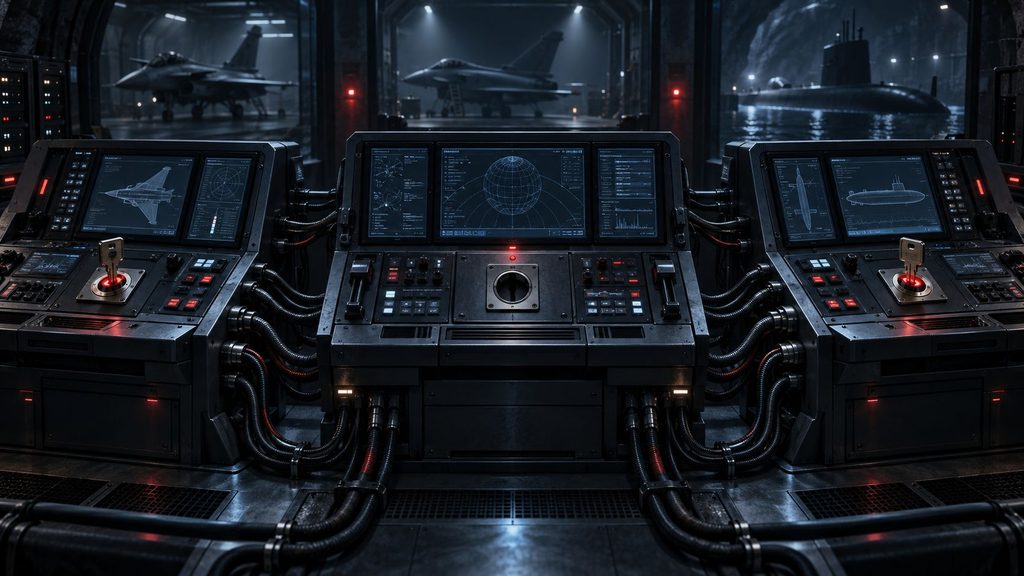
The fourth step was the first operational one. On July 16, 2026 – the day before the Franco-German Defense and Security Council meetings in Nörvenich and Brühl – two French nuclear-capable Rafales, two German Eurofighters, and a French tanker aircraft conducted joint aerial refueling and subsequent flight maneuvers; the aircraft landed together at Nörvenich Air Base. No nuclear weapons were aboard. Nevertheless, the German Ministry of Defence and Paris explicitly described the operation as the first operational step in the new deterrence cooperation. Merz announced that the Bundeswehr would participate in a French nuclear exercise “before the end of this year” – marking the first time German and French conventional forces would work together in such an exercise. German military personnel are also scheduled to attend a French nuclear-weapons exercise as observers in the fall of 2026.

The council itself – the 26th Franco-German Council of Ministers – met on July 17, 2026, at https://www.buymeacoffee.com/MichaelHollisterAugustusburg Palace in Brühl. Speaking to the press, Macron listed the objectives: strategic closeness, joint exercises and partnership formats, closer integration of military staffs – and, as he put it, creating uncertainty among adversaries because responsibility for deterrence would then be more widely distributed. Merz simultaneously struck a more cautious note: This might lead to a change in doctrine, he said, but it was still too early for that. The language remained cautious; the action – the first joint flight operation the previous day – did not.
Four steps in less than a year, from paper to flight operations. That is considerably more than a nonbinding discussion about a “nuclear umbrella” – and none of it is subject to a denial.
The Triangle – and Why It Still Runs Through Washington
The Franco-German axis is only one side of a triangle. France and the United Kingdom formed the second with the Northwood Declaration on July 10, 2025: The two states declared that their nuclear forces, while remaining under national control, could be coordinated and that no extreme threat to Europe could fail to prompt a response by both. Germany and the United Kingdom drew the third side a week later, on July 17, 2025, with the Kensington Treaty – the first comprehensive bilateral treaty since World War II, containing a mutual-assistance clause and a package of 17 projects. It built on the Trinity House Agreement of October 2024 and includes the joint development of a long-range precision weapon with a range of more than 1,240 miles (2,000 km). The weapon is officially intended for a conventional role; there is no evidence that it will be nuclear-armed. The treaty commits both sides to mutual assistance in the event of an armed attack and to joint arms-export campaigns. Northwood, in turn, amounted to more than a political gesture: Paris and London agreed to coordinate their nuclear policy, capabilities, and operations more closely, conduct joint nuclear research, and continue developing long-range weapons systems such as the Storm Shadow/SCALP cruise missile. In parallel, London announced that it would purchase F-35A fighter aircraft and reenter NATO’s nuclear delivery role.
These three bilateral agreements create a structure in which Paris and London serve as Europe’s two nuclear decision-making centers, while Berlin becomes the most important nonnuclear state for connectivity, infrastructure, and support. This is not an official European nuclear command. It is a network of bilateral agreements that could gradually assume such a function.
Germany is no nuclear novice. American B61 nuclear bombs have been stored for decades at Büchel Air Base and would be delivered to their targets by German aircraft in wartime – the classic form of NATO nuclear sharing, with the weapons remaining under American control. Around 100 U.S. warheads are stored in Europe, many of them in Germany. The new arrangement is being added to the old one: It is no longer solely the American deterrent, but also a European pillar built around Paris and London, toward which German conventional forces are being drawn. The difference is fundamental. The previous arrangement consisted of American bombs, American control, German delivery aircraft, and planning within NATO. Germany is now working with France on doctrine and exercises, conducting a dialogue with the United Kingdom that includes nuclear issues, and integrating early warning, air defense, and long-range weapons on a trilateral basis. One dependency is becoming several ties.
Yet the United Kingdom is only of limited use to a narrative of “European autonomy.” Britain’s deterrent is operationally under national control – the warheads and the decision to use them remain British, and the Dreadnought submarines are being built in the United Kingdom. Technically, however, it is closely dependent on the United States: The Trident II missiles come from a pool managed jointly with the United States, maintenance and support are heavily shaped by the Americans, and cooperation extends to warhead development.

This dependency is not merely an interpretation advanced by critical observers; it is a consensus even in Moscow. A RAND study of publications by Russian military experts found that Russia’s specialist community regards Britain’s deterrent as heavily dependent on the United States, both technically and politically, and as less credible than France’s precisely because of that dependence. By contrast, the French arsenal is considered highly independent, both politically and technologically. British participation in the shared missile pool is longstanding and concrete: According to the government, the British contribution historically amounted to around £12 million a year. The missile intended to help sustain Europe’s deterrent is therefore administered by the United States. Trident missiles are drawn from a common pool stored and maintained at the U.S. Navy base at Kings Bay, Georgia; the foundation for this cooperation dates back to the 1958 U.S.-UK Mutual Defence Agreement. A British missile that is never permanently based in Britain is a precise image of the limits of British autonomy.
This leads to a structural finding with implications beyond the present moment: The more a “European” deterrent relies on the British pillar, the less it separates itself from Washington. The more autonomous pillar is French – and the decision over it rests solely with the French president. Anyone speaking of European nuclear sovereignty is therefore describing an order that at one end still runs through the United States and at the other through Paris.
The Legal Boundary Is Not Financing
The question remains why Berlin denies financing so emphatically. The obvious answer – that it would be prohibited anyway – does not hold.
Under the Treaty on the Non-Proliferation of Nuclear Weapons and the Two Plus Four Treaty, Germany has undertaken not to manufacture or possess nuclear weapons or obtain control over them. Article 3 of the Two Plus Four Treaty refers to Germany’s “renunciation of the manufacture and possession of and control over nuclear” weapons. The NPT obliges every nonnuclear-weapon state not to receive control over nuclear weapons “directly, or indirectly.” That control is the red line – not the money.
This is not merely an interpretation but the conclusion of a study by the German Bundestag’s Research Services. In May 2017, a briefing with the reference number WD 2-3000-013/17, prepared at the request of CDU parliamentarian Roderich Kiesewetter, reached a clear conclusion: The prohibitions under the NPT and the Two Plus Four Treaty are limited to Germany acquiring a bomb of its own. Cofinancing a French or British nuclear capability would not automatically constitute a violation; in principle, it could be arranged through the defense budget and a bilateral agreement. Financing through the EU budget, by contrast, is not envisaged without a treaty amendment. At the time, The New York Times summarized the study under the headline: “European Nuclear Weapons Program Would Be Legal, German Review Finds.”
The study attracted little attention in Germany at the time; it was American interest that brought it to wider notice. Its logic is simple: Germany joined the NPT in 1969 and reaffirmed its renunciation of nuclear weapons of its own in the Two Plus Four Treaty in 1990. What these treaties prohibit is a German bomb – not a contribution to someone else’s. Between the two lies a legal space that has barely been explored because, until now, hardly anyone wanted to use it.
That legal space also explains why the denial is so narrow. Had the German government wanted to rule out every form of financial participation in another country’s deterrent, it could have said so. It denied only the specific reported case – and left the broader possibility untouched.
This changes how the denial should be assessed. Berlin is not denying Trident financing because it would be legally impossible – according to the Bundestag Research Services’ legal analysis, it could in principle be structured lawfully. The denial is therefore not a legal necessity but a political decision. It keeps an uncomfortable debate small: one about costs, commitments, and how much German money and responsibility should flow into another country’s deterrent. The legal boundary at which matters would truly become serious lies only where Germany obtains control over nuclear weapons.
That boundary also marks the point at which some individual voices go further than the government. In an interview, Brigadier General Frank Pieper – expressly speaking in a personal capacity – called for Germany to acquire tactical nuclear weapons of its own. The German government, by contrast, continues to cite the NPT and the Two Plus Four Treaty and insists that Germany will take no unilateral national action in this area. Between the individual demand and the official position lies precisely the space in which the European construct is developing: no German bomb, but growing proximity to foreign ones. Short of that boundary, much is possible that is not prohibited – and it is precisely within this space that the Steering Group operates.
The Blind Spot
This is also where a second, domestic political finding emerges. The further integration advances, the less Parliament learns about it.
The Analysis – including the strategic section and assessment is available to my registered readers.
Please log in here.
If you do not yet have a reader account, you can register here free of charge.
Access is activated immediately.