by Michael Hollister
Exclusive published at Michael Hollister on November 15, 2026
Part 1 read here:
Terafab – Part 1: The Factory for AI in Space
Part 2 read here:
Terafab – Part 2: Why Space? The Physical Wall
Part 3 read here:
Terafab – Part 3: Escape Upward
Part 4 read here:
Terafab – Part 4: The Swarm
Part 5 read here:
TerraFab – Part 5: The Militarization of Orbit
4.178 words * about 22 minutes readingtime

The Records Dispute in Grimes County
The question of how far a corporation’s accountability extends will not be decided in orbit. It will be decided in the filing cabinets of a Texas county government.
On November 11, 2026, SpaceX expanded a legal dispute through which the company is seeking to prevent the release of records concerning the TerraFab chip-factory project. The request came from local television station KBTX, which has followed the development in Grimes County for months. On the same day, the records of the responsible appraisal district showed a company called WIT TECH LLC with more than 70 active property accounts totaling over 10,000 acres around the construction site. A review of the same records in August had found approximately 7,700 acres. KBTX reported both the expanded landholdings and SpaceX’s challenge to the release of the requested records.
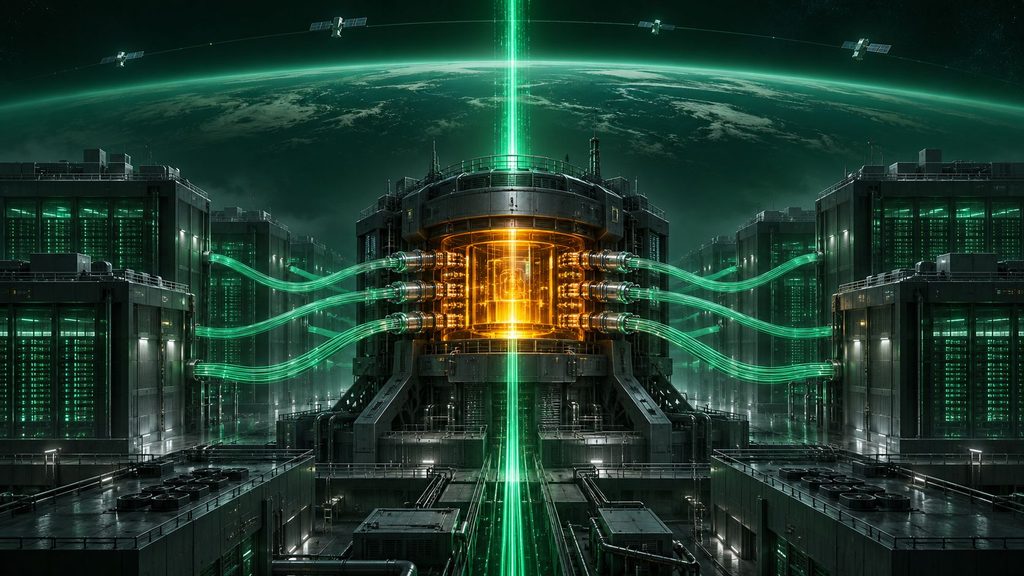
The site is located at Gibbons Creek Reservoir, the location of a decommissioned coal-fired power plant approximately 1 hour northwest of Houston. TerraFab consists of 2 components: a research fabrication facility on the northern grounds of Tesla’s Austin factory, under construction since April 2026, and the production complex in Grimes County at issue here. Three thousand permanent jobs have been pledged for the first phase. The documents SpaceX submitted to the county contain an initial estimate of $55 billion.
The project terms have been in place since the summer. The county waived property taxes and instead agreed to annual payments of $20 million under an agreement running from 2027 through 2036. The Texas Enterprise Fund is providing a $30 million grant. Two small school districts signed their tax-abatement agreements. The first construction phase is documented at more than $16.8 billion, while county records cite as much as approximately $119 billion across 4 phases. SpaceX and Tesla formally announced an initial $16.8 billion investment. Formal construction is scheduled to begin on December 01, 2026; earthwork has been underway since October, and series production is scheduled for the third or fourth quarter of 2028.
In early August, SpaceX representatives faced local residents in the county commission chamber for the first time. One resident later told KBTX that he had been surprised by how close the planned facility would be to his home. By then, the tax agreements had already been signed and had taken effect.
Here, then, is a company building the largest structure in the world on land quietly assembled over time, receiving public funding and tax concessions for it – and going to court to shield the project records from a regional broadcaster.
Part 5 ended with a question. If a single private actor controls the entire chain – chips, transportation, network, energy, computing power – and if that chain has military utility, who controls him?
The answer is different from what the series had suggested until now. It is also different from what it was as recently as this summer.
The Chain, Added Up
Five installments have described a structure. Part 1 examined the scale: 100 million square feet of floor space in Grimes County, an annual target of 1 terawatt of computing capacity – by Musk’s own calculation, 50 times what global industry adds in new AI computing capacity each year – with approximately 80 percent of it not intended for Earth. Part 2 examined the physics: Energy, radiation, and cooling are solvable or manageable; the real wall is launch cadence. Part 3 examined the law: Orbit is not beyond the law; the governing jurisdiction can be selected, and the gap lies not in the rule but in enforcement. Part 4 examined the architecture: A data center in space cannot be a building but must become a swarm of thousands of small, replaceable nodes. Part 5 examined the other side: The same properties that make the swarm resilient for civilian purposes give it military value.
Taken together, they produce a finding with 3 components.
First, vertical integration. Chips, rockets, and network are controlled by one actor, while competitors depend on outside suppliers – Google is negotiating over launches, possibly with SpaceX, and Starcloud carried its first satellite into orbit aboard a Falcon 9. Second, jurisdictional choice. Article VIII of the Outer Space Treaty leaves jurisdiction and control with the state of registry, meaning registration travels with the object; what can be selected is not whether law applies, but which regulator does. Third, dual use. On September 14, 2026, the U.S. Secretary of the Air Force said the Space Force possessed on-orbit space-control weapons, without identifying their type or location; a $2.29 billion contract for a satellite-based data backbone shows how closely commercial and military systems already sit beside one another.
One qualification carries this entire installment, and it remains valid through the final sentence: None of this is computing in orbit today. The factory is a construction site, series production remains 2 years away, and the orbital data center exists as an application and a research project. Everything that follows is conditional. If the system works.
What has changed since the summer is not the technology. It is the ownership structure.
What the Prospectus Promises – and Whom It Excludes
On May 20, 2026, SpaceX filed Form S-1, its initial public offering prospectus, with the U.S. Securities and Exchange Commission. It was the first reliable look into the accounts of a company that had remained private for 24 years. The filing became publicly searchable through the SEC’s EDGAR system.
The 2025 figures were as follows: $18.67 billion in revenue, an increase of 33 percent, and a net loss of $4.94 billion. The operating loss was $2.6 billion; adjusted earnings before interest, taxes, depreciation, and amortization were $6.6 billion. Starlink carries the revenue: $11.4 billion from connectivity, approximately 61 percent of total revenue. Space operations – launch services and crewed NASA missions – generated $4 billion and spent almost as much, approximately $3 billion, on Starship development. The AI segment – xAI together with the X platform – brought in $3.2 billion while posting an operating loss of $6.4 billion and capital expenditures of $12.7 billion. The segment that generated 17 percent of revenue consumed more capital than space operations and connectivity combined. The filing provided the first detailed public breakdown of the company’s financials.
That figure, however, appears in the accounts for a year in which the segment did not yet exist inside SpaceX. xAI was not integrated until February 2026; because both companies had previously been under common control, the prospectus retrospectively recasts the prior years. The reported revenue series – $10.39 billion for 2023, $14.02 billion for 2024, and $18.67 billion for 2025 – thus presents a corporation that did not exist in that form during any of those years.
The document puts the total addressable market at $28.5 trillion. The breakdown reveals what the company is actually betting on: $370 billion for space operations; $1.6 trillion for connectivity – $870 billion for Starlink broadband and $740 billion for Starlink mobile; and $26.5 trillion for artificial intelligence, representing 93 percent of the total. The AI figure is divided into 4 categories: $2.4 trillion for AI infrastructure, $760 billion for subscriptions, $600 billion for digital advertising, and $22.7 trillion for enterprise applications. The final category alone accounts for approximately 80 percent of the entire addressable market, and it is not an invention of the company. The number comes from a Digital Cooperation Organization estimate of the total value of the digital economy in 2026 and combines agentic AI, automation, cybersecurity, enterprise software, and cloud services. The second-largest of the 4 categories is the one in which the company already earns money: AI infrastructure, at $2.4 trillion. Anthropic and Google make monthly payments into it. In the prospectus, the company claims to have identified “the largest total addressable market in human history.”
Two things about this figure are remarkable, and both appear in the document itself.
It is the issuer’s estimate of the market it intends to pursue, not of the share it will capture. And it expressly excludes China and Russia. The largest market in human history omits 2 of the world’s largest economies – making the figure more conservative than it sounds while simultaneously revealing that the market being described is Western, not global.
TerraFab itself appears in this prospectus of more than 300 pages without a separate risk disclosure. According to the document, Tesla and SpaceX have only a general framework agreement; schedules, milestones, and investment amounts have not been fixed. Intel joined as a process-technology partner in April 2026, 1 month before the filing.
The project intended to serve the $26.5 trillion opportunity is supported most thinly in the very document that cites that figure.
At one point, however, the prospectus becomes remarkably explicit: It describes computing in orbit as a technical task that only SpaceX will be able to solve at scale for the foreseeable future. It is a claim of exclusivity made by the company about itself and addressed to investors – in a document that, because of its liability implications, is ordinarily written more cautiously than a press release.
One Share, Ten Votes
Trading began on the Nasdaq under the ticker SPCX on June 12, 2026. The company sold 555,555,555 shares at $135, granted the underwriters an over-allotment option for another 83,333,333 shares, and raised approximately $86 billion. By offering volume, it was the largest IPO in history. The target valuation was $1.77 trillion.
That should answer the question from Part 5. A publicly traded company has reporting obligations to the regulator, publishes quarterly figures, is assessed by analysts, and is controlled by its shareholders. Who controls him? The shareholders’ meeting.
Except that the same prospectus says this is precisely what does not apply.
SpaceX is listed with 2 classes of stock. Class A, sold to the public, carries 1 vote per share. Class B carries 10. Musk holds 12.3 percent of the Class A shares and 93.6 percent of the Class B shares. According to the prospectus, this gives him between 82 and 85 percent of all voting rights while his economic ownership is approximately 42 percent. The reported post-IPO structure left Musk with 85.1 percent voting control. Gwynne Shotwell holds 7.1 million supervoting Class B shares. The public float was approximately 5 percent at launch; the lockup period for Musk and senior management is 366 days.
Musk is simultaneously chief executive officer, chief engineer, and chairman of the board at this company.
The structure also affects the company’s weight within the index. Because only approximately 5 percent of shares were freely tradable at launch, Nasdaq’s free-float rules weighted the company at 1 percent rather than 5, initially damping the effect of price swings on the index. The allocation was also unusual: IPOs normally reserve 5 to 10 percent for retail investors; SpaceX planned to allocate 25 to 30 percent. The company published the prospectus, investor questions, and its roadshow presentation online.
Musk himself explained the logic of such structures in 2024, when he called for a second class of Tesla stock. He wanted at least 25 percent voting control, he said, adding that this was “not so much that I can control the company even if I go bonkers.” At SpaceX, that figure now exceeds 83 percent.
Dual-class stock is common in the U.S. technology sector; Alphabet, Meta, and Palantir use comparable structures, and Snap listed a nonvoting class in 2017. Lucian Bebchuk and Kobi Kastiel of Harvard Law School argued during the week of the IPO that the SpaceX structure went beyond what had previously been customary – less because of the voting ratio alone than because it was combined with 3 leadership roles concentrated in 1 person.
The finding is therefore not that accountability is absent. It is more precise and more uncomfortable: The form of accountability has been established while control remains untouched. Reporting obligations without decision-making power for the recipients of those reports. And unlike any conjecture about Musk’s intentions, this is not an attribution. It is information contained in a document filed with the securities regulator.

The Rule That Was Changed for One Company
The spring of 2026 showed what market access looks like when the company seeking entry is large enough. Three index providers took different decisions, and that divergence is exactly what makes the episode revealing.
On March 30, 2026, Nasdaq changed its inclusion rules so that very large new listings could enter the Nasdaq-100 after only 15 trading days instead of waiting 3 to 12 months. SpaceX had made early index inclusion a condition for listing on Nasdaq rather than on the New York Stock Exchange, which had also competed for the IPO. FTSE Russell likewise changed its rules to permit earlier inclusion in the Russell indexes.
S&P Dow Jones Indices took the opposite position on June 04, 2026. Following a public consultation that closed at the end of May, it left the criteria unchanged. Exceptions involving financial viability, minimum trading history, and free-float weighting, it explained, should “not be granted based solely on market capitalization.” S&P reaffirmed its existing requirements and blocked fast-track inclusion. To enter the S&P 500, a company must be profitable under U.S. generally accepted accounting principles in both the most recent quarter and the aggregate of the 4 most recent quarters. SpaceX reported a net loss of $4.94 billion for 2025. Inclusion is therefore possible no earlier than mid-2027, and only after 4 consecutive profitable quarters.
The decision has consequences extending beyond the index. Passive S&P 500 funds manage trillions of dollars and would have been required to buy the stock automatically upon its inclusion. That institutional demand did not materialize; estimates put the lost inflow at approximately $14 billion. The same consultation also refused to waive the profitability requirement for other AI companies, including OpenAI and Anthropic – meaning the decision did not apply to a single company alone.
Two providers adapted their rules to the entrant; 1 did not. That is the precise condition of institutions facing a company of this scale – neither powerless nor unimpressed.
What the Market Can Still Do
The capital market is not a parliament. But neither is it powerless, and the 5 months since the IPO provide evidence of what it can do.
The shares were allocated at $135. The first trading day closed at $160.95, approximately 19 percent higher. On June 16, 2026, the stock reached a record closing price of $201.80; after 3 sessions, it stood 49 percent above the offering price. By the end of July, it had lost approximately half its value from the high, and Musk lost his status as a trillionaire. On November 11, 2026, the stock closed at $139.75, giving the company a market capitalization of $1.90 trillion after a monthly loss of 14.5 percent. The 52-week range extends from $104.83 to $225.64. The stock had returned close to its offering price by November.
Valuations diverge widely. Morningstar initiated coverage in early June and set fair value at approximately $780 billion – less than half the IPO target. Immediately after the listing, CFRA issued a sell rating with a $115 target, which the stock fell below in July. Price targets from 37 analysts range from $70 to $800 and average approximately $255; 11 valuation models together produce a figure just under $137, almost exactly the current price. At the offering price, the market paid approximately 94 times the company’s 2025 revenue.
Two consecutive trading days show how nervous this market is: a 9 percent loss on November 05, 2026, followed by an 8.5 percent gain on November 06.
On October 20, 2026, the company reported results for the third quarter: $4.40 billion in net income after a loss of $1.05 billion in the prior-year quarter, including $2.79 billion from operations. It was the first quarterly profit since the IPO. For the first 9 months of 2026, however, the company still posted a net loss of $413 million. It had earned $791 million in 2024; the 2025 loss resulted from Starship development, which alone consumed approximately $3 billion in research spending, and from the acquisition of the AI segment.
For anyone asking about mechanisms of control, here is one at work. It does not control decisions because the voting rights do not permit that. It makes those decisions more expensive. A 40 percent price movement against the issuer is a signal that even a controlling shareholder reads, and quarterly reporting forces into view figures that nobody previously saw. The launch cadence of Starship, identified in Part 2 as the true wall, now appears as a line item in a quarterly filing.
That is less than democratic accountability. It is more than nothing.

The Competitors’ Rent
Part 1 described Musk’s position in the race for orbital computing capacity as that of an actor who could simultaneously be a competitor and a supplier to his competitors. It was framed as a possibility arising from the architecture, not as an intention.
That possibility has materialized – on Earth, long before any chip has reached orbit.
On May 06, 2026, Anthropic announced an agreement with SpaceX giving the AI company all of the computing capacity at the Colossus 1 data center in Memphis: more than 300 megawatts and over 220,000 Nvidia accelerators from the H100, H200, and GB200 series. The agreement included both terrestrial capacity and interest in future space-based development. Reports put the contract at approximately $1.25 billion per month; New Street Research estimated that it would generate $3 billion to $4 billion in annual revenue for SpaceX, with more than $2.5 billion in cash profit. Anthropic attributed the move to capacity constraints affecting paying subscribers.
The scale can be understood from the fleet from which this capacity was carved out. Epoch AI estimates that Colossus 1 contained approximately 150,000 H100 accelerators, 50,000 H200s, and 30,000 B200s. Through the contract, Musk’s AI segment handed almost half of its entire inventory of approximately 500,000 accelerators to a competitor – made possible because its own model training had previously moved to the successor facility, Colossus 2. Anthropic took over all Colossus 1 computing capacity. Users saw the effect immediately: Anthropic then doubled the usage limits of its coding tool for paying customers and removed peak-hour restrictions.
The same announcement contains the sentence that removes this installment from the realm of the thought experiment: Anthropic expressed interest in working with SpaceX to develop gigawatt-scale orbital computing capacity.
Google followed on June 05, 2026, with a comparable agreement worth approximately $920 million per month for capacity from the Colossus network. Reflection AI is also a tenant. Cursor, a provider of AI coding tools, initially became a partner in April, then received a conditional $60 billion acquisition offer and belonged to the group by August. Musk stated that the company was offering AI computing capacity as a service at significant scale and indicated that additional customers were being sought. The AI segment, known as SpaceXAI since July and SpaceX Super Intelligence since October, also holds a $200 million contract with the U.S. Department of Defense. SpaceX said it was actively seeking further AI computing customers after the Anthropic agreement.
Anthropic is a direct competitor to Musk’s own AI development. So is Google, and with Project Suncatcher, Google operates the research program that performed the technical calculations for data centers in orbit – the program whose figures underpinned Parts 2 and 4. Both companies pay monthly rent to the corporation against which they are competing for the resource that will determine the outcome of the race.
Part 1 used wording that deliberately remained conditional: capacity as leverage, not as intent. That distinction still holds. Nothing in the contracts indicates that the leverage is being applied, and the declared strategy remains internal demand. The only change is that the leverage now exists and can be quantified – in dollars per month, with termination provisions and contract terms that are unknown to the public.
The situation, then, is not that Musk might someday become the landlord of his competitors if the orbital system works.
The competitors have been paying rent since May.

About the Author
Michael Hollister
is a geopolitical analyst and investigative journalist. He served six years in the German military, including peacekeeping deployments in the Balkans (SFOR, KFOR), followed by 14 years in IT security management. His analysis draws on primary sources to examine European militarization, Western intervention policy, and shifting power dynamics across Asia. A particular focus of his work lies in Southeast Asia, where he investigates strategic dependencies, spheres of influence, and security architectures. Hollister combines operational insider perspective with uncompromising systemic critique – beyond opinion journalism. His work appears on his bilingual website (German/English) www.michael-hollister.com and in investigative outlets across the German-speaking world and the Anglosphere.
Stay informed without having to work through the daily flood of news – the most important developments and connections summarized for you.

Sources
The Series
TerraFab – Part 1: The Factory for AI in Space – https://www.michael-hollister.com/de/2026/09/30/terafab-teil-1-die-fabrik-fuer-die-ki-im-all/
TerraFab – Part 2: Why Space? The Physical Wall – https://www.michael-hollister.com/de/2026/10/11/terafab-teil-2-warum-ins-all-die-physikalische-wand/
TerraFab – Part 3: Escape Upward – https://www.michael-hollister.com/de/2026/10/18/terafab-teil-3-flucht-nach-oben/
TerraFab – Part 4: The Swarm – https://www.michael-hollister.com/de/2026/10/25/terafab-teil-4-der-schwarm/
TerraFab: The Militarization of Orbit – Part 5 – https://www.michael-hollister.com/de/2026/11/08/terafab-die-militarisierung-des-orbits-teil-5/
SpaceX IPO – Prospectus, Financials, Market Estimates
U.S. Securities and Exchange Commission, EDGAR Full-Text Search – Form S-1, Space Exploration Technologies Corp., filed May 20, 2026 – https://www.sec.gov/edgar/search/
Via Satellite: SpaceX’s IPO Filing Gives First Look Into Company’s Financials – https://www.satellitetoday.com/finance/2026/05/20/spacexs-ipo-filing-gives-first-look-into-companys-financials/
Exploding Topics: SpaceX Revenue and Valuation Statistics – https://explodingtopics.com/blog/spacex-revenue
Crypto Briefing: SpaceX Reveals $28.5T Total Addressable Market in IPO Filing – https://cryptobriefing.com/spacex-28-trillion-tam-ipo-filing/
Aktien.news: SpaceX – 3 Key Figures Every Investor Should Know – https://www.aktien.news/spacex-drei-kennzahlen-die-jeder-anleger-kennen-sollte
stock3: SpaceX – The Price Is Set – https://stock3.com/news/spacex-das-filing-ist-da-alles-was-du-zum-ipo-wissen-musst-17084718
Benzinga: SpaceX Is Targeting a $28.5 Trillion Market – Here’s How It Breaks Down – https://www.benzinga.com/analyst-stock-ratings/analyst-color/26/06/53126126/spacex-is-targeting-a-28-5-trillion-market-heres-how-it-breaks-down
Fortune: SpaceX IPO Targets $28.5 Trillion Total Addressable Market – https://fortune.com/2026/05/20/spacex-ipo-filing-s1-total-addressable-market-make-life-multiplanetary/
New Space Economy: SpaceX’s $26.5 Trillion AI Market – A Leprechaun’s Pot of Gold? – https://newspaceeconomy.ca/2026/06/01/spacexs-26-5-trillion-ai-market-a-leprechauns-pot-of-gold/
The Motley Fool: 3 Numbers Every SpaceX Investor Should Know – https://www.fool.com/investing/2026/10/02/3-numbers-every-spacex-investors-should-know/
Dave Manuel: SpaceX S-1 Analysis – What’s in the IPO Filing – https://www.davemanuel.com/2026/05/20/spacex-s1-ipo-filing-analysis/
Ownership and Voting Control
InvestingLive: SpaceX Files for Nasdaq IPO With Musk Retaining 85.1% Voting Control – https://investinglive.com/stocks/spacex-files-for-nasdaq-ipo-with-musk-retaining-851-voting-control-20260520/
Kiet Law: The SpaceX IPO, Dual-Class Shares, and What It All Means – https://www.kietlaw.com/blog/the-spacex-ipo-dual-class-shares-and-what-it-all-means
SpaceXChart: Who Owns SpaceX? Ownership, Cap Table & Voting Power – https://spacexchart.com/ownership
Fortune: SpaceX Said to Weigh Dual-Class IPO Shares to Empower Musk – https://fortune.com/2026/02/13/spacex-ipo-dual-class-shares-elon-musk-control-minority-holders/
Initial Public Offering of SpaceX – https://en.wikipedia.org/wiki/Initial_public_offering_of_SpaceX
Index Inclusion
CNBC: SpaceX Blocked From Early U.S. Benchmark Index Entry as S&P Reaffirms Existing Rules – https://www.cnbc.com/2026/06/05/spacex-blocked-from-early-us-benchmark-index-entry-as-sp-reaffirms-existing-rules.html
MLQ: S&P 500 Rejects Fast-Track Entry for SpaceX – https://mlq.ai/news/sp-500-rejects-fast-track-entry-for-spacex-blocks-profitability-waivers-for-openai-and-anthropic/
Yahoo Finance: SpaceX Faces Delay to S&P 500 Inclusion After Index Provider Keeps Existing Criteria – https://finance.yahoo.com/markets/stocks/articles/spacex-faces-delay-p-500-100109864.html
Stock Performance and Valuation
Investing.com: SpaceX Stock – Back at the Offering Price – https://de.investing.com/news/stock-market-news/spacex-aktie-zuruck-auf-dem-ausgabepreis-was-taugen-raumfahrtaktien-jetzt-3755532
MarketBeat: SpaceX (SPCX) Stock Chart and Price History – https://www.marketbeat.com/stocks/NASDAQ/SPCX/chart/
Leverage Shares: SpaceX Stock After Its IPO – What SPCX’s First Weeks Show – https://leverageshares.com/us/insights/spacex-stock-first-weeks-after-ipo/
Kagels Trading: SpaceX Stock 2026 – Company, Valuation, and Ticker SPCX – https://www.kagels-trading.de/spacex-aktie/
Trending Topics: SpaceX – IPO Valuation 94 Times Higher Than 2025 Revenue – https://www.trendingtopics.eu/spacex-price-to-sales-verhaeltnis/
Trending Topics: Where Will $75 Billion Come From? SpaceX Lures Retail Investors Into the Largest IPO – https://www.trendingtopics.eu/woher-75-milliarden-dollar-nehmen-spacex-lockt-kleinanleger-in-den-groessten-ipo/
Anthropic, Google, and the Colossus Contracts
CNBC: Anthropic, SpaceX Announce Compute Deal That Includes Space Development – https://www.cnbc.com/2026/05/06/anthropic-spacex-data-center-capacity.html
Data Center Dynamics: Anthropic to Use All of SpaceX-xAI’s Colossus 1 Data Center Compute – https://www.datacenterdynamics.com/en/news/anthropic-to-use-all-of-spacex-xais-colossus-1-data-center-compute/
Data Center Dynamics: Musk – SpaceX-xAI Is Actively Seeking More AI Compute Customers Following Anthropic Deal – https://www.datacenterdynamics.com/en/news/musk-spacex-xai-is-actively-seeking-more-ai-compute-customers-following-anthropic-deal/
Constellation Research: Anthropic Buys All of SpaceX’s Colossus 1 Data Center Capacity – https://www.constellationr.com/insights/news/anthropic-buys-all-spacexs-colossus-1-data-center-capacity
Chamath Palihapitiya: SpaceX and Anthropic 300MW Compute Partnership – https://chamath.substack.com/p/what-i-read-this-week-183
Colossus (Data Center) – https://en.wikipedia.org/wiki/Colossus_(data_center)
SpaceX-xAI Merger
TechCrunch: Elon Musk’s SpaceX Officially Acquires Elon Musk’s xAI, With Plan to Build Data Centers in Space – https://techcrunch.com/2026/02/02/elon-musk-spacex-acquires-xai-data-centers-space-merger/
ZDFheute: Musk Merges Space Company SpaceX and AI Developer xAI – https://www.zdfheute.de/wirtschaft/unternehmen/spacex-xai-elon-musk-zusammenlegung-100.html
SpaceXAI – https://en.wikipedia.org/wiki/SpaceXAI
TerraFab in Grimes County
Austin American-Statesman: SpaceX, Tesla Make Initial $16.8 Billion Texas TerraFab Investment Official – https://www.statesman.com/business/article/elon-musk-terafab-spacex-grimes-county-22375537.php
Spectrum News: TerraFab Semiconductor Plant Takes Shape in Grimes County – https://spectrumlocalnews.com/tx/austin/news/2026/09/28/terafab-semiconductor-plant-takes-shape-in-grimes-county
Teslarati: SpaceX Finally Faced the People Living Next to Its Next TerraFab Mega-Project – https://www.teslarati.com/space-finally-faced-the-people-living-next-to-its-next-terafab-mega-project/
KBTX via News Beep: TerraFab Land Holdings Top 10,000 Acres as SpaceX Challenges Release of Records Requested by KBTX – https://www.newsbeep.com/us/913661/
Optimusk: TerraFab Timeline & Size – When Will It Open? – https://optimusk.blog/blog/terafab-timeline-size/
Optimusk: Where Is TerraFab Being Built? Texas Site (2026) – https://optimusk.blog/blog/where-is-terafab-being-built/
© Michael Hollister – Redistribution expressly encouraged.
I am pleased when my articles, commentaries, and analyses attract interest and are shared. Reproduction, distribution, and publication of my texts, in whole or in part, on other websites, blogs, or in other publications is expressly permitted and encouraged. No prior permission is required.
<u>The sole requirement:</u> Michael Hollister must be clearly and prominently identified by name as the author. In addition, a clearly visible, clickable link to the original website, www.michael-hollister.com, must be included.
Reuse without author attribution and a link is not permitted.
If this work helps you understand what lies behind the headlines, consider supporting it. Membership starts at $5 per month, includes access to all supporter-only analyses, and can be cancelled at any time.