Tag Sahel

Hollister’s Geopolitics Compass * May 2026

May 2026 was the month in which supply itself became a weapon. What appeared in the headlines as separate crises - Hormuz, Ukraine, Europe, the Sahel, Cuba, the South Caucasus - reveals a deeper common logic: energy, raw materials, sea lanes and military power are once again being used as one integrated pressure system. Hollister’s Geopolitical Compass does not sort events by noise, but by impact: who gains room to maneuver, who loses it, and which global chains begin to break when supply, security and geopolitics merge.
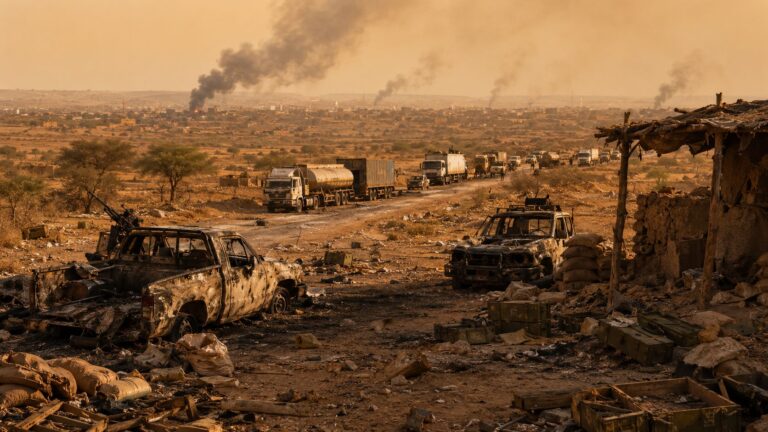
UPDATE: Mali Situation Report – 29. May 2026

By late May 2026, Mali has reached a strategic breaking point. Russia’s Africa Corps has abandoned the entire north, JNIM is choking key supply routes into Bamako, the Islamic State is exploiting the vacuum, and the junta is already looking for new partners in Ankara, Tehran and Beijing. What Moscow once sold as its successful Sahel security model is collapsing under pressure: Kidal has fallen, the capital is being economically squeezed, and the Alliance of Sahel States is facing its first existential stress test. This situation report explains why Mali is not merely burning - but why its breakdown could reshape the security order of West Africa.

Mali Burns, Russia Bleeds

Mali is no longer merely facing an internal security crisis. The coordinated offensive by Tuareg separatists and JNIM, the withdrawal of Russia’s Africa Corps from Kidal, and the growing pressure on Bamako point to a new phase of war in the Sahel. What may look like a French attempt to regain lost influence is, in fact, a far more complex proxy structure: Ukrainian drone expertise, Algerian border depth, French strategic interests, and a Russian security model beginning to fracture in public. This article explains why Mali has become an African secondary front in the wider Russia-West conflict - and why the outcome may reshape the entire western Sahel.