by Michael Hollister
Exclusive published at Michael Hollister on October 14, 2026
3.677 words * about 19 minutes readingtime

Research status: through October 13, 2026
Zelenskyy is openly offering the United States a “diesel deal” of his own – and in doing so, he states his leverage without disguise:
He has influence over whether “these ships sail” and whether “these refineries operate.”
It is left to the reader to imagine exactly what means a country without a blue-water navy and without command authority over Russian industrial facilities might use to exercise that influence.
What Happened in One Week
Between October 09 and October 13, 2026, the U.S. government made 4 decisions or statements in rapid succession, each of which marks a foreign-policy reversal in its own right – and which, taken together, produce a picture no longer consistent with the West’s previous policy toward Russia.
On October 09, after a phone call with Vladimir Putin, Donald Trump announced that Russia would supply large quantities of diesel to the United States and the world market; later that same day, the U.S. Treasury Department suspended the corresponding sanctions by license. On October 10, Trump publicly called for a new Ukrainian president. On October 11, he announced on Truth Social an immediately effective “energy ceasefire” between Russia and Ukraine – one that, as it turned out, neither Kyiv nor Moscow understood to be binding. And in the background, already known for days, talks were underway between Washington and Moscow about an American stake in the Nord Stream pipelines.
None of this is happening in a vacuum, but less than 4 weeks before the U.S. midterm elections on November 03, in a campaign dominated by the cost of living. The national average diesel price in the United States had recently exceeded $6.50 per gallon – a level that hits farmers, truckers, and haulers, precisely the groups Trump explicitly named in his announcement. Anyone trying to understand the 4 developments of this week has to read that domestic political pressure alongside them: It explains the urgency, but not the direction.
It is worth treating these developments not as material for outrage, but as findings: What is documented, what is claimed, and what follows from it? Each strand, taken on its own, is documented and verifiable; only their simultaneity creates the full picture. Four strands that ultimately condense into a single question – how long the man in Kyiv, whom Washington supported yesterday and openly questions today, will remain in office.
First Sanctioned, Then Bought
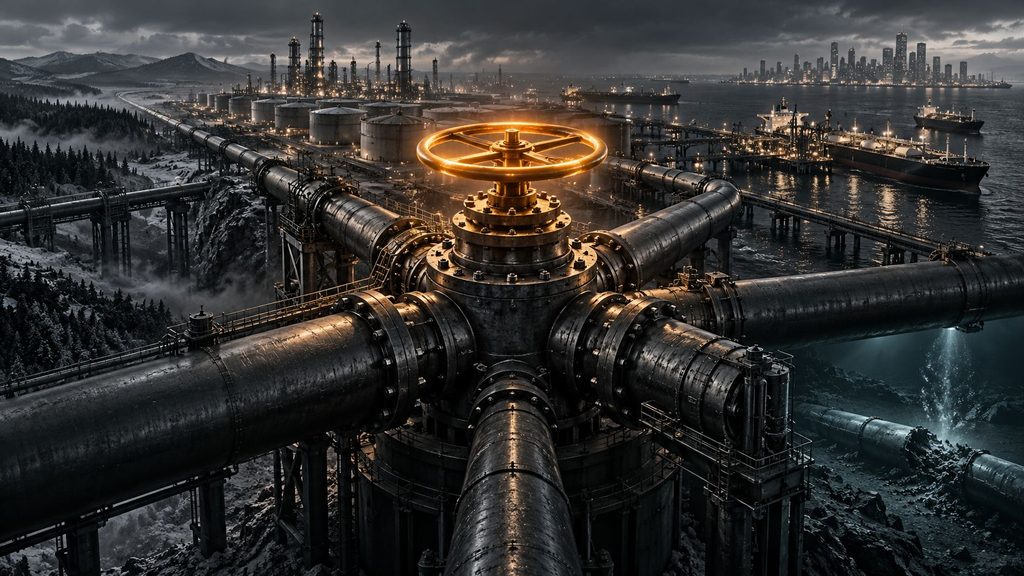
The diesel deal is the best documented of the 4 developments. After speaking with Putin, Trump said Russia would initially make more than 300,000 metric tons of diesel available immediately, another 500,000 metric tons in November, and then 1 million metric tons; in total, he put the potential at around 4.8 million metric tons for the U.S. and global markets. The final and largest tranche is explicitly subject to a production condition – it depends on the state of Russian refineries, which Ukrainian drones have been striking for months. Trump’s announcement and the 4.8-million-metric-ton figure were reported together with the Truth Social wording.
What is remarkable is the stated occasion for the call: According to consistent U.S. reports, the conversation was originally intended to discuss a suspected plague outbreak in Russia – what emerged instead was the most far-reaching energy arrangement between Washington and Moscow since the war began.
Russia’s ability to supply at all is itself the result of a reversal in Moscow: On October 10, the Russian government relaxed the diesel export ban it had kept in place for months and repeatedly extended because of Ukrainian attacks and domestic shortages. Putin’s investment envoy Kirill Dmitriev shared the Finance Ministry’s announcement and said energy cooperation between the 2 countries would benefit the world. According to the International Energy Agency, Russian diesel production has recently fallen by around 30 percent – meaning that the market into which this deal is entering has been shaped by the very Ukrainian strikes Trump now wants stopped.
On October 09, the U.S. Treasury Department’s Office of Foreign Assets Control published General License 135. It lifts the prohibitions under the relevant sanctions regulations for the sale, delivery, unloading, and import of diesel of Russian origin – explicitly including import into the United States – and remains in effect through April 07, 2027. Certain accounts of the Russian Central Bank, the National Wealth Fund, and the Finance Ministry remain excluded; this is therefore not a complete lifting of all sanctions on Russia, but a targeted, temporary exemption. Russia, for its part, relaxed its own diesel export ban on October 10. Specialist sanctions analysis of General License 135 describes the scope and April 07, 2027 expiration.
What is striking about this exemption is its relationship to existing law. Congress banned Russian energy imports by statute as early as 2022. Among other things, that law requires consultation with Congress and a written justification before the ban can be lifted – steps that, according to several senators, did not occur. A second law adds another layer: Only in September 2026, Trump signed a sweeping sanctions law named after the senator who had died in July, providing for 100 percent tariffs against purchasers of Russian oil. The diesel deal came just over a week before Trump was due to impose those tariffs.
The reaction from Congress was correspondingly sharp – and it did not come only from the opposition. A bipartisan group of senators – 7 according to Reuters, 4 of them Republicans; 6 according to the Associated Press – demanded that the administration “immediately reverse course.” They argued that Congress had banned Russian energy imports in 2022 to keep American dollars away from Putin’s war, and that the administration had neither consulted Congress nor provided the legally required justification. Former Vice President Mike Pence called the easing a betrayal of the late senator’s legacy and demanded its reversal; Democrat Elizabeth Warren called it a betrayal of Ukraine. Republican Senator Thom Tillis warned that the deal could be unlawful and put American lives at risk. Richard Blumenthal, a co-author of the sanctions law, said the decision made the United States complicit in Putin’s war. Republican Representative Don Bacon also spoke out: It was time for more sanctions, not fewer. Senate Democratic Minority Leader Chuck Schumer pointed to what he called the real source of the high prices – the war against Iran – and described the Russia deal as a political maneuver. Reuters reported the bipartisan Senate demand that Trump reverse course, while Associated Press reported the “immediately reverse course” demand.
The other side has arguments as well. Treasury Secretary Scott Bessent takes the position that the administration has sufficient legal authority and emphasizes the economic benefit. Republican Senator John Barrasso defended the move as a way to lower prices and interpreted the sanctions law as an additional instrument of pressure against Moscow, not as a constraint on the president. There has so far been no judicial ruling on whether an administrative agency can suspend an explicit federal statute by license. That is the legal core of the issue: A General License suspends sanctions regulations – whether it can also override a statutory import ban is a different question.
Economically, the matter is more sober than the headline numbers suggest. According to Reuters’ calculation, the immediately promised 300,000 metric tons amount to about 2.25 million barrels; the U.S. transportation sector alone consumes around 2.94 million barrels of diesel – per day. The first tranche therefore covers less than 1 day’s demand. Analysts also pointed out that if its refineries are not being hit, Russia exports far more anyway; the supply gain is small, while the benefit to Moscow is substantial because Russia currently needs to clear summer diesel in order to switch to heavier winter and Arctic grades. The short-term market effect was measurable but limited: Oil prices fell initially after the announcement, even though proof of an actual agreement was lacking. Lasting relief at the pump is considered unlikely.
One detail on the margins illustrates the difference between a primary and a secondary source: The Associated Press reported that the license applied only to diesel loaded by October 09 – but the actual license text, according to specialist legal observers, does not contain that restriction. It is a small error with a large effect: It narrows a far-reaching import authorization into what appears to be a harmless grandfathering rule.
Europe Is Told to Open Its Reserves
The diesel deal can only be understood in light of the week that preceded it. Then it was not Russia at the center, but Europe – and the tone from Washington was unmistakable.
At the beginning of October, the U.S. government called on its European allies to release strategic diesel reserves “immediately.” Treasury Secretary Bessent demanded that Europe make additional volumes available at once; Energy Secretary Chris Wright said he was confident Europe would help push down global prices and announced that there would be announcements “from our friends in Europe.” Trump himself raised the possibility of a U.S. export halt on diesel – the pressure point that arrived in Brussels as a threat, even though he never stated it quite so directly. According to an EU official quoted by Politico, Washington presented Europeans with a proposal to release 120 million barrels from national strategic reserves over 180 days; France and Germany in particular, which together hold more than a third of the EU’s strategic diesel reserves, were expected to draw down their stocks. EU states moved into emergency consultations; France floated the release of 50 million barrels of diesel together with a coordinated oil release. EU Trade Commissioner Maroš Šefčovič called any possible U.S. export halt unexpected for Europeans. The irony: At Macron’s meeting with Trump on the sidelines of the UN General Assembly, the French presidency had still denied that any such request had been made at all – within days, the disputed request had become an open pressure campaign, accompanied by a G7 video conference on the global energy situation. Al Jazeera reported Washington’s demand for an “immediate” European reserve release.
How serious the situation was is shown by the Commission’s own finding: An expert group concluded that the EU did not face an immediate supply problem, but did face an affordability crisis. That is an important distinction – the problem is not a lack of diesel, but a lack of affordable diesel. A U.S. record of $6.53 per gallon and new record highs in 12 EU member states marked the pressure point Washington was targeting.
Then, just as Europe had begun moving toward a reserve release, Trump changed course and struck the deal with Putin. From Brussels’ perspective, this created a double imposition: first the pressure to tap its own emergency stocks, then the announcement that Washington would instead buy from Moscow – whose energy exports the EU continues to sanction.
The European response was sharp. EU foreign-policy chief Kaja Kallas said suspending the sanctions would provide Moscow with additional revenue for the war; this was not the time to reduce pressure on Russia, and Europe would not do so. In its response, the European Commission called for a ceasefire protecting energy infrastructure in both Ukraine and Russia – a pointed response to an arrangement limited to refineries. Kallas explicitly noted that a ceasefire confined to refineries could benefit Russia far more than Ukraine, which, according to its own account, has only 1 heavily damaged refinery left. Germany reaffirmed that it would maintain the sanctions course; Finnish Prime Minister Petteri Orpo called the move disappointing. On October 12, EU foreign ministers adopted the largest sanctions package since the war began and added around 1,600 more individuals and entities to the list. AFP reported Kallas’ criticism and the Commission’s call for a bilateral energy-infrastructure ceasefire.

The origin of the high prices, however, does not lie in Ukraine. Since the joint U.S.-Israeli strikes against Iran at the end of February 2026 and the subsequent blockade of the Strait of Hormuz, diesel prices in Europe have doubled according to the Commission, while gas prices have risen by around 140 percent. In March, the 32 members of the International Energy Agency responded with a coordinated release of 400 million barrels of strategic oil reserves – the largest such release in history. Trump nevertheless publicly blamed the high prices on Ukrainian attacks against Russian refineries – an attribution several U.S. senators disputed, pointing instead to the Iran war as the real price driver. That connection is what makes the episode so remarkable: A price shock triggered by one’s own actions is now supposed to be mitigated through a return to Russian energy, while Europe simultaneously continues to insist on the opposite.
The Return of Nord Stream
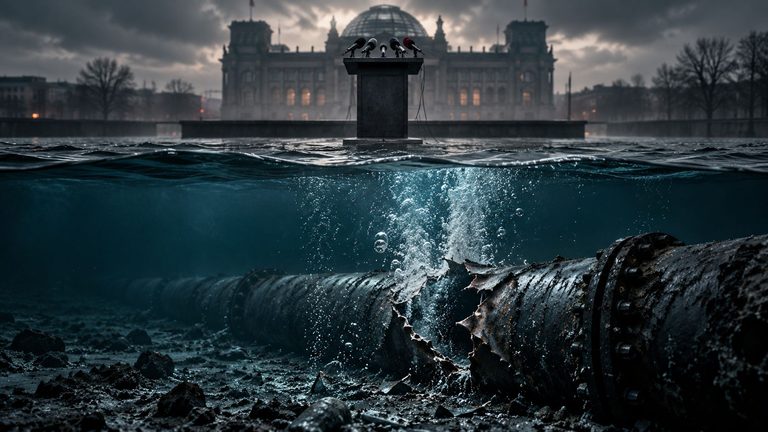
While all of this was unfolding, an issue returned to the agenda that Europe had long considered settled. According to a Reuters investigation published on October 08, based on 5 people familiar with the matter, senior American and Russian representatives are discussing bringing a U.S. investor into the Nord Stream pipelines. On the American side, Trump’s son-in-law and special envoy Jared Kushner is involved; on the Russian side, Putin’s envoy Kirill Dmitriev, head of the state investment fund RDIF. The 2 men have met in Moscow and New York in recent weeks; the same channel is running in parallel with talks about ending the war and about the assets of the Russian company Lukoil. Reuters reporting described the U.S.-Russian discussions over possible American investment in Nord Stream.
The logic is plain to see: An American stake would allow U.S. capital to earn money from the flow of Russian gas to Europe. The idea itself is not new. As early as March 2025, the Financial Times reported that Matthias Warnig, the former head of the Nord Stream 2 operating company and a longtime associate of Putin, was trying to arrange a restart of the pipeline with American investors involved. The issue disappeared, but returned in a broader framework alongside the diesel deal: Kushner is simultaneously pursuing a consortium that would acquire the sanctioned foreign assets of Russian oil company Lukoil. Meduza, citing Reuters, reported the Kushner-Dmitriev channel and the parallel Lukoil discussions.

The White House confirms the structure while denying its current relevance – a familiar pattern. Any deal, a government official said, would have to run through the U.S. International Development Finance Corporation and the Treasury Department and would have to benefit American taxpayers and businesses; most recently, however, there had been “no Nord Stream talks.” A non-denial that does more to confirm the existence of the discussions than to dispel it. That Moscow might care more about these deals than about a rapid end to the war is not malicious insinuation: The heads of 5 European intelligence services told Reuters that Russia does not want to end the war quickly and is deliberately using the talks with Washington to advance business deals.
The obstacles are substantial, legally as well as politically. Nord Stream is sanctioned by both the United States and the EU; restarting it would be illegal. In July 2025, the EU banned all operation and financing of the 2 pipelines. Germany’s Economy Ministry said Russian gas was sanctioned in Europe, alternatives had been found, and Germany had no interest in resuming imports. The Ukrainian government, for its part, criticized Washington for negotiating future economic projects with Moscow while simultaneously presenting itself as a mediator for peace.
And yet Washington is negotiating – which raises a simple but uncomfortable question: Would the United States conduct these talks at all if it believed Europe’s “no” was permanent?
The pipeline ends lie on German soil. This is where European sovereignty rhetoric becomes awkward, because it leads to an uncomfortable alternative. Either the “no” remains in place, in which case it is difficult to explain why a superpower is investing effort in these talks. Or Europe ultimately finds itself on the American path after all and resumes taking Russian gas through Nord Stream – only now with a U.S. investor acting as intermediary. How a Commission would sell such a reversal to its citizens after having elevated the end of Russian gas into a moral principle for years is left to the imagination. There is already movement on the domestic political flank in Germany: The AfD explicitly supports reopening the pipelines. And German shareholders in the operating company reportedly want to retain their stakes in order to preserve German influence should Gazprom sell its share – an indication that not everyone on the German side is keeping the door as firmly shut as the official line suggests. Semafor reported both German resistance and political support inside Germany for reopening Nord Stream.
At this point, care requires a clear boundary. Who destroyed the pipelines in September 2022 has still not been conclusively established. Germany’s federal prosecutors are pursuing a Ukrainian-linked group of suspects; another suspect was arrested in Croatia on August 19, 2026. U.S. responsibility has not been proven and is not alleged here.
Nevertheless, 2 documented events deserve to be recalled and left to the reader to assess. On February 07, 2022, then-U.S. President Joe Biden said beside German Chancellor Olaf Scholz that if Russia invaded, there would no longer be a Nord Stream 2: “We will bring an end to it.” Asked how that would be possible given that the project was under German control, Biden replied that the United States would be able to do it. Reuters reporting preserved Biden’s February 07, 2022 statement that “we will bring an end to it”. And when the pipelines were destroyed in September 2022, Polish member of the European Parliament Radek Sikorski shared an aerial image of the gas plume with the words “Thank you, USA.” People were once visibly pleased that the pipeline had been taken out of play. Now that it fits the concept, discussions are underway about bringing it back into operation. Whoever moved from one position to the other has done so remarkably quietly. That an American stake will actually materialize is pure speculation. That the process will be fascinating to watch is not.
That puts the business deals on the table. What is emerging this week is not a zigzag of isolated episodes, but an ordered grab for energy – first sanctioned, then bought; Europe pressured to release reserves and, just as it begins to do so, Washington turning to Moscow instead; the destroyed pipeline back on the negotiating table. That is one half of the story. The other is about its price: about a ceasefire neither belligerent has confirmed, about a U.S. president putting his Ukrainian partner’s office openly into question before the cameras, and about that partner’s own unmistakable threat. Whoever stands in the way when access to energy becomes a currency of power is finding out these days in Kyiv. That is what Part 2 is about.

About the Author
Michael Hollister
is a geopolitical analyst and investigative journalist. He served six years in the German military, including peacekeeping deployments in the Balkans (SFOR, KFOR), followed by 14 years in IT security management. His analysis draws on primary sources to examine European militarization, Western intervention policy, and shifting power dynamics across Asia. A particular focus of his work lies in Southeast Asia, where he investigates strategic dependencies, spheres of influence, and security architectures. Hollister combines operational insider perspective with uncompromising systemic critique – beyond opinion journalism. His work appears on his bilingual website (German/English) www.michael-hollister.com and in investigative outlets across the German-speaking world and the Anglosphere.
Stay informed without having to work through the daily flood of news – the most important developments and connections summarized for you.
Sources
Diesel Deal and Sanctions Exemption
- Global Sanctions / Peters & Peters – OFAC General License 135 – legal assessment.
https://globalsanctions.com/2026/10/us-general-license-authorises-supply-of-russian-diesel-until-7-april-2027/ - HSF Kramer – OFAC General License 135 – analysis.
https://www.hsfkramer.com/notes/sanctions/2026-posts/ofac-issues-general-license-135-authorizing-transactions-involving-russian-origin-diesel-fuel - Ship & Bunker – U.S. Treasury eases diesel sanctions for six months.
https://shipandbunker.com/news/world/445068-us-lifts-sanctions-on-russian-diesel-for-six-months-after-trump-putin-call - MercoPress – Trump announces 4.8 million metric tons of Russian diesel; Truth Social wording.
https://en.mercopress.com/2026/10/09/trump-says-russia-will-supply-millions-of-tonnes-of-diesel-as-us-eases-sanctions-on-moscow - Associated Press via Boston Globe – Trump strikes deal with Putin; reactions in Congress.
https://www.bostonglobe.com/2026/10/09/nation/trump-russia-diesel-deal/
Congress, Legal Situation, Graham Act
- Reuters via Al-Monitor – Bipartisan senators demand reversal.
https://www.al-monitor.com/originals/2026/10/us-republicans-democrats-want-trump-reverse-course-russia-diesel - CNN via KION – Bipartisan criticism and allegation of legal violation.
https://kioncentralcoast.com/politics/cnn-us-politics/2026/10/11/trumps-us-russia-diesel-deal-draws-bipartisan-criticism/ - Associated Press via PBS NewsHour – Six senators demand an “immediate reversal”.
https://www.pbs.org/newshour/politics/bipartisan-group-of-senators-calls-on-trump-to-reverse-course-on-russian-diesel-plan
U.S. Pressure on European Reserves and the EU Response
- Al Jazeera – U.S. demands “immediate” release of European diesel reserves.
https://www.aljazeera.com/news/2026/10/2/trump-vs-europe-as-us-presses-for-release-of-emergency-diesel-stocks - Al Jazeera – Trump considers export halt; EU emergency talks.
https://www.aljazeera.com/amp/news/2026/10/2/trump-says-us-may-ask-europe-to-release-diesel-reserves - Reuters via ARY News – Europe agrees to release reserves.
https://arynews.tv/europe-agrees-to-release-diesel-stocks-trump-says - AFP via Arab News – Kallas: sanctions easing finances Russia’s war; EU Commission calls for a bilateral ceasefire protecting energy infrastructure.
https://www.arabnews.pk/world/eu-says-lifting-diesel-sanctions-gives-russia-revenues-to-wage-war-3003804 - Ground News – EU adopts largest sanctions package since the war began.
https://ground.news/article/eu-condemns-trump-putin-deal-on-diesel-supplies
Energy Ceasefire
- Times of Israel – Trump announces energy ceasefire; Zelenskyy says it is “news for me”.
https://www.timesofisrael.com/trump-says-russia-and-ukraine-reached-energy-ceasefire-zelensky-news-to-me/ - Ukrainska Pravda / Barak Ravid – Zelenskyy was not informed; Axios quote.
https://www.pravda.com.ua/eng/news/2026/10/11/8057487/ - Orissa Post – No Kremlin confirmation; September precursor.
https://www.orissapost.com/?p=900547
Trump Against Zelenskyy, Miami Talks
- Kyiv Post – Trump: “Time for a new president”.
https://www.kyivpost.com/post/86697 - Axios – Diesel deal after Zelenskyy’s refusal; intelligence threat.
https://axios.com/2026/10/10/trump-zelensky-putin-diesel-deal-war - Reuters via Malay Mail – Zelenskyy says Ukraine ready to halt refinery strikes in exchange for mutual de-escalation.
https://www.malaymail.com/amp/news/malaysia/2026/10/11/zelensky-says-ukraine-ready-to-halt-refinery-strikes-if-russia-stops-hitting-energy-grid/238718
Zelenskyy’s Warsaw Statement
- European Pravda – Zelenskyy: U.S. should make a “diesel deal” with Ukraine; wording on ships and refineries.
https://www.eurointegration.com.ua/eng/news/2026/10/12/7247469/ - Ukrainska Pravda – Warsaw speech, full wording.
https://www.pravda.com.ua/eng/news/2026/10/12/8057585/index.amp - Wikipedia – Ukraine in the 2026 Iran war (Ukraine has attacked ships since late July 2026).
https://en.wikipedia.org/wiki/Ukraine_in_the_2026_Iran_war
Nord Stream
- Reuters via Cyprus Mail – U.S.-Russian talks over a U.S. investor in Nord Stream.
https://cyprus-mail.com/2026/10/08/us-and-russia-discuss-american-investment-in-nord-stream-pipelines - Meduza, citing Reuters – Kushner-Dmitriev, White House non-denial, Lukoil.
https://meduza.io/en/news/2026/10/08/us-russia-discuss-possibility-of-selling-gas-to-europe-via-nord-stream - Semafor – AfD support, German opposition.
https://www.semafor.com/article/10/08/2026/us-russian-officials-discuss-nord-stream-investment-report - Reuters via Gulf News – Biden, February 07, 2022: “We will bring an end to it.”
https://gulfnews.com/world/americas/biden-pledges-end-to-nord-stream-2-if-russia-invades-ukraine-1.1644284296684 - Deutsche Wirtschafts Nachrichten – Sikorski tweet “Thank you, USA,” September 27, 2022.
https://deutsche-wirtschafts-nachrichten.de/700420
Context: Price Drivers, Bottlenecks, Manpower
- AFP via Malay Mail – U.S. military operation against Maduro; U.S. oil companies move toward Venezuela, January 03, 2026.
https://www.malaymail.com/news/world/2026/01/04/trump-says-us-oil-firms-to-head-into-venezuela/204260 - Al Jazeera – Houthis take control of Bab el-Mandeb, September 2026.
https://www.aljazeera.com/news/2026/9/11/houthis-take-control-of-yemens-red-sea-coast-key-shipping-route - Berliner Zeitung – Merz asks Zelenskyy to keep young men in Ukraine.
https://www.berliner-zeitung.de/news/bundeskanzler-merz-fordert-junge-maenner-auf-in-der-ukraine-zu-bleiben-li.10005547
© Michael Hollister – All rights reserved. Redistribution, publication or reuse of this text requires express written permission from the author. For licensing inquiries, please contact the author via www.michael-hollister.com.