
by Michael Hollister
Exclusive published at Michael Hollister on May 03, 2026
4.932 words * 26 minutes readingtime
Part 1 read here:
Israel: The System Behind the Bars – Part 1

De Facto State Policy
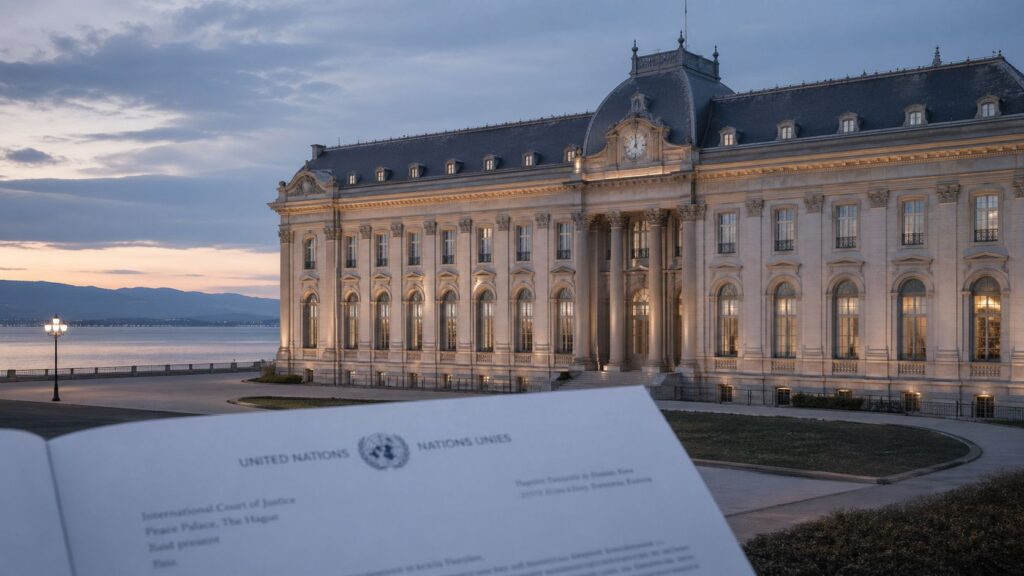
Geneva, November 11, 2025. Peter Vedel Kessing, the Danish jurist serving as Country Rapporteur of the UN Committee against Torture for Israel, addressed the Israeli delegation and spoke a sentence that, in 34 years of Israeli adherence to the UN Convention against Torture, had never been spoken in this form before: the Committee was deeply appalled by the large number of alternative reports describing what appeared to be systematic and widespread torture and inhuman treatment of Palestinians, including children. And then: the reports indicated that torture had become a deliberate and widespread tool of state policy, employed across all legal, administrative, and operational systems – from arrest through interrogation to detention.
The Israeli delegation, led by Justice Ministry Director General Itamar Donenfeld and Israel’s Permanent Representative to the UN Office at Geneva, Daniel Meron, rejected the assessment. Meron labeled the allegations disinformation. Donenfeld reaffirmed Israel’s “full and unwavering commitment” to the Convention and called on the Committee to remain anchored in facts and law rather than yielding to what he described as anti-Semitic propaganda.
Two weeks later, on November 25, 2025, the Committee adopted its concluding observations. They were published on December 22, 2025, under the document number CAT/C/ISR/CO/6. What they contain is sharper than what Meron and Donenfeld had tried to forestall in Geneva.
What the Committee against Torture Is – and What It Is Not
Anyone seeking to assess the weight of CAT/C/ISR/CO/6 must first understand the body that produced it.
The UN Committee against Torture is not a criminal court. It does not pronounce verdicts of guilt against individuals. It cannot impose sanctions, order arrests, or compel prosecution. It is a treaty body – established under the 1984 UN Convention against Torture, composed of ten independent experts who serve in their personal capacity, not as government representatives. Its mandate is to monitor implementation of the Convention by its 174 states parties, including Israel since 1991. The 83rd session, which reviewed Israel, was the first since 2016 – a gap of nearly a decade.
The procedure follows clearly defined steps. States parties submit periodic reports on their implementation of the Convention. Civil society organizations may submit parallel alternative reports. The Committee conducts a public dialogue with the state delegation – questions, answers, and follow-up questions over two days of session. At the end, it adopts its concluding observations: findings, concerns, and recommendations addressed to the state. For certain priority recommendations, it sets deadlines for follow-up reporting.
This is not a soft mechanism. Concluding observations issued by a UN treaty body are not non-binding opinions. They are the official international assessment of a state’s treaty compliance by the UN body charged with that task. They feed into customary international law, are cited by international courts – including the International Court of Justice – and form the basis for subsequent reviews. A state that systematically ignores recommendations thereby documents to the international community its conscious failure to fulfill treaty obligations. Israel has done this twice already: neither the recommendations of 2009 nor those of 2016 produced any legislative action. The Committee notes this explicitly in its current observations.
At the same time, the Committee is not an investigative body. It relies on reports, documents, and dialogue with the state. It does not conduct on-site investigations of its own and does not make criminal-court findings on individual cases. What it does is assess the overall situation on the basis of all available information and articulate the conclusions it draws. That is precisely what makes the present document significant.
The Procedural Chain: From NGO Submission to the Geneva Hearing Room
Part 1 of this series described the institutional starting point: the five Israeli human rights organizations that on October 13, 2025, submitted a joint filing to the Committee – the Public Committee Against Torture in Israel, Adalah, HaMoked, Physicians for Human Rights Israel, and Parents Against Child Detention, supported by the World Organisation Against Torture. That submission is the starting point of an institutional chain that had not occurred in this form since 2016.
What unfolded over the two session days in Geneva is documented in the public meeting record and provides the reader with something pure document analysis cannot deliver: the direct collision of two positions under conditions in which both sides must explain why the Committee should believe them rather than the other.
Kessing put a question to the Israeli delegation that distilled the entire proceeding to its core: five alternative, reliable institutions had repeatedly reported to the Committee that Palestinians were subjected to abuse and torture during interrogations – including tightly locked handcuffs, urination on detainees, humiliation, and denial of religious rights. Israel had disputed this in the chamber that day. Why should the Committee not believe the reports received from five alternative and reliable institutions?
The delegation’s response came from several directions. Donenfeld reaffirmed Israel’s full commitment to the Convention and pointed to the situation following October 7 – a day, in his words, of unimaginable horror that tore apart every boundary of law and morality. The Committee, he said, must condemn Hamas and use all means within its mandate to demand the release of the hostages. Ambassador Meron stated that Israel rejected the claim of systematic and widespread abuse and torture. In the exceptional case of an individual breaking the law, that person needed to be held to account. Treating those exceptional cases as systematic, he argued, was false.
The delegation also brought hostages to Geneva. Keith and Aviva Siegel, residents of Kibbutz Kfar Aza who had been held in Gaza for 51 days, gave testimony before the Committee about what they had endured – hunger, threats, inadequate water, systematic abuse. Kessing responded: the Committee was aware of the consistent and well-documented reports of torture and war crimes committed by Hamas against Israeli soldiers and civilians. Neither international humanitarian law nor international human rights law, he stressed, was based on reciprocity. Hamas crimes would be addressed separately with the State of Palestine.
On the question of investigation mechanisms – a central point of contention – the Israeli delegation stated that the Israel Prison Service maintained a zero-tolerance policy toward mistreatment. All personnel received corresponding training. In cases of death in custody, a commission of inquiry was established immediately. A new division for alternative incarceration had been created to expand the use of non-custodial measures. Kessing pressed further: how many supervision hours had been conducted in ISA interrogation rooms in 2024 and 2025? How often had supervisors found that detainees had been exposed to torture or inhuman treatment? How often had cases been referred to the Inspector for Complaints for investigation and possible prosecution? The delegation provided no concrete numbers in response.
What the meeting record documents goes beyond the central confrontation. The Committee posed a series of further specific questions to the delegation, to which Israel responded either evasively or not at all.
On the question of juveniles – the Committee was deeply concerned by reports of a significant rise in the number of Palestinian children deprived of liberty, many held in administrative or prolonged pre-trial detention – it asked: how did Israel ensure that minors in administrative detention were protected against torture or violent interrogations? What guaranteed that children had regular and confidential access to lawyers, medical care, and family contact? For minors detained under the Unlawful Combatants Law: how were procedural safeguards and conditions of detention aligned with international standards? Here too: no concrete numbers from the Israeli side, no explanation of how the stated guarantees were ensured in practice.
Another moment in the chamber bears recording. Kessing articulated a foundational principle that cut directly against Israel’s entire line of argument: neither international humanitarian law nor international human rights law was based on reciprocity. In doing so, the Committee rejected the implicit logic conveyed by the presence of the Siegel hostages and Israel’s invocation of the Hamas attack – namely, that Israel’s conduct was to be evaluated in light of the adversary’s crimes. The Convention recognizes no such balancing. Article 2 paragraph 2 is unambiguous: no exceptions, under any circumstances.
Donenfeld’s closing statement in Geneva: throughout the dialogue, Israel had demonstrated its full commitment to the Convention through facts, data, legal safeguards, and robust oversight mechanisms.
What the Committee Itself Says: Paragraph 28 in Full
The concluding observations in CAT/C/ISR/CO/6 comprise 57 paragraphs covering a broad spectrum of topics – from the criminalization of torture as a distinct offense, through administrative detention and conditions in detention facilities, to non-refoulement, the death penalty, and the protection of journalists and human rights defenders. The document contains more than 50 individual findings and recommendations. Its center of gravity is paragraph 28.
Three elements of this sentence demand precise interpretation.

First: whose qualification is this? The Committee does not say that NGOs allege a de facto state policy. It says that reports indicate one – and thereby adopts that qualification as its own finding in its official document. That is a different register of statement. The difference is comparable to that between “witnesses claim X fired the shot” and “the court finds that X fired the shot” – bearing in mind that the Committee is not a criminal court, but as a UN treaty body it carries a different institutional authority than the NGOs whose reports it cites.
Second: what is actus reus? It is a legal term of art designating the external conduct element of a crime – the objective constituent, without the subjective element of intent. The finding that something forms part of the actus reus of genocide is among the sharpest qualifications under international law that a UN body can issue without itself being a criminal court. The Committee does not adopt this formulation as its own finding but as a reference to the findings of the Independent International Commission of Inquiry – a separate UN body. But it adopts the reference. That carries weight.
Third: what follows from this in the document? Paragraph 28 enumerates in detail the specific forms of mistreatment reported, which the Committee classifies as part of this de facto state policy: repeated severe beatings, dog attacks, electrocution, waterboarding, prolonged stress positions, sexual violence, threats against detainees and their family members, insults to personal dignity and humiliation such as being made to act like animals or being urinated on, systematic denial of medical care, excessive use of restraints in some cases resulting in amputation, the performance of surgery without anesthetic, exposure to extreme cold or heat including boiling water, denial of adequate nutrition and water, deprivation of clothing, sleep, and access to hygiene facilities, deprivation of light, the use of loud music, denial of the right to freely practice one’s religion, and the forcible use of hallucinogenic medication – all in a discriminatory manner against Palestinians, for purposes including the extraction of information or confessions and as a means of collective punishment.
The breadth of this list is not a rhetorical device. It is the result of a process in which the Committee evaluated all submitted reports, the state’s response, and the public dialogue. The finding that all these methods have been documented and reported and that they indicate a de facto state policy is the formal conclusion of that evaluative process.
Israel’s Position: Complete and Fair
Sound reporting requires a full presentation of Israel’s position. What the delegation argued in Geneva is on the record – and it amounts to more than mere rejection.
Israel disputes that the allegations describe a system. Ambassador Meron labeled the accusations disinformation and stressed that Israel was committed to its Convention obligations in accordance with its moral values and principles, even amid the challenges posed by a terrorist organization. In exceptional cases where individuals broke the law, they had to be held to account. That, he argued, was the difference between an individual case and a system.
Israel pointed to the security situation. The October 7, 2023, attack is consistently invoked by the Israeli side as the starting point of any discussion of detention conditions – a context, Israeli officials argue, that explains exceptional measures without justifying them. Donenfeld called on the Committee to condemn Hamas and demand the release of the hostages. The presence of Aviva and Keith Siegel in Geneva was no accident: they were brought to make plain to the Committee what Israeli citizens had endured, and thereby implicitly to set the context in which Israeli security measures were to be evaluated.
Israel disputed the applicability of the Convention to the Occupied Palestinian Territory – a position Israel has held for decades and that the Committee has rejected for just as long. Meron stated explicitly at the close of the session that Israel maintained that the Convention’s reference to “territory under its jurisdiction” pertained to its sovereign territory.
On investigation mechanisms, Israel pointed to existing structures: the Inspector for Complaints against Israel Security Agency Interrogators for ISA-related complaints, the Military Police Criminal Investigation Division for the military, and the National Prison Wardens Investigation Unit for the IPS. All these mechanisms exist. What Israel did not provide in Geneva: concrete figures on how often these mechanisms had actually led to indictments over the past two years. The Committee recorded in its concluding observations what it does know: despite widespread torture allegations since October 7, 2023, the Inspector has not initiated a single criminal prosecution. The military, in two years of war, has secured a single conviction for mistreatment – a sentence of seven months in custody, which the Committee assessed as not commensurate with the gravity of the offense.
The Committee acknowledges its condemnation of the Hamas attack expressly. In its concluding observations, it speaks of a “reprehensible loss of life” and offers condolences to the State of Israel. At the same time, it underscores what Article 2, paragraph 2 of the Convention prescribes: the prohibition against torture is absolute. No exception for the security situation, armed conflict, or domestic emergency. That is not the Committee’s opinion. It is the treaty text Israel signed in 1991.
What the Committee Demands: Four Priorities, One Deadline
The Committee has called on Israel to report by November 28, 2026, on the implementation of four specific recommendations. These follow-up priorities mark what the Committee identifies as the most urgent obligations to act.
First: criminalization of torture as a distinct offense, together with a public statement at the highest level of state authority that torture will not be tolerated and that those responsible will be held to account. The Committee here repeats demands it has already made of Israel in 2009 and 2016. Israel has not legislated in either case. Justice Minister Yariv Levin stated openly in August 2023 that the government had seen no occasion to address the matter. That is the state of affairs the Committee identifies, 34 years after Israel ratified the Convention, as the first item requiring action.
Second: an end to incommunicado detention and enforced disappearance. The Committee calls on Israel to end incommunicado detention immediately, to clarify the fate and whereabouts of all detainees, and to investigate, prosecute, and punish all persons who order, authorize, or otherwise facilitate enforced disappearance. That demand targets directly the Unlawful Combatants Law and its practice: tens of thousands of Palestinians from Gaza have been held since October 2023 without notification of families, without access for the International Committee of the Red Cross (ICRC), and without contact with legal counsel.
Third: access to healthcare in detention. The Committee calls on Israel to ensure that all detainees have access to adequate medical care, including timely treatment, independent medical accompaniment, and all necessary medications, as well as the prevention, early detection, and treatment of infectious diseases. The scabies epidemic that, in September 2025, had affected an estimated 25 percent of all Palestinians in IPS security wings is mentioned explicitly in the document.
Fourth: cessation of all practices in the Occupied Palestinian Territory that amount to torture or inhuman treatment. Immediate access for humanitarian aid and aid organizations to Gaza; independent investigation of all human rights violations in the context of occupation and armed conflict; prosecution of those responsible, including superiors who knew or should have known that their subordinates had committed or were likely to commit such crimes.

Beyond these four priorities, the document contains further central demands: the establishment of an independent, impartial ad hoc commission of inquiry to investigate all torture allegations in the context of armed conflict; immediate ICRC access to all places where protected persons are present; the return to families of the bodies of all Palestinians who died in Israeli custody; and – strikingly specific – the provision of detailed information about the situation and any criminal proceedings concerning Major General Yifat Tomer-Yerushalmi, who was arrested in November 2025 for allegedly authorizing the release of video footage showing an assault by Israeli soldiers on a Palestinian detainee at the Sde Teiman detention center.
Not Alone: The International Legal Constellation Since October 2023
The CAT proceeding does not stand in isolation. It is part of an international legal constellation that has gained considerable density and sharpness since October 2023 – one that lends the Committee’s findings a weight they would not have on their own.
The International Court of Justice has, in two advisory opinions within 15 months, addressed central legal questions about Israel’s conduct in the Occupied Palestinian Territory. In July 2024, the ICJ found Israel’s continued presence in the occupied territories unlawful and called for its prompt termination – a finding that goes well beyond the law of torture and reaches the entire structure of the occupation. In October 2025, the ICJ in a further advisory opinion reaffirmed Israel’s obligations regarding the activities of international organizations – including UN agencies – in the occupied territories. The CAT Committee cites both opinions in its concluding observations expressly as part of the legal framework within which its own recommendations are to be understood.
The International Criminal Court issued arrest warrants in November 2024 against Israeli Prime Minister Benjamin Netanyahu and former Defense Minister Yoav Gallant. The charges include the use of starvation as a method of warfare and other acts classified as crimes against humanity. Israel does not recognize the ICC’s jurisdiction. That changes nothing about the legal existence of the warrants – they obligate all 124 ICC member states to arrest the named individuals upon entry. It is no coincidence that the Israeli legislative initiative criminalizing cooperation with the ICC – which the Committee mentions explicitly in its observations – picked up momentum immediately after the warrants were issued.
The Independent International Commission of Inquiry on the Occupied Palestinian Territory – a separate UN body established by the Human Rights Council – has determined in a legal analysis paper that Israel’s conduct in Gaza amounts to war crimes and crimes against humanity and forms part of the actus reus of genocide. That is the source of the sharpest sentence in paragraph 28 of the CAT document. The Committee did not make this determination itself – it cited the determination and integrated it into its own findings. Two independent UN bodies have thereby used the same legal figure to qualify Israel’s conduct.
The UN Special Rapporteur on the situation of human rights in the Palestinian territories has, in her report to the Human Rights Council, likewise used the term torture and classified detention conditions as part of a systematic pattern. Several UN special procedures have during this period issued communications on individual cases – including Sde Teiman, Ofer, and ISA interrogation facilities – and requested responses from Israel.
What this constellation reveals is not a single instance leveling an accusation but an increasingly dense network of international legal bodies arriving, independently and under different mandates, at similar qualifications. The CAT Committee is the most recent link in this chain – but not the only one. And every additional link makes it harder to dismiss the overall picture as a coordinated political campaign against Israel, as Israeli authorities regularly do. Ten independent experts in Geneva, judges of the ICJ in The Hague, ICC prosecutors, and UN special rapporteurs share no common political agenda. They share common legal documents – and the same factual record.
The NGO infrastructure that made this documentation possible in the first place is itself under pressure. The Committee expresses concern in its concluding observations specifically about the proposed Law on Associations, which would for three years bar NGOs receiving foreign government funding from publicly criticizing ministries and impose tax penalties of up to 46 percent on foreign donations. And about the legislation criminalizing cooperation with the ICC, which provides for sentences of up to life imprisonment. Both initiatives target directly the organizations that supplied the data base for the CAT proceeding – and any future proceedings of this kind.
Three Levels: What Is Established, What Is Demanded, What Remains Open
Sound journalistic interpretation requires distinguishing three levels – not as a softening of the finding, but as a precision that makes it sustainable. Anyone who blends these levels becomes vulnerable to attack. Anyone who keeps them clean does not.
Level one: what the UN proceeding has established.
The review took place. The NGO submissions were taken up as formal procedural documents and are part of the official UN record. The Israeli delegation had two full days of session to present its position – it used that opportunity, and Israel raised concrete objections. The Committee made its findings on the basis of all available information: NGO reports, the state report, the public dialogue, and its own evaluation. The result is CAT/C/ISR/CO/6, published December 22, 2025. No Israeli rejection alters that – not legally, not institutionally, not factually.
What is also established: the five submitting organizations are not campaign groups without field operations. PCATI has existed since 1990, HaMoked for 37 years, Adalah for nearly 30 years, PHRI for decades. Their documentation methodology – witness statements, prison visits, legal work, freedom-of-information requests, court records – meets the standard recognized as legally usable in international proceedings. The Committee characterized these sources as “five alternative and reliable institutions” – that is no courtesy phrase but a qualification with procedural significance. Kessing put the question directly to the Israeli delegation in the chamber: why should the Committee not believe these sources? A persuasive answer was not forthcoming.
What is finally established: Israel did not implement the Committee’s 2009 recommendations. Nor those of 2016. The Committee notes this expressly in its current observations. That is not background noise – it is part of the evaluative basis for assessing whether Israel, as a state, demonstrates a structural willingness to comply with its treaty obligations.
Level two: what the Committee has demanded.
Four priority measures, with a reporting deadline of November 28, 2026: criminalization of torture as a distinct offense with a public statement at the highest level; an end to incommunicado detention and all practices amounting to enforced disappearance; access to adequate healthcare for all detainees; cessation of all practices in the Occupied Palestinian Territory that amount to torture or inhuman treatment.
Beyond these – not as follow-up priorities, but as full recommendations in the document: establishment of an independent ad hoc commission of inquiry into all torture allegations in the context of armed conflict; immediate ICRC access to all detention sites; return to families of the bodies of all Palestinians who died in Israeli custody; detailed reporting on the situation and any prosecution of Major General Tomer-Yerushalmi; establishment of a whistleblower protection mechanism. In total, more than 50 individual findings and recommendations in a document Israel had in hand by the end of 2025.
What distinguishes these demands from earlier ones: they are more concrete, more measurable, and tied to an explicit follow-up deadline. The Committee made the same demands in 2009 and 2016 – without a deadline, without measurable outcomes. The current version contains both. That does not raise accountability pressure dramatically, but it closes the back door of treating recommendations as non-binding suggestions.
Level three: what the Committee did not do – and what that means.
The Committee did not establish individual criminal guilt. It did not establish genocide – it referenced the finding of another UN body, the Independent International Commission of Inquiry, and integrated that finding into its own. It did not impose sanctions, because it cannot. It did not order prosecutions, because that is not its mandate.
The qualification of a de facto state policy of organized and widespread torture is the Committee’s own assessment, based on the available reports. It is not a criminal-court finding. Nor is it merely an opinion. It is what a UN treaty body, after a formalized review process – with state participation, with the right to respond, with public dialogue – writes as its conclusion in an official document. That carries a specific, clearly defined institutional weight: more than an NGO report, less than a criminal verdict, comparable to what international courts treat as the factual finding of an independent expert commission.
What this means in practice: states that ignore CAT recommendations do not do so without consequence in a legal vacuum. They thereby document their failure to fulfill treaty obligations to an international community that reads the same documents. ICC prosecutors read them. ICJ judges read them. Governments deciding on weapons deliveries, trade relations, or diplomatic positions read them – or ought to. That is the actual operative mechanism of concluding observations: not coercion, but documentation that can be – and is – used in other proceedings.
The precise formulation that does full justice to this finding: the UN Committee against Torture – the treaty body charged with monitoring the UN Convention against Torture – has, after a public dialogue with Israel in which Israel rejected all allegations as disinformation, found that reports from five reliable Israeli human rights organizations and from further UN bodies indicate the application of a de facto state policy of organized and widespread torture, gravely intensified since October 7, 2023. It has called for independent investigations, prosecutions, structural remedies, and immediate protective measures, and set a 12-month deadline. Israel has rejected the assessment. The international legal constellation – ICJ, ICC, Commission of Inquiry, UN Special Rapporteurs – points in the same direction.
What Comes Next
The proceeding is not concluded. By November 2026, Israel will have to report on what it has undertaken with respect to the four priority recommendations. The Committee will examine that report. Based on its assessment, it can initiate follow-up proceedings, activate the procedure under Article 20 of the Convention – a deeper inquiry – or formulate further recommendations.
What happens in this 12-month window is not predetermined. Israel did not respond to earlier Committee recommendations – in 2009, in 2016 – and the international response remained limited. At the same time, the constellation today is different: ICC arrest warrants exist, ICJ advisory opinions accumulate, several UN bodies have independently arrived at similar qualifications, and the documenting civil society stands under legislative pressure that is itself the object of international attention.
Whether this generates a different dynamic than in the past is a question the coming months will answer.
What the Palestinian detainees in Sde Teiman, Ofer, Ktzi’ot, Megiddo, and the ISA interrogation facilities are meanwhile experiencing is not an international proceeding. It is their daily life. Documented, named, classified – and, to date, protected by a system that, according to the finding of the responsible UN treaty body, is itself the problem.
This is part 2 of a two-part series. Part 1 – “The System Behind the Bars: Israel’s Detention Architecture“ – has been published on www.michael-hollister.com.
Michael Hollister
is a geopolitical analyst and investigative journalist. He served six years in the German military, including peacekeeping deployments in the Balkans (SFOR, KFOR), followed by 14 years in IT security management. His analysis draws on primary sources to examine European militarization, Western intervention policy, and shifting power dynamics across Asia. A particular focus of his work lies in Southeast Asia, where he investigates strategic dependencies, spheres of influence, and security architectures. Hollister combines operational insider perspective with uncompromising systemic critique – beyond opinion journalism. His work appears on his bilingual website (German/English) www.michael-hollister.com, at Substack and in investigative outlets across the German-speaking world and the Anglosphere.
Sources
- Committee against Torture, Concluding Observations on the sixth periodic report of Israel, CAT/C/ISR/CO/6, adopted November 25, 2025, published December 22, 2025 – https://www.ecoi.net/en/file/local/2134602/G2520538.pdf
- OHCHR / UN Geneva Meeting Summary – Israel before the Committee against Torture, November 11–12, 2025 – https://www.ungeneva.org/en/news-media/meeting-summary/2025/11/examen-disrael-au-cat-les-mesures-de-prevention-de-la-torture
- OMCT: Israel – CAT warns of systematic torture and ill-treatment of Palestinians, incommunicado detention and impunity, December 4, 2025 – https://www.omct.org/en/resources/news/israel-cat-warns-of-systematic-torture-and-ill-treatment-of-palestinians-incommunicado-detention-and-impunity
- Times of Israel: Israel grilled at UN over reports claiming systematic and widespread torture of Palestinians, November 13, 2025 – https://www.timesofisrael.com/israel-grilled-at-un-over-reports-claiming-systematic-and-widespread-torture-of-palestinians/
- Adalah: UN Committee Against Torture – Israel Appears to Pursue a Deliberate Policy of Torture and Collective Punishment, December 1, 2025 – https://www.adalah.org/en/content/view/11445
- PCATI, Adalah, HaMoked, Physicians for Human Rights Israel, Parents Against Child Detention (OMCT): NGO Submission to the UN Committee against Torture, October 13, 2025 – https://tbinternet.ohchr.org/_layouts/15/TreatyBodyExternal/DownloadDraft.aspx?key=NZZGCnrqFt6Z6k06NOGPmGw88HLLKnpbeYMRgaWQ4x0xyWsK8eqeNkD0PZ4S7QDB
- OHCHR Treaty Body Database – 83rd Session, Committee against Torture – https://tbinternet.ohchr.org/_layouts/15/treatybodyexternal/SessionDetails1.aspx?Lang=en&SessionID=2844
- ECOI – Concluding Observations Israel, CAT/C/ISR/CO/6, document entry – https://www.ecoi.net/en/document/2134602.html
- UN Convention against Torture (UNCAT), full text – https://www.ohchr.org/en/instruments-mechanisms/instruments/convention-against-torture-and-other-cruel-inhuman-or-degrading
- Independent International Commission of Inquiry on the Occupied Palestinian Territory – Legal Analysis, actus reus of genocide – https://www.ohchr.org/en/hr-bodies/hrc/co-israel/index
© Michael Hollister – All rights reserved. Redistribution, publication or reuse of this text requires express written permission from the author. For licensing inquiries, please contact the author via www.michael-hollister.com.
Newsletter
🇩🇪 Deutsch: Verstehen Sie geopolitische Zusammenhänge durch Primärquellen, historische Parallelen und dokumentierte Machtstrukturen. Monatlich, zweisprachig (DE/EN).
🇬🇧 English: Understand geopolitical contexts through primary sources, historical patterns, and documented power structures. Monthly, bilingual (DE/EN).