
by Michael Hollister
Exclusive published at Michael Hollister on April 26, 2026
4.880 words * 26 minutes readingtime
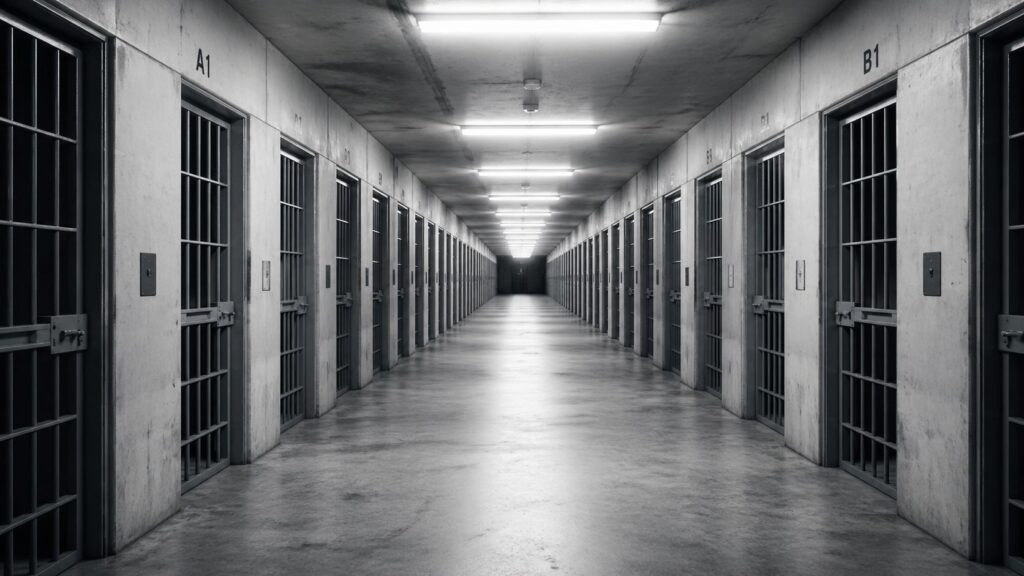


Israel’s Detention Architecture
One number worth knowing: 96.8 percent. That is the confession rate in interrogations of Palestinian security detainees in Israel when preceded by questioning from the Israel Security Agency – known as Shin Bet or Shabak. Without ISA involvement, the same rate stands at 64.8 percent. The difference between the two figures is 32 percentage points. It has a name, even if Israeli official statements rarely use it: “necessity interrogation.” What happens during these interrogations is the subject of one of the most comprehensive international documentation processes ever conducted on a single state.
This article does not reconstruct a single event. It describes a system: the legal infrastructure, the detention sites, the protection gaps, and the mechanisms that ensure none of it carries criminal consequences. The foundation is exclusively primary sources – among them a formal submission to the UN Committee Against Torture by five Israeli human rights organizations with a combined total of more than 100 years of field experience, the Committee’s own concluding observations, and figures validated by the UN Office of the High Commissioner for Human Rights. Part two of this series addresses the international review process and its outcome separately.
A Legal Framework Designed to Thin Out Protection
Israel ratified the UN Convention Against Torture in 1991. Since then, the obligation to incorporate torture as a standalone criminal offense into domestic law has gone unfulfilled for 34 years. That is not an oversight. It is a decision, actively maintained through deliberate refusal.
In August 2023 – before October 7 – Justice Minister Yariv Levin responded to a parliamentary question from Knesset member Aida Touma-Sliman: “The current government has had no reason to address this matter.” In July 2025, Touma-Sliman introduced a private member’s bill against torture in the Knesset. The coalition refused to support it. The vote was postponed by four months. An inter-ministerial working group that, according to the state’s own submission to the UN Committee, has been drafting relevant legislation since at least 2015, has produced no legislative progress to date.
The absence of a specific prohibition on torture in Israeli law is not merely a formal gap. It has immediate practical consequences: existing criminal provisions that Israel points to carry maximum sentences of three years – not proportionate to the gravity of torture under international standards. They are subject to statutes of limitations that contradict the absolute character of the prohibition against torture. And they do not identify the specific purpose of torture – extracting information, intimidation, punishment – as an aggravating factor. This gap is not abstract. It is the reason why more than 1,450 complaints about torture in ISA interrogations have been filed since 2001 and not a single one has resulted in an indictment.
Into this framework step three legal instruments that, in combination, produce a detention system largely shielded from external oversight.
Administrative detention – imprisonment without charge, without trial, on the basis of secret evidence inaccessible to the detainee – has been a tool in Israel since the state’s founding, applied almost exclusively against Palestinians. The statistics are unambiguous: in March 2023, the number of administrative detainees exceeded 1,000 for the first time in 17 years. Since October 7, 2023, the figure exploded further. In September 2025, 3,577 Palestinians were held in administrative detention – 30 percent of all detainees classified as security prisoners, a 30-year record. Among them were 147 minors as of June 2025.
Detention orders are issued on the basis of classified information that neither detainees nor their lawyers can access. Judges themselves have acknowledged in interviews that they lack the tools to assess the reliability of this intelligence. An analysis of all 55 Supreme Court rulings on administrative detention in 2021 found that in not a single case was detention overturned. Khalida Jarrar – a member of the Palestinian parliament and human rights activist – spent more than a year in administrative detention following her arrest in December 2023, six months of it in solitary confinement.
In November 2024, the Defense Ministry ruled that administrative detention would no longer be applied to Jewish Israeli settlers – it was “inappropriate for Israel to take such severe measures against settlers,” as the official rationale stated. A petition filed immediately afterward by a Palestinian citizen of Israel challenging his own administrative detention was rejected by the Supreme Court. The instrument is what it has always been structurally: one reserved for Palestinians.
The Unlawful Combatants Law – enacted in 2002 – creates a legal category that does not exist in international law. It strips detainees of both prisoner-of-war status and civilian protection under humanitarian law by constructing a third category that triggers neither set of protections. The UN Special Rapporteur on the promotion and protection of human rights and fundamental freedoms while countering terrorism concluded in his analysis that Israel had thereby “sacrificed detainee rights to administrative convenience and reduced accountability of its forces for violations of international law.”
Since October 7, 2023, this law has been applied on a mass scale and, according to the NGOs’ own accounts, without differentiation. In September 2025, 2,662 individuals were being held as “unlawful combatants.” More than 4,000 Palestinians from Gaza have been detained under this framework since October 2023, including demonstrably civilians: an 82-year-old woman with Alzheimer’s disease held for two months as an “unlawful combatant,” and 250 medical professionals from Gaza, of whom at least 100 remained detained without charge as of June 2025.
The law has been repeatedly tightened since October 2023. The current version – confirmed by Knesset vote in July 2025 – permits 30 days of detention without a warrant, 45 days before the first judicial review, and 75 days without access to a lawyer. The ICRC has no access to these detention sites. Family members receive no information about detainees’ whereabouts. Only since May 2024 – following a HaMoked petition – has there been an email address through which relatives can search for detainees: practically accessible only after 45 days of detention (HaMoked, “Unaccounted For – Disappearance of Gaza Palestinians After They Were in the Custody of Israeli Security Forces,” November 2024, https://hamoked.org/document.aspx?dID=Updates2252).
The Counter-Terrorism Law of 2016 expands agency powers and broadens the definition of terrorist acts. It permits trials in the absence of defendants, prohibits informing individuals about decisions in their own cases, and enables disproportionately long pretrial detention. Between October 2023 and April 2025, at least 645 individuals were arrested under this law for expression-related offenses, according to a freedom of information request by the human rights organization Adalah – the overwhelming majority Palestinian citizens of Israel and residents of East Jerusalem. More than 200 were charged and held for extended periods. Attorney Ahmad Khalifa, a Palestinian citizen of Israel, was arrested on October 19, 2023 at a peaceful demonstration against the Gaza war, beaten on the way to the station, mistreated again at the station, and held in pretrial detention for 110 days – on the basis of chants he had called out during the demonstration.
All three instruments share a structural feature: they apply almost exclusively to Palestinians. And all three produce detention conditions under which external oversight is structurally impeded or made impossible.
The Detention Sites: Three Systems, One Logic
Palestinian security detainees in Israel are held by three institutionally separate but practically intertwined systems: the military, the Israel Security Agency, and the Israel Prison Service. Each operates with its own legal instruments, its own oversight mechanisms – and its own documented practices.
The Israel Security Agency is responsible for security interrogations. The documentation here rests on a comparatively small number of available witness accounts – which the submitting organizations explicitly flag as an independent alarm signal: the near-total exclusion of external observers makes reliable figures structurally impossible to obtain. What is available describes a pattern that has been documented for decades and that Israel acknowledges continuing.
Israel openly concedes that the ISA uses “special means” in certain interrogations. The state’s position: these means do not constitute torture, since the Supreme Court established in 1999 a so-called necessity defense that can grant ISA interrogators criminal immunity when acting under conditions of urgency. The result of this construction is a system in which the act of torture is prohibited but effectively unpunishable – because the prohibition only applies when no state of necessity exists, and the assessment of whether such a state exists is left to the interrogator conducting the session.
Documented methods include stress positions – the so-called “banana” and “frog” positions – combined with strikes and the forcing of limbs into unnatural positions. Sleep deprivation is particularly widespread, in some cases through consecutive interrogation sessions lasting more than 24 hours. Additional methods include confinement in extreme cold, continuous lighting, denial of toilet access, sexual intimidation, threats against family members, and – newly documented since October 2023 – suspension by the wrists.
Attorney Tarek Barghout of East Jerusalem was arrested in 2019. In response to his torture complaint, the ISA acknowledged interrogating him 14 times – the shortest session lasting 27 hours and 35 minutes, the longest 47 hours and 55 minutes, continuously shackled, and in accordance with all relevant authorization procedures by the state’s own account. The complaint and appeal were dismissed. This case represents a structural reality: between 2001 and 2022, more than 1,450 complaints of torture and mistreatment by the ISA were filed. Three led to criminal investigations. Not one resulted in an indictment. The average duration of preliminary review by the responsible complaints body is three years and four months – in some cases more than eight years (PCATI, Adalah, HaMoked, Physicians for Human Rights Israel, Parents Against Child Detention / OMCT, NGO Submission to the UN Committee Against Torture, October 13, 2025, https://tbinternet.ohchr.org/_layouts/15/TreatyBodyExternal/DownloadDraft.aspx?key=NZZGCnrqFt6Z6k06NOGPmGw88HLLKnpbeYMRgaWQ4x0xyWsK8eqeNkD0PZ4S7QDB).
The military has operated three central detention facilities since October 2023: Sde Teiman and Naftali inside Israel, and Ofer camp in the occupied West Bank; the Anatot facility was operational until May 2025. Sde Teiman was opened immediately after October 7 on the Defense Minister’s orders as a camp for Palestinians from Gaza under the Unlawful Combatants Law.
At Sde Teiman, thousands of detainees were held in outdoor enclosures – shackled, blindfolded, 24 hours a day, forced to spend most of their waking hours kneeling and to sleep on the ground, exposed to heat and cold. The facility had a medical field unit whose staff operated anonymously on Health Ministry instructions: no names given to patients, no signatures on medical documents. The written guidelines contained no requirement to document or report signs of violence or torture, even as detainees arrived with visibly severe injuries. The purpose of this anonymity was to structurally obstruct complaints and investigations.

Multiple independent reports document rape with objects and dog attacks by guards. In July 2024, at least one detainee from Sde Teiman was hospitalized with internal lacerations, severe internal injuries, and broken ribs. Ten reserve soldiers were temporarily detained. Five faced charges of aggravated assault – not sexual assault. Their unit was disbanded. That is, as of the research date, the only case in which soldiers faced any consequences at all for mistreatment in military facilities – despite hundreds of similar reports from Ofer and Anatot.
Dr. N.T., a 48-year-old surgeon from Gaza, was held in at least two military facilities, including Sde Teiman and Ofer. His testimony describes the pattern across facilities: “At every stage we suffered beatings and severe violence: clubs, dog attacks, and boiling water poured on us, causing severe burns.” K.N., a 60-year-old medical coordinator and ambulance driver, described the so-called “Disco Room” interrogation chamber at Ofer: “They beat me so brutally that my dental filling came out. They poured cold water on me, hit me on the head with a mobile phone, and beat me half to death. They threatened to harm my family and my parents” (Physicians for Human Rights Israel, “Unlawfully Detained, Tortured and Starved – Gaza’s Medical Workers Testimonials,” February 2025, https://www.phr.org.il/en/unlawfully-detained-tortured-and-starved-gazas-medical-workers-testimonials/).
Ofer camp – to which many detainees were transferred following public pressure – represents not an improvement but a relocation: the same practices, a different site. The officially prescribed daily ration for detainees amounts to approximately 1,000 calories with just under 40 grams of protein. Nutrition experts called as witnesses in court proceedings assessed this diet as “clearly not suitable for human nutrition” and found that it causes hunger and seriously damages detainees’ health – particularly over weeks and months. Detainees had their hands and feet shackled around the clock, including while sleeping, eating, and using the toilet; the shackles were removed for only a few minutes per week for showering. Several detainees suffered nerve damage and, in some cases, gangrene that led to amputations.
The Israel Prison Service held a total of 11,040 Palestinians classified as security prisoners as of early September 2025 – among them 49 women and 400 minors. Since October 7, 2023, this number increased by 200 percent. The immediate consequence was extreme overcrowding: in December 2023, an average of 10 detainees shared a cell in security wings. By late 2024, more than 3,200 prisoners – over a third of all Palestinian security detainees – were sleeping without a bed. A testimony from Ktzi’ot dated December 2024 describes the situation: “In my ward, 30 prisoners share a single cell. Our mattresses are taken away every morning. We wear only T-shirts; there are no jackets. Every prisoner has just one blanket. I have been wearing the same clothes for five months. The scabies is killing us.”
Minister of National Security Itamar Ben-Gvir, who holds direct authority over the IPS, publicly posted on social media about detainee conditions and repeatedly encouraged IPS staff to apply degrading treatment. The new IPS commissioner declared upon taking office on October 24, 2024 that worsening conditions for security detainees in accordance with Ben-Gvir’s policy was the primary focus of his tenure. In a letter to human rights organization ACRI dated June 2024, Ben-Gvir himself wrote: “It is indeed my policy to reduce conditions for security detainees to the legally prescribed minimum, including food and caloric intake.” The purpose of this policy, Ben-Gvir continued, was “deterrence” – a characterization that led the UN Committee Against Torture to conclude that the food deprivation policy was explicitly employed as a means of collective punishment (Committee Against Torture, Concluding Observations on the sixth periodic report of Israel, CAT/C/ISR/CO/6, adopted November 25, 2025, published December 22, 2025, https://www.ecoi.net/en/file/local/2134602/G2520538.pdf).
The Names Behind the Statistics
The specific deaths produced by this system carry names. Abdul Rahman Mirie died on November 13, 2023 at Megiddo Prison. His autopsy revealed broken ribs, a broken sternum, and extensive marks of violence. Fellow detainees testify that he had been severely attacked by IPS guards a week before his death and was not seen again afterward. Abdel Rahman Bahash died in January 2024 at Megiddo; his autopsy revealed multiple broken ribs, a spleen injury, and bruising. Muhammad Elsbar died on February 8, 2024 at Ofer Prison; he had suffered from Hirschsprung’s disease since childhood, a bowel condition requiring a specific diet – both the condition and the diet were ignored. A physician from Physicians for Human Rights Israel determined the cause of death to be medical neglect. Samih Aliwi spent months at Ktzi’ot; his repeated requests for medical care were ignored. Only when he lost the ability to speak, was suffering from hypokalemia, and had wasted to 88 pounds was he transferred to the central IPS medical facility. He died there on November 6, 2024. Walid Khalid Abdullah Ahmad, 17 years old, died on March 22, 2025 at Megiddo Prison. His autopsy revealed prolonged malnutrition, untreated colitis and scabies, and marks of violence on his body. He had shared a portion of rice with nine other minors.
At least 75 Palestinians died in Israeli custody between October 7, 2023 and August 31, 2025 – a figure validated by the UN Office of the High Commissioner for Human Rights (OHCHR, “At least 75 Palestinians have died in Israeli detention since 7 October 2023,” September 17, 2025, https://www.un.org/unispal/document/ohchr-press-release-17sep25/). Physicians for Human Rights Israel documents at least 52 deaths in military custody for the same period, all men from Gaza. In nearly half of these cases, the identity of the deceased remains unknown as of September 2025 – because the state releases no information. As of September 2025, not a single soldier and not a single IPS member has been indicted in connection with any of these deaths.
Sexual Violence as a Documented Pattern
Sexual violence in detention facilities is not treated as a peripheral phenomenon in the documentation at hand. The NGO submission contains multiple independent, detailed accounts from different facilities. The UN Committee Against Torture devotes a standalone paragraph to the subject in its concluding observations, noting that based on available information, no charges have been filed to date against Israeli security officials for such acts.
Documented forms include: beatings of unclothed detainees, targeted at the genitals; the insertion of objects into the body during searches; coercion to stand naked before other detainees and guards while the acts were filmed by IPS staff; threats of rape against detainees and their family members; sexual insults and humiliation as part of the daily routine in security wings. Detainees were also forced to degrade one another.
In a testimony recorded by the human rights organization PCATI in December 2023, R. describes events at Ktzi’ot: “Guards conducted searches while prisoners were naked; they placed approximately 12 prisoners in a narrow toilet cubicle. They inserted the aluminum device used in searches into the prisoners’ anuses. They then beat the prisoners’ genitals with apparent pleasure, while other prisoners and guards watched.” A female detainee – documented in the record of a Judean Military Court hearing dated November 13, 2023 – experienced repeated abuse at HaSharon Prison, according to her attorney, including beatings in her cell out of camera range while she was unclothed.

These accounts are assessed by the submitting organizations as not isolated. They originate from different facilities, different time periods, and were recorded by human rights organizations working independently of one another.
What Is Missing: Protection Gaps as Architecture
The detention conditions described above are not the product of oversight failure within an otherwise functioning system. They are possible because the protective mechanisms that should operate in such situations have been systematically dismantled – not gradually through neglect, but through concrete legal and administrative decisions.
Access to legal counsel is routinely denied to detainees under the Unlawful Combatants Law for the first 45 days, extended by court order to 75 days in many cases. ISA detainees can be held without access to a lawyer for up to 30 days, extendable to 60 days by military court order. In practice, this means the overwhelming majority of all ISA detainees have no access to legal assistance during the entire interrogation period. Israeli military courts routinely approve extensions of lawyer bans without substantive review – even when allegations of torture and mistreatment are on record.
Active sabotage of legal access compounds the problem. In January and February 2025, Megiddo Prison canceled the same PCATI attorney’s scheduled visit three times in succession – first citing an alleged administrative error, then twice citing sudden “emergency situations” declared while the attorney was already on prison grounds. In May 2025, Ganot Prison denied a PHRI attorney access to three Gaza detainees on the grounds of a three-week medical isolation due to scabies – even though the same condition had been spreading throughout the facility for months and was being used as a pretext for isolation measures unrelated to health.
ICRC access to all Palestinians in Israeli security custody was terminated entirely immediately after October 7, 2023 – across the Israel Prison Service, military facilities, and ISA interrogation sites. This is historically without precedent: since 1968, the International Committee of the Red Cross had had access to Palestinian detainees, including during earlier wars and escalations. As of September 2025, the Supreme Court had granted the state 19 consecutive procedural delays in a petition challenging the ICRC exclusion. No substantive hearing had taken place – even though the petition had been filed in February 2024.
Enforced disappearance is a further structural finding. Israel states that it recognizes no legal obligation to disclose information about Palestinians from Gaza being held in custody. Only after a HaMoked petition was an email address established in May 2024 through which relatives can request information – practically accessible only after 45 days of detention. Between May and October 2024, HaMoked successfully located 501 detainees from Gaza through this channel. The fate of a further 400 Palestinians from Gaza whom HaMoked attempted to trace remains unresolved to this day.
What this means in individual cases is illustrated by documented examples. T.T. disappeared; in November 2024, the military claimed he had been released to Gaza. In March 2025, the military cryptically informed HaMoked that T.T. had died in an Israeli hospital on December 31, 2024 “after his release” – without further details. Mounir and Yassin Alfaqawi, father and son, were arrested by soldiers in March 2024. For weeks their fate was unknown. Following a habeas corpus petition, the state disclosed that both had died in military custody four months earlier. Of 24 habeas corpus petitions filed by HaMoked with the Supreme Court between May and October 2024, 16 were dismissed – with the state’s standard response that there was “no indication of arrest or detention.” Among those 16: the disappearance of a five-year-old girl and two elderly men whose fate remains unresolved to this day.
Medical independence is structurally absent. IPS physicians are employed by the Ministry of National Security, not the Ministry of Health, and are subject to no independent professional oversight. Since 2019, a regulation requires that an IPS guard be present during examinations by independent physicians – which eliminates the confidentiality of the doctor-patient relationship. At Sde Teiman, medical staff worked anonymously and were explicitly instructed not to document signs of violence. Several Israeli hospitals refused, from October 2023 onward – in response to instructions from the Health Minister – to admit sick and injured Palestinian detainees, resulting in the Sde Teiman field unit treating cases far beyond its capacity.
Judicial oversight has also failed, by the assessment of the documentation at hand. Twenty petitions by Israeli NGOs against torture and mistreatment in IPS facilities have been filed with the Supreme Court since October 2023. Only two were granted. The Court has repeatedly invoked procedural grounds to avoid substantive decisions. When NGOs filed an urgent petition in November 2023 targeting the systematic violation of the fundamental rights of Palestinian security detainees, the Court dismissed it: the proper course of action, it held, was individual petitions – despite the fact that all affected detainees were completely cut off from the outside world and unable to file petitions of their own.
Coerced confessions are admissible in the Israeli legal system. In 2022, the Supreme Court explicitly confirmed the admissibility of a confession given less than 48 hours after interrogations using “special means” while in police custody – with the state itself acknowledging that pain-inducing measures had been used during the interrogations. Military courts have, based on available information, never excluded a single confession on grounds of torture coercion – with one documented exception from 2011. The 96.8 percent confession rate cited at the outset of this article is the measurable product of this system (Nery Ramati, Karin Torn Hibler, “The Cooperation between the Police and the Israeli Security Agency in Investigating Security Offenses,” Law, Society and Culture, Vol. 4, 2021).
Impunity as Structure, Not Failure
Israel’s system for investigating mistreatment complaints is institutionally fragmented, chronically slow, and systematically produces no results. That is not an anomaly – it is the pattern across all three agencies involved.
For the ISA, the Inspector for Interrogee Complaints – formally independent since 2014 – is the relevant complaints body. Of more than 1,450 complaints since 2001, three led to criminal investigations. None resulted in an indictment. Not a single objection to a case closure has ever been upheld. The average preliminary review takes three years and four months. The submitting organizations conclude: the mechanism has become competent at generating paperwork and formulating explanations – it produces no accountability.
For the military, the Military Police Criminal Investigation Division is responsible. According to data from Israeli NGO Yesh Din, investigations were opened in only a minority of reported cases between 2018 and 2022. The probability of an Israeli soldier being indicted for killing a Palestinian stands at 0.4 percent – one indictment for every 219 reported deaths (Yesh Din, “Data Sheet – Law Enforcement Against Israeli Soldiers Suspected of Harming Palestinians,” February 4, 2025, https://www.yesh-din.org/en/data-sheet-law-enforcement-against-israeli-soldiers-suspected-of-harming-palestinians-and-their-property-figures-for-2018-2022/). The military acknowledged opening a total of 58 investigative proceedings related to the treatment of Gaza detainees through August 2024, including 44 concerning deaths. In the same period, the military had released only a single body for autopsy – despite 32 Palestinians dying in military custody in the first six months of the war. As of November 2024: 15 indictments in two years of war against soldiers in total, most for weapons theft. Not one for a death in custody.
For the IPS, the indictment rate for violence complaints stands at 3 to 5 percent according to a Knesset Research Division analysis – with the standard grounds for case closure: “no criminal offense established.” Since October 7, 2023, not a single IPS member has been indicted for torture, sexual violence, or a death in custody. This includes the 19 IPS guards investigated following the violent death of Thaer Abu Asab on November 19, 2023 at Ktzi’ot.
One final element completes the impunity architecture: the Israeli government is currently advancing two legislative initiatives that would further restrict the remaining space for external oversight. The first is a bill to amend the Associations Law that would bar NGOs receiving funds from foreign government sources from publicly criticizing government ministries or participating in political activities for three years – with tax penalties of 23 to 46 percent on foreign donations as a coercive mechanism. The second criminalizes any formal cooperation with the International Criminal Court and provides for sentences of up to life imprisonment – which would directly threaten the work of the NGOs documenting torture that are involved with ICC proceedings concerning Palestine (OMCT, “Israel – CAT warns of systematic torture and ill-treatment of Palestinians, incommunicado detention and impunity,” December 4, 2025, https://www.omct.org/en/resources/news/israel-cat-warns-of-systematic-torture-and-ill-treatment-of-palestinians-incommunicado-detention-and-impunity).
What Becomes of a System
The architecture this article describes is not new. Administrative detention has existed since 1948, the necessity interrogation for decades, complaints about mistreatment in Israeli custody since at least the 1970s. The UN Committee Against Torture flagged the same structural problems in 2009 and 2016: the absence of criminalization of torture, inadequate investigative mechanisms, incommunicado detention, insufficient ICRC access. None of those recommendations were implemented.
What happened after October 7, 2023 was not the invention of something new. It was the radical expansion of something already in place: mass arrests pushing the system beyond its capacity and beyond it; exceptional legal powers applied comprehensively rather than exceptionally; protective mechanisms eliminated even where they had at least nominally existed. To this was added explicit political legitimization: ministries whose representatives publicly demanded the worsening of detention conditions and whose instructions are documented in writing.
The question of whether what has emerged from all this qualifies as institutionalized state policy has been posed and answered by an international body with a formal mandate. What answer it gave, what that answer means, and what it does not mean – that is the subject of part two of this series.
This is part 1 of a two-part series. Part 2 – “De Facto State Policy: What the UN Committee Against Torture Found on Israel” – will appear shortly on www.michael-hollister.com.
Michael Hollister
is a geopolitical analyst and investigative journalist. He served six years in the German military, including peacekeeping deployments in the Balkans (SFOR, KFOR), followed by 14 years in IT security management. His analysis draws on primary sources to examine European militarization, Western intervention policy, and shifting power dynamics across Asia. A particular focus of his work lies in Southeast Asia, where he investigates strategic dependencies, spheres of influence, and security architectures. Hollister combines operational insider perspective with uncompromising systemic critique—beyond opinion journalism. His work appears on his bilingual website (German/English) www.michael-hollister.com, at Substack and in investigative outlets across the German-speaking world and the Anglosphere.
Sources
- PCATI, Adalah, HaMoked, Physicians for Human Rights Israel, Parents Against Child Detention (OMCT) – NGO Submission to the UN Committee Against Torture, October 13, 2025: https://tbinternet.ohchr.org/_layouts/15/TreatyBodyExternal/DownloadDraft.aspx?key=NZZGCnrqFt6Z6k06NOGPmGw88HLLKnpbeYMRgaWQ4x0xyWsK8eqeNkD0PZ4S7QDB
- Committee Against Torture – Concluding Observations on the sixth periodic report of Israel, CAT/C/ISR/CO/6, adopted November 25, 2025, published December 22, 2025: https://www.ecoi.net/en/file/local/2134602/G2520538.pdf
- OHCHR – At least 75 Palestinians have died in Israeli detention since 7 October 2023, September 17, 2025: https://www.un.org/unispal/document/ohchr-press-release-17sep25/
- OMCT – Israel: CAT warns of systematic torture and ill-treatment of Palestinians, incommunicado detention and impunity, December 4, 2025: https://www.omct.org/en/resources/news/israel-cat-warns-of-systematic-torture-and-ill-treatment-of-palestinians-incommunicado-detention-and-impunity
- Yesh Din – Data Sheet: Law Enforcement Against Israeli Soldiers Suspected of Harming Palestinians, February 4, 2025: https://www.yesh-din.org/en/data-sheet-law-enforcement-against-israeli-soldiers-suspected-of-harming-palestinians-and-their-property-figures-for-2018-2022/
- Physicians for Human Rights Israel – Unlawfully Detained, Tortured and Starved: Gaza’s Medical Workers Testimonials, February 2025: https://www.phr.org.il/en/unlawfully-detained-tortured-and-starved-gazas-medical-workers-testimonials/
- Nery Ramati, Karin Torn Hibler – “The Cooperation between the Police and the Israeli Security Agency in Investigating Security Offenses,” Law, Society and Culture, Vol. 4, 2021
- HaMoked – Unaccounted For: Disappearance of Gaza Palestinians After They Were in the Custody of Israeli Security Forces, November 2024: https://hamoked.org/document.aspx?dID=Updates2252
- UN Convention Against Torture (UNCAT) – full text: https://www.ohchr.org/en/instruments-mechanisms/instruments/convention-against-torture-and-other-cruel-inhuman-or-degrading
© Michael Hollister – All rights reserved. Redistribution, publication or reuse of this text requires express written permission from the author. For licensing inquiries, please contact the author via www.michael-hollister.com.
Newsletter
🇩🇪 Deutsch: Verstehen Sie geopolitische Zusammenhänge durch Primärquellen, historische Parallelen und dokumentierte Machtstrukturen. Monatlich, zweisprachig (DE/EN).
🇬🇧 English: Understand geopolitical contexts through primary sources, historical patterns, and documented power structures. Monthly, bilingual (DE/EN).