
HOW EU RESEARCH FUNDS FLOW TO ISRAELI MILITARY TECH DESPITE CIVILIAN MANDATE
from Michael Hollister
First published at Manova News on November 26, 2025
3.007 words * 16 minutes readingtime
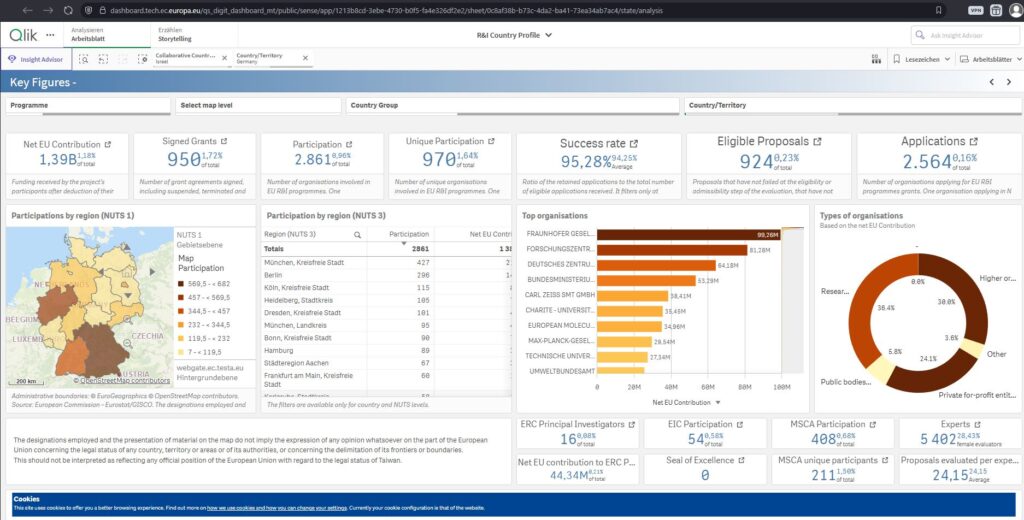
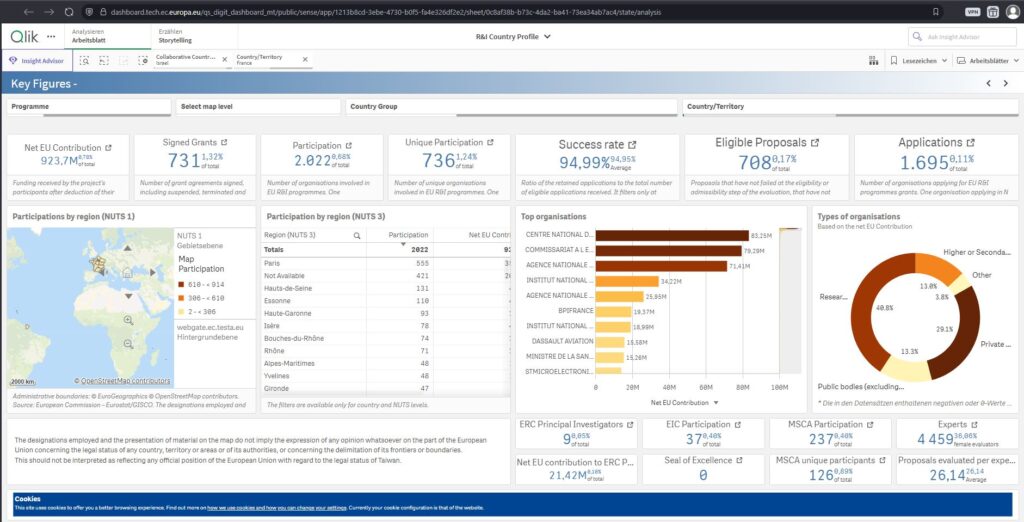
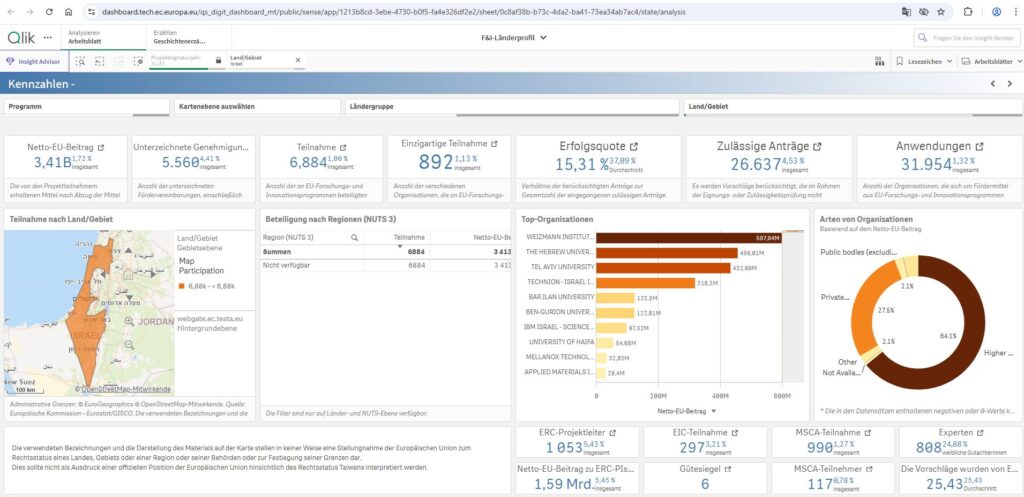
€3.4 billion since 1996. That’s how much EU research funding has flowed to Israel—more than to Germany (€1.39 billion), more than to France (€924 million). A non-EU member state collects more than the Union’s largest net contributors. Since October 2023 alone, when the Gaza war began, Israeli startups and research institutions have received approximately €475 million from the Horizon Europe program.
The European Union describes Horizon as a “scientific research initiative to develop a sustainable and livable society in Europe.” The program is contractually restricted to civilian applications. Yet an analysis of recipient data reveals a troubling pattern: a substantial portion of these funds systematically flows to companies and institutions with direct military ties. In at least one documented case, the funded technology was demonstrably deployed in the Gaza conflict.
There is no debate about this in German-speaking countries. While investigative media in Britain and the United States expose these entanglements, German, Austrian, and Swiss mainstream outlets remain silent. Yet this isn’t about Israel—it’s about the systematic misappropriation of European taxpayer money.
THE NUMBERS: A SYSTEMIC IMBALANCE
The official data from the EU research database CORDIS paints a clear picture. Since the program’s 1996 launch, Israel has received a total of €3.41 billion in EU research funds—across 5,560 approved projects and 6,884 participations. By comparison: Germany, the EU’s largest net contributor, received €1.39 billion during the same period. France, the second-largest net contributor, got €924 million.
Even Switzerland, a wealthy non-EU country with a highly developed research landscape, received more than Israel at €5.11 billion—but across significantly more projects (13,429 grants) and substantially broader participation (18,057 participations). Norway, also a non-EU member, received a modest €196 million.
Israel is thus by far the largest non-European recipient of Horizon funds. The president of the Israeli Academy of Sciences stated in May 2025 that excluding Israel from the program would be “almost a death sentence for Israeli science.” This statement underscores the existential importance of European research funding for Israel’s science and technology sector.
In 2024, a year when leading international jurists deemed the crime of genocide in Gaza to be established, €220 million flowed to 179 Israeli companies and initiatives. That year, Israel ranked third after France and Germany among recipients of “Accelerator” funding—a program component explicitly designed to support small and medium enterprises “to improve life in Europe.”
In 2025, as Israel announced plans for the complete ethnic cleansing of Gaza and scientists estimated Palestinian death tolls exceeding 400,000, another €110 million flowed to Israeli technology initiatives. And in summer 2025, while the Knesset voted on a “final solution” and Gaza was officially driven into an Israeli-engineered famine, the EU continued to pay out millions to companies run by former IDF officers.
THE CIVILIAN MANDATE: A CONTRACT ON PAPER
Horizon Europe is bound by clear contractual requirements. The program may exclusively fund civilian research. Article 41(2) of the EU Treaty prohibits financing military or defense-related research from the EU budget. This separation isn’t an administrative formality—it’s legally binding.
The European Commission repeatedly emphasizes the “purely civilian character” of Horizon in official documents. Projects with military connections are excluded. Companies and institutions must confirm when applying that their research serves exclusively civilian purposes.
Yet this firewall is permeable. In Israel, a country with universal military conscription and a highly militarized social structure, the boundaries between civilian and military research systematically blur. The country’s leading universities maintain official partnerships with arms manufacturers. Startups are frequently founded by former intelligence officers and IDF commanders. And technologies presented as “civilian innovations” regularly find military applications.
Campaign organizations have previously criticized Horizon for violating its own mandate by funding Israeli institutions with direct connections to the security apparatus. Under pressure from escalating violence in Gaza, the European Commission recently proposed a partial, limited exclusion of Israel. Whether this proposal will garner sufficient votes from member states remains uncertain.
What has been missing until now was name-by-name documentation: Who exactly receives these funds? What military backgrounds do their executives have? And can it be proven that funded knowledge flows directly into weapons technology?
The answer is: Yes.
FIVE CASES THAT EXPOSE THE SYSTEM
1. Sightec: The Documented Breach of Contract
Sightec, a manufacturer of AI-powered navigation systems for drones, received nearly €2.5 million in Horizon funding in 2024. The company officially presents its technology as civilian innovation for commercial drone applications.
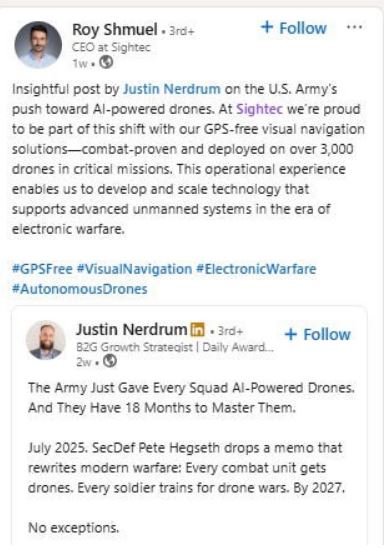
But in August 2025, Sightec CEO Roy Shmuel published a LinkedIn post that leaves no room for interpretation. Shmuel wrote that Sightec’s technology is “combat-proven and deployed on over 3,000 drones in critical missions.” The post explicitly referenced collaboration with the U.S. Army and the development of autonomous weapons systems.
This constitutes a documented, publicly verifiable breach of contract. Horizon Europe prohibits funding military applications. Sightec confirms military application. The EU paid €2.5 million anyway. The European Commission has not yet responded to this case.
2. Wi-Charge: The Direct IDF Spinoff
Wi-Charge develops wireless charging systems for mobile devices. In 2024, the company received €2.2 million in Horizon funds. What’s missing from the official project description: Wi-Charge is a direct spinoff of Unit 81, a specialized technology unit of the Israeli Defense Forces.
Unit 81 specializes in developing technologies to maintain Israel’s apartheid system. The team behind Wi-Charge—including CEO Victor Vaisleib, who served 15 years in the IDF, and CTO Ori Mor—received the Israel Defense Award for their work, the state’s highest honor for technological contributions to Israel’s national security.
A project honored by the Israeli military, emerging from an IDF unit, is financed with European taxpayer money. The Horizon program doesn’t define this as a problem.
3. SpacePharma: The Satellite Commander
SpacePharma, a startup developing laboratories for spaceflight, received €2.1 million in 2024. CEO Yossi Yamin was previously commander of the Israeli satellite unit—a division of the Israeli Space Agency organizationally subordinate to the military.
This unit operates the satellites that monitor Gaza and the West Bank, control missile launches, and are integral to Israel’s missile defense system. SpacePharma is effectively a direct spinoff from Israel’s military-intelligence complex.
European research funds thus finance a former military commander whose expertise is rooted in surveillance and weapons systems. Here too: no problem for the EU Commission.
4. IBM Israel: Software for Apartheid Infrastructure
IBM Israel has received seven million euros in Horizon funds since October 2023. The company provides and operates the software that documents all Palestinian entries and exits at Israeli military checkpoints. IBM also provides the systems that systematically capture and store biometric data of Palestinians.
This technology isn’t peripheral—it’s the backbone of movement control in the occupied territories. Without these systems, Israel couldn’t maintain its blockade. The EU finances the operator of this infrastructure with millions—and declares it civilian research.
5. Weizmann Institute: The Institutional Level
The largest individual recipients of Horizon funds are Israeli universities and research institutes. At the top stands the Weizmann Institute of Science, which has received nearly €600 million since 1996—more than any other Israeli institution.
The Weizmann Institute maintains longstanding partnerships with Rafael, Israel Aerospace Industries, and Elbit Systems, the country’s three largest defense contractors. The institute operates a master’s program for active IDF soldiers, promising to “combine military service and studies.” In 2023, Weizmann announced an official collaboration with Elbit to develop “bio-inspired materials for the IDF” and a “military space telescope.”
The chairman of Elbit Systems, billionaire Michael Federmann, sits on the Weizmann Institute’s board of directors. In June 2025, Iran struck the institute with targeted missiles—explicitly justifying the attack by its connection to Israel’s military and nuclear weapons program.
The Weizmann Institute received €52 million in Horizon funds in 2024. In 2025, it’s €15 million so far.
The other top recipients show an identical pattern:
The Hebrew University of Jerusalem and Tel Aviv University received nearly a billion euros combined. Both universities operate joint centers with Israeli military and defense companies.
The Technion, Israel’s premier research institute, received €316 million. It maintains multiple partnerships and scholarship programs with Israel’s largest weapons manufacturers and offers a course on how to market the Israeli defense industry in international export markets. The Technion also plays a key role in developing the quadcopter drones that have killed countless Palestinians in Gaza.
Bar Ilan University (€123 million) operates an entire faculty called the “Security Arms Section,” which functions as a direct pipeline into Israel’s security apparatus. The university also organizes annual “hackathons” in cooperation with the Israeli Ministry of Defense and works closely with Shin Bet, Israel’s domestic intelligence service.
Ben Gurion University (€121 million) houses the “Homeland Security Institute,” whose partners include Israeli defense companies and the Ministry of Defense.
What becomes visible here is the complete militarization of a state. Few countries in the world have such open, institutionalized connections between military, intelligence services, and academic institutions. In Israel, this fusion isn’t a scandal—it’s the system.
THE POLITICAL DIMENSION: WHY IS EUROPE SILENT?
The systematic funding of militarily connected research through a program contractually restricted to civilian applications raises fundamental questions. Why is there no parliamentary oversight? Why are audit offices silent? Why is there no public debate in German-speaking countries?
In the United Kingdom and the United States, investigative media like The Grayzone and Do Not Panic! have exposed these entanglements. In Germany, Austria, and Switzerland: silence. Yet it’s also German, Austrian, and Swiss taxpayers whose money is being diverted here.
The European Commission argues that Israel, as an “associated country,” is entitled to participate in Horizon. This association is based on the 1996 agreement, which was meant to promote scientific cooperation—not finance military structures. The treaty explicitly stipulates that only civilian research will be funded.
But reality shows: this contractual restriction is not enforced. There is no effective oversight. Applicants formally confirm the civilian character of their projects—and then use the funds for military applications. The EU Commission doesn’t react even when CEOs publicly boast on LinkedIn about the military deployment of their technologies.
This loss of control isn’t an Israeli problem—it’s a European one. The question isn’t: Why does Israel receive these funds? The question is: Why doesn’t the EU enforce its own contracts?
A QUESTION OF PRIORITIES
Every euro flowing to a militarily connected startup in Israel is missing from European civilian research. Horizon Europe has a total budget of €95.5 billion for the 2021-2027 period. This is supposed to finance innovative solutions for climate change, health, digital transformation, and societal challenges.
But when a substantial portion of these funds systematically flows into military structures of a non-EU country—while European universities simultaneously struggle for basic funding and civilian research projects are rejected—then this isn’t a bureaucratic oversight. Then this is a political decision.
The idea behind Horizon is fundamentally sound: European cooperation in research strengthens innovation, competitiveness, and social progress. But this idea is perverted when taxpayer money is systematically misappropriated—and nobody intervenes.
WHAT MUST BE DONE
The European Commission must do three things:
First: The cases of Sightec, Wi-Charge, SpacePharma, IBM, and the military entanglements of funded universities must be legally reviewed. When breaches of contract exist—and in Sightec’s case, this is documented—consequences must follow. Funding must be reclaimed. Institutions violating the civilian mandate must be excluded.
Second: Effective control mechanisms are needed. Formal self-declarations aren’t sufficient. When a startup is led by a former IDF commander, when a university has official cooperation contracts with Elbit Systems, when a CEO posts about military deployments on LinkedIn—then the EU cannot claim it knew nothing.
Third: Member states must conduct the discussion that has been absent: Is it in the European interest for a non-EU country to receive more research funding than an EU country, than Germany or France? Is it acceptable that these funds systematically flow into military structures? And if not—why is it happening anyway?
This debate isn’t taking place in Germany. It isn’t taking place in Austria. It isn’t taking place in Switzerland. It’s time for it to begin.
Michael Hollister is a former European military professional with experience in Balkans peacekeeping operations. After a career transition into IT security, he now analyzes NATO expansion, European militarization, and Western interventions. His work challenges mainstream narratives on conflicts in Ukraine, Gaza, and beyond. Published at michael-hollister.com
SOURCES
PRIMARY SOURCES
[1] CORDIS Database of the European Commission – Country Profile Israel
https://dashboard.tech.ec.europa.eu/qs_digit_dashboard_mt/public/sense/app/1213b8cd-3ebe-4730-b0f5-fa4e326df2e2/sheet/0c8af38b-b73c-4da2-ba41-73ea34ab7ac4/state/analysis
As of November 2025. All figures on funding volumes, grants, and participations are from this official EU database.
[2] Nate Baer: “EU science grants are funding Israeli military tech, data shows”
Do Not Panic!, August 30, 2025
https://www.donotpanic.news/p/eu-science-grants-are-funding-israeli
Primary source for the investigative research on which this article builds.
[3] European Commission: Horizon Europe – Official Programme Description
https://research-and-innovation.ec.europa.eu/funding/funding-opportunities/funding-programmes-and-open-calls/horizon-europe_en
[4] CORDIS Database – Country Profiles Germany, France, Norway, Switzerland
Germany: https://dashboard.tech.ec.europa.eu (Filter: Germany)
France: https://dashboard.tech.ec.europa.eu (Filter: France)
Norway: https://dashboard.tech.ec.europa.eu (Filter: Norway)
Switzerland: https://dashboard.tech.ec.europa.eu (Filter: Switzerland)
[6] Times of Israel: “Israeli science chief warns of ‘death sentence’ if EU cuts research funding”
May 2025 (cited in Do Not Panic investigation)
[7] Center for Constitutional Rights: “Genocide in Gaza”
https://ccrjustice.org/genocide-in-gaza
Legal opinion by leading international law scholars, as of 2024
[8] CORDIS Database – EIC Accelerator Recipients 2024
https://eic.ec.europa.eu/eic-funding-opportunities/eic-accelerator_en
[9] The Lancet: “Counting the dead in Gaza: difficult but essential”
Scientific estimates on excess mortality, July 2025
[10] Treaty on European Union (TEU) – Article 41(2)
“Operational expenditure arising from operations having military or defence implications shall not be charged to the Union budget.”
https://eur-lex.europa.eu/legal-content/EN/TXT/?uri=CELEX:12012M/TXT
[11] Horizon Europe Model Grant Agreement
https://ec.europa.eu/info/funding-tenders/opportunities/docs/2021-2027/common/guidance/aga_en.pdf
Section on “Civilian Use Only” and exclusion of military applications.
[12] Stop the Wall Campaign: “Stop EU Funding of Israeli Military Research”
https://www.stopthewall.org/campaigns/stop-eu-funding-israeli-military-research
Documentation of earlier criticism of Horizon funding for militarily connected Israeli institutions.
INDIVIDUAL CASES – COMPANIES AND EXECUTIVES
[13] CORDIS Project Database: Sightec funding 2024
Project number and funding amount documented in CORDIS database.
[14] Roy Shmuel (CEO Sightec): LinkedIn post, August 2025
“Insightful post by Justin Nerdrum on the U.S. Army’s push toward AI-powered drones. At Sightec we’re proud to be part of this shift with our GPS-free visual navigation solutions—combat-proven and deployed on over 3,000 drones in critical missions.”
LinkedIn profile publicly accessible at time of research (November 2025). Screenshots archived.
[15] CORDIS Project Database: Wi-Charge funding 2024
[16] Wi-Charge Company Profile & Israel Defense Award
Company profile documents origin from Unit 81 and Israel Defense Award.
https://wi-charge.com/about/
LinkedIn profiles of Victor Vaisleib and Ori Mor document IDF background. Screenshots archived.
[17] CORDIS Project Database: SpacePharma funding 2024
[18] Nate Baer (Do Not Panic), see [2]
Yossi Yamin LinkedIn profile documents position as “former chief commander of the Israeli Satellites Unit”. Screenshots archived.
[19] CORDIS Project Database: IBM Israel funding since October 2023
[20] Who Profits Research Center: “IBM and the Israeli Occupation”
https://www.whoprofits.org/company/ibm/
Documentation of IBM’s role in checkpoint software and biometric data collection.
[21] CORDIS Database: Weizmann Institute of Science – Total Funding 1996-2025
Total funding: €597.84 million (rounded: nearly €600 million)
[22] Weizmann Institute: IDF Scholarship Program
https://www.weizmann.ac.il/feinberg/admissions/idf-program
Official website of master’s program for active IDF soldiers.
[23] Weizmann Institute Press Release: “Elbit Systems and Weizmann Institute Announce Strategic Collaboration”
2023
https://wis-wander.weizmann.ac.il/weizmann-and-elbit-systems-announce-strategic-collaboration
Announcement of collaboration on “bio-inspired materials for the IDF” and military space telescope.
[24] Reuters: “Iran strikes Israeli military and research facilities”
June 2025
Coverage of Iranian missile attack on Weizmann Institute with justification through military connections.
[25] CORDIS Database: Weizmann Institute – Funding 2024 and 2025
[26] CORDIS Database: Hebrew University of Jerusalem & Tel Aviv University – Total Funding
Hebrew University: €456 million (rounded)
Tel Aviv University: €433 million (rounded)
Documentation of military partnerships on official university websites.
[27] CORDIS Database: Technion – Total Funding €316 million
Technion Marketing Course for Defense Industry:
https://international.technion.ac.il/2019/04/30/marketing-israeli-defense-industry/
Documentation of quadcopter development: Haaretz coverage of Technion’s role in IDF drones, 2024.
[28] Bar Ilan University: Security Arms Section
https://www.biu.ac.il/en/security-arms
Official faculty website. Documentation of hackathons with Israeli Ministry of Defense.
[29] Ben Gurion University: Homeland Security Institute
https://in.bgu.ac.il/en/bsi/Pages/default.aspx
Official website with list of partners (including defense companies and Ministry of Defense).
LEGAL AND POLITICAL SOURCES
[30] EU-Israel Association Agreement 1996
https://eur-lex.europa.eu/legal-content/EN/TXT/?uri=CELEX:22000A0627(01)
Agreement on scientific cooperation with explicit civilian mandate.
[31] Horizon Europe Budget 2021-2027
https://ec.europa.eu/info/research-and-innovation/funding/funding-opportunities/funding-programmes-and-open-calls/horizon-europe_en
Official total budget: €95.5 billion.
ADDITIONAL INDIVIDUALS (LinkedIn Profiles)
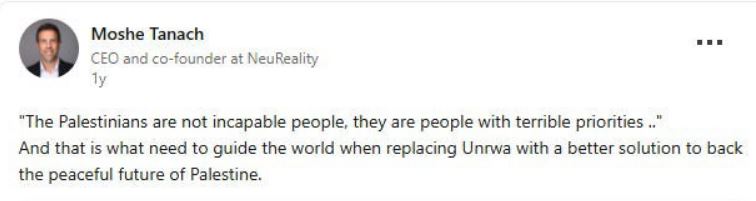
Moshe Tanach (CEO NeuReality): LinkedIn post about UNRWA, 2024
“The Palestinians are not incapable people, they are people with terrible priorities… And that is what need to guide the world when replacing Unrwa with a better solution to back the peaceful future of Palestine.”
LinkedIn profile publicly accessible at time of research (November 2025). Screenshots archived.
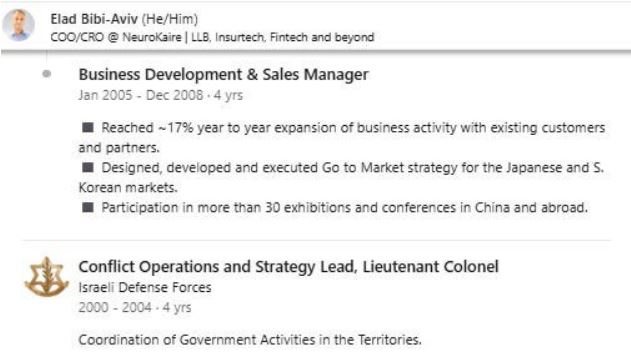
Elad Bibi-Aviv (CEO NeuroKaire): LinkedIn profile
“Conflict Operations and Strategy Lead, Lieutenant Colonel, Israeli Defense Forces, 2000-2004”
“Coordination of Government Activities in the Territories”
LinkedIn profile publicly accessible at time of research (November 2025). Screenshots archived.
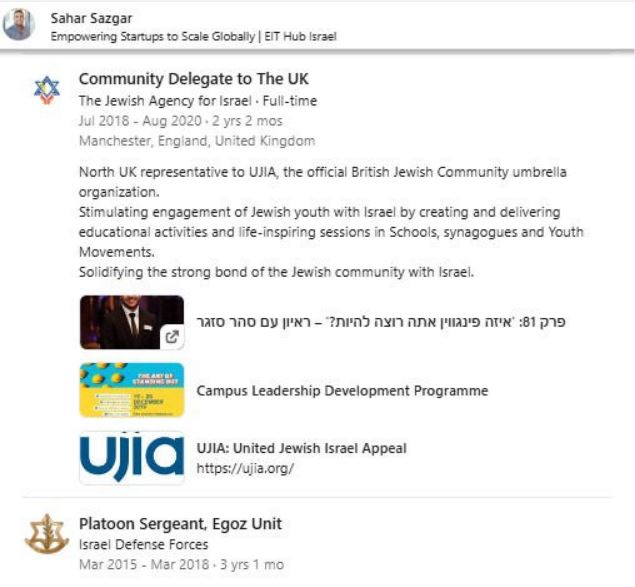
Sahar Sazgar (EIT Hub Israel): LinkedIn profile
“Platoon Sergeant, Egoz Unit, Israeli Defense Forces, Mar 2015 – Mar 2018”
Documentation of service in special unit for covert operations.
LinkedIn profile publicly accessible at time of research (November 2025). Screenshots archived.
ADDITIONAL SOURCES
The Grayzone: Investigative reporting on Western military aid and technology transfer
https://thegrayzone.com
Corporate Occupation: Database on corporate connections to Israeli occupation
https://corporateoccupation.org
BDS Movement: Documentation of academic and economic connections
https://bdsmovement.net
Who Profits Research Center: Mapping military-industrial entanglements
https://www.whoprofits.org
METHODOLOGICAL NOTE
All figures on funding volumes, project numbers, and participations are from the official CORDIS database of the European Commission, accessed in November 2025. LinkedIn profiles were documented as publicly accessible at the time of research; screenshots were archived to enable later verification. University websites and official press releases were preserved via Wayback Machine (archive.org).
This investigation builds on the investigative work of Nate Baer (Do Not Panic!) and expands it with DACH-specific perspectives and additional source verification.
- https://www.donotpanic.news/p/eu-science-grants-are-funding-israeli
© Michael Hollister — Redistribution, publication or reuse of this text is explicitly welcome. The only requirement is proper source attribution and a link to www.michael-hollister.com (or in printed form the note “Source: www.michael-hollister.com”).
Supporting documentation (CORDIS data & public statements by recipient companies)
Newsletter
🇩🇪 Deutsch: Verstehen Sie geopolitische Zusammenhänge durch Primärquellen, historische Parallelen und dokumentierte Machtstrukturen. Monatlich, zweisprachig (DE/EN).
🇬🇧 English: Understand geopolitical contexts through primary sources, historical patterns, and documented power structures. Monthly, bilingual (DE/EN).