
UPDATE Report – Updated: May 31, 2026 – Building on my update from May 27, 2026
by Michael Hollister
Exclusive published at Michael Hollister on May 31, 2026
2.395 words * 13 minutes readingtime
TICKER
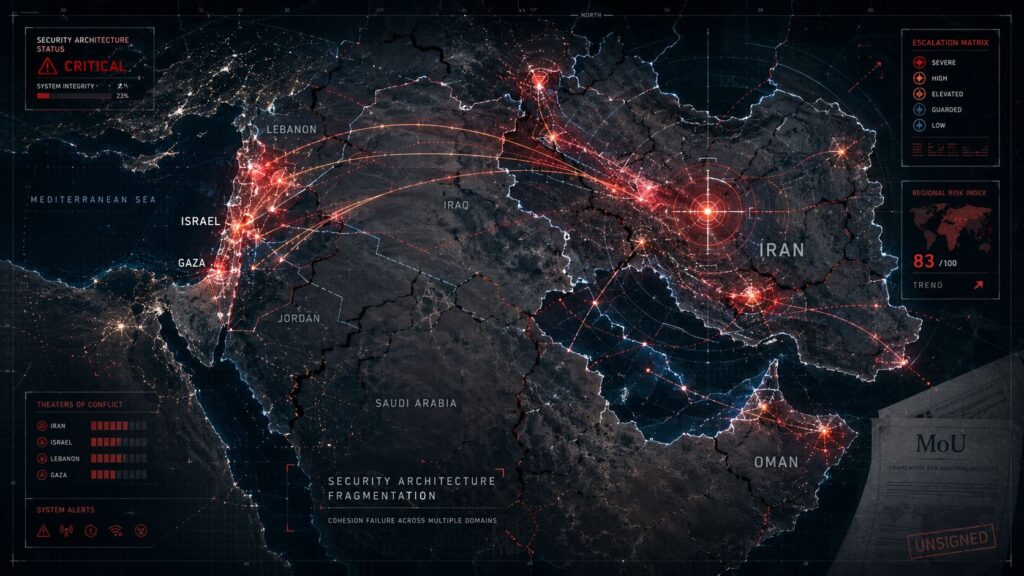
Trump Leaves Situation Room Without Decision – MOU Still Unsigned On May 30, Trump entered the Situation Room to make, by his own announcement, a “final determination” on the MoU. After two hours, he left without a decision. A senior administration official told the New York Times that a deal remained close but required further clarification – particularly regarding frozen Iranian assets and a discussed $300 billion reconstruction fund. Trump posted on Truth Social: “No money will be exchanged, until further notice.” That is not a negotiating position – it is a direct rejection of a core element of the draft.
Trump Confirms to Israel: Freedom of Action on All Fronts – Including Lebanon In a phone call between Netanyahu and Trump during the week before May 31, Trump reaffirmed, according to an Israeli government source cited by Reuters: “Israel will maintain freedom of action against threats in all arenas, including Lebanon, and President Trump reiterated and supported this principle.” The MoU draft explicitly provides for an end to the Israel-Hezbollah war in Lebanon, according to CBS News and Axios. Iran has stated in every round of negotiations that any agreement must cover all fronts, including Lebanon. Trump’s confirmation of Israeli freedom of action and the MoU text are in direct contradiction.
US Forces Disable Commercial Vessel in the Gulf of Oman CENTCOM confirmed on May 30 that it had disabled the M/V Lian Star, a commercial vessel sailing under a Gambian flag, with a missile. The ship had been heading toward an Iranian port despite repeated warnings, attempting to break the US naval blockade. It is the first confirmed case in this conflict of US forces physically disabling a civilian commercial vessel. The blockade of Iranian ports has been in effect since April 13.
Exchange of Blows May 27: Bandar Abbas, Kuwait, Iranian Retaliation In the early hours of May 27, US forces struck Iranian drone installations near Bandar Abbas. CENTCOM reported five Iranian one-way drones intercepted and a sixth neutralized on the ground. Iran confirmed the US strike and declared it had struck a US air base in retaliation – at 04:50 local time, according to IRGC/Tasnim. Iran did not name the targeted base. CENTCOM also reported an Iranian ballistic missile fired toward Kuwait at 22:17 Eastern Time – intercepted, according to CENTCOM, by Kuwaiti forces. Kuwait confirmed its own air defense activity without naming Iran as the aggressor. Reuters reported that negotiations continued in parallel with the strikes.
Treasury Secretary Bessent Threatens Oman – Trump: “We’ll Have to Blow Them Up” At a Cabinet meeting at the White House on May 27, Trump said of Oman: “Oman will behave just like everybody else or we’ll have to blow them up.” The backdrop: Iranian state media had reported that Tehran and Muscat might jointly coordinate shipping traffic through the Strait of Hormuz. On May 28, Treasury Secretary Bessent sanctioned Iran’s Persian Gulf Transit Authority and warned Oman on X: “The US Treasury will aggressively target any actors involved – directly or indirectly – in facilitating tolls for the Strait.” The Omani ambassador subsequently assured Bessent that Oman had no plans to participate in any toll system. According to gCaptain, Oman has been one of the most important mediation channels between Tehran and Washington since the war began.

Hezbollah Strikes Kiryat Shmona – IDF Warns of Escalation On May 30, Hezbollah claimed it had struck Kiryat Shmona with a “rocket salvo” in response to Israeli ceasefire violations in southern Lebanon. The IDF announced on Telegram that it was preparing for intensified rocket attacks from Lebanon “in accordance with the situational assessment” and ordered the immediate evacuation of residents from seven additional villages in southern Lebanon. Schools in northern Israeli border communities were closed for Sunday and Monday; a field hospital was moved underground. Netanyahu stated on May 29 at the northern front that Israeli forces had crossed the Litani and reached “controlling positions.”
Israel Crosses the Litani – Zahrani Zone Declared, Tyre and Sidon Struck On May 29, Israeli ground forces advanced north across the Litani River – in places as far as Dibbine, near Marjayoun. Israel ordered the population south of the Zahrani River – roughly six miles north of the Litani – to flee and declared the area a combat zone. On May 28, Israel had struck the southern Beirut suburbs of Choueifat as well as Tyre and Sidon. Al Jazeera’s Open Source Unit documents Israeli control over approximately 220 square miles of southern Lebanese territory – more than official maps indicate.
Pentagon Talks Israel-Lebanon: Security and Diplomatic Track On May 29, Israeli and Lebanese military representatives met at the Pentagon – the most direct talks between the two sides since the war began. Reuters reported the discussions were divided into two tracks: security matters at the Pentagon, diplomatic questions the following week at the State Department. Hezbollah rejects these talks and refuses disarmament or participation. Lebanese Prime Minister Nawaf Salam described Israel’s conduct on May 30 as “a policy of comprehensive destruction and mass displacement.”
Lebanon Toll Day 91: 3,213 Dead, More Than 1.2 Million Displaced The Lebanese Health Ministry reported a cumulative total of 3,213 dead and 9,737 wounded since the Israeli offensive began on March 02, 2026. Reuters counted 23 Israeli soldiers and four civilians killed in the same period. More than 1.2 million people have been displaced from Lebanon. The current Lebanon war is, according to Reuters, the deadliest spillover of the Iran war.
Gaza: Netanyahu Wants 70 Percent – Over 900 Palestinians Killed Since Ceasefire Netanyahu declared on May 28 that Israel controls 60 percent of the Gaza Strip and has issued orders to advance to 70 percent. The original ceasefire agreement provided for 53 percent; Reuters reports that approximately 64 percent is already effectively inaccessible to the population. Since the ceasefire began, more than 900 Palestinians have been killed by Israeli strikes according to Reuters; Palestinian attacks have killed four Israeli soldiers. Hamas called Netanyahu’s 70-percent announcement a “dangerous escalation.”
Hegseth: US Operating on Two Fronts – Arms Production to Be Multiplied US Defense Secretary Hegseth declared on May 28 that the United States is capable of doing “two things at one time” – waging the Iran war while simultaneously prioritizing the Indo-Pacific. Arms production would be scaled to two to four times current levels, “so that all of our operation plans are properly funded.” Hegseth also reaffirmed that the US is prepared to resume strikes against Iran if no deal is reached. The simultaneous emphasis on the Iran war and the Indo-Pacific reflects the prioritization of the Pacific theater as the primary strategic competition arena, as enshrined in the National Defense Strategy.
Gaza Humanitarian: Kerem Shalom Only Crossing – 2 Million Squeezed into Shrinking Space UN-OCHA reported for the week of May 30 that the Zikim crossing remained closed, making Kerem Shalom the sole operative crossing for aid into Gaza. More than two million residents are being compressed into ever-smaller areas as additional Israeli control zones eliminate further space. The World Health Organization counted a cumulative 169 attacks on health facilities in Gaza.
ANALYSIS
I. MoU Mechanics: What’s Missing – and Why
Five days after Trump declared the deal “largely negotiated,” no document has been signed. The Situation Room evening of May 30 shows why. What looked like technical fine-tuning is a structural dispute over the fundamental logic of the agreement. Tehran insists that frozen assets must be released before the Strait of Hormuz reopens. Washington insists on the reverse: open Hormuz first, then sanctions relief. Trump’s Truth Social post on May 30 – “No money will be exchanged, until further notice” – is not a negotiating tactic. It is the public codification of the US position, which Iran reads as a demand for advance concessions.
Then there is the $300 billion reconstruction fund, which the New York Times cites from Iranian and other sources – and which Trump promptly dismisses. What was conceived as an investment framework for US firms in Iran – a Witkoff/Kushner model – is publicly disavowed by Trump before the ink is even dry. That hands the hardliners in Tehran ammunition: if the US side publicly retreats from negotiating positions while talks are still running, why would Iran sign?
II. The Oman Threat and Its Strategic Logic
Trump threatens an ally with bombardment. That is not the language of alliance politics – it is the language of coercion. And Bessent’s sanctions threat against anyone involved in Hormuz toll collection explicitly includes state actors. In theory, every Gulf state with economic ties to Iran is now in the crosshairs.
What lies behind this is not escalation from weakness. Washington is trying to prevent the Hormuz toll system from becoming institutionalized before it takes hold. Iran has already established the Persian Gulf Transit Authority, issued initial fee demands, and sounded out Oman as a potential administrative partner. Once that system is running – even for a few weeks – it becomes difficult to unwind. The US threat is preemptive, and it targets a state of affairs Iran regards as a legitimate outcome of the war.
The problem: the Gulf states are watching this very carefully. The UAE and Qatar host US bases that are meant to provide them protection. A US president who threatens those same protection recipients with bombardment if they cooperate economically with Iran puts that protective logic publicly in question.
III. Lebanon: The Litani as New Reality
What is happening in southern Lebanon follows a pattern that is coming into increasingly sharp focus. Israel has proclaimed a “Forward Defence Line” that acknowledges no UN resolution. It controls, according to Al Jazeera’s satellite data, 220 square miles of southern Lebanese territory. It has ordered the population south of the Zahrani River – six miles north of the Litani – to evacuate and declared the area a combat zone. It has struck Beirut’s southern suburbs, bombarded Tyre and Sidon, and on May 30 prepared the population for further Israeli attacks.
Trump has simultaneously assured Netanyahu of “freedom of action on all fronts, including Lebanon” – a confirmation Reuters cites from Israeli government sources. The MoU draft explicitly provides for an end to the Israel-Hezbollah war, according to CBS News and Axios. Both statements come from the US side and contradict each other. Iran does not read this contradiction as a communications failure – Iran reads it as a signal of what the agreement is actually worth.
IV. Strikes During Negotiations – The Underlying Logic
The US has now struck Iran three times during active negotiations – on May 25, on May 27, and on May 30 with the physical disabling of the M/V Lian Star, the first civilian vessel rendered inoperable in this conflict. Each time, the official justification was “self-defense.” Each time, Iran responded with counter-strikes.
What can be observed here is a negotiating tactic known in foreign policy as coercive diplomacy: maintaining pressure through military action while simultaneously negotiating at the table. It works when the other side treats the strikes as separate from the negotiations. Iran does not. Tehran’s Foreign Ministry has explicitly described the US strikes as “bad faith and unreliability” – a diplomatic formulation that carries more weight than a mere condemnation. It means: we question whether you are a reliable treaty partner. A treaty with an unreliable partner is worse than no treaty at all.
Strategic Assessment
Day 92. The Situation Room produced no decision. The MoU is tentative, unsigned, and described differently by each side. Trump has confirmed Israeli freedom of action in Lebanon – Iran insists Lebanon must be part of any agreement. Hormuz remains closed. Negotiations are running, strikes are running, escalation in Lebanon is running. Four days in the Situation Room have not closed the open questions.

Michael Hollister
is a geopolitical analyst and investigative journalist. He served six years in the German military, including peacekeeping deployments in the Balkans (SFOR, KFOR), followed by 14 years in IT security management. His analysis draws on primary sources to examine European militarization, Western intervention policy, and shifting power dynamics across Asia. A particular focus of his work lies in Southeast Asia, where he investigates strategic dependencies, spheres of influence, and security architectures. Hollister combines operational insider perspective with uncompromising systemic critique – beyond opinion journalism. His work appears on his bilingual website (German/English) www.michael-hollister.com and in investigative outlets across the German-speaking world and the Anglosphere.
Sources
- Reuters, 28. May 2026 – US-Iran tentative deal: 60-day ceasefire extension, Hormuz reopening: https://www.reuters.com
- CNN, 28. May 2026 – Tentative agreement reached, Trump hasn’t signed off: https://www.cnn.com/2026/05/28/world/live-news/iran-war-us-news
- Axios, 28. May 2026 – Scoop: US and Iran reach deal but need Trump’s final approval: https://www.axios.com/2026/05/28/iran-peace-deal-trump-approval
- Times of Israel, 31. May 2026 – Trump’s Situation Room meeting ends with no decision: https://www.timesofisrael.com/trump-meeting-to-make-final-determination-on-iran-deal-said-to-end-with-no-decision/
- CBS News Live, 30. May 2026 – Iran war updates, deal status, Hezbollah: https://www.cbsnews.com/live-updates/iran-war-us-trump-vance-ceasefire-strait-of-hormuz-deal-close/
- CNN, 29./30. May 2026 – US military ready to resume combat, Lebanon escalation: https://edition.cnn.com/2026/05/29/world/live-news/iran-trump-war-news
- ZDF, 30. May 2026 – Iran-Krieg Liveblog: CENTCOM Lian Star, Hisbollah Kiryat Shmona: https://www.zdfheute.de/politik/ausland/iran-israel-usa-angriff-liveblog-100.html
- Al Jazeera, 28. May 2026 – US Treasury threatens Oman over Hormuz toll system: https://www.aljazeera.com/news/2026/5/28/us-treasury-threatens-oman-with-sanctions-over-hormuz-strait
- gCaptain / Reuters, 28. May 2026 – US Treasury warns Oman over Hormuz toll system: https://gcaptain.com/u-s-treasury-warns-oman-over-hormuz-toll-system/
- Reuters / NPR, 27. May 2026 – US strikes Iranian drone sites near Bandar Abbas: https://www.npr.org/2026/05/25/nx-s1-5833690/u-s-iran-negotiations-updates
- Reuters / People Daily, 23. May 2026 – Netanyahu tells Trump Israel will retain freedom to act in Lebanon: https://peopledaily.digital/news/netanyahu-tells-trump-israel-will-retain-freedom-to-act-in-lebanon-amid-iran-deal-talks
- Euronews, 29. May 2026 – Iran-US deal nears finish line – but Trump and Khamenei must say yes: https://www.euronews.com/2026/05/29/iran-us-deal-nears-finish-line-but-trump-and-khamenei-must-say-yes
- Reuters / AP, 29. May 2026 – Netanyahu at northern front: Israeli forces crossed the Litani: via CBS News Live
- AP, 29. May 2026 – Israeli troops enter Dibbine, Pentagon talks Israel-Lebanon: via CBS News Live
- Al Jazeera Open Source Unit, 26. May 2026 – Israel controls more territory than official maps show: https://www.aljazeera.com/news/2026/5/26/israels-occupation-of-gaza-lebanon-syria-extends-beyond-what-maps-show
- Reuters, 29. May 2026 – Over 900 Palestinians killed since Gaza ceasefire: via CBS News Live
- UN-OCHA, 30. May 2026 – Gaza: Zikim closed, Kerem Shalom only operative crossing: via CBS News Live
© Michael Hollister – All rights reserved. Redistribution, publication or reuse of this text requires express written permission from the author. For licensing inquiries, please contact the author via www.michael-hollister.com.
Newsletter
🇩🇪 Deutsch: Verstehen Sie geopolitische Zusammenhänge durch Primärquellen, historische Parallelen und dokumentierte Machtstrukturen. Monatlich, zweisprachig (DE/EN).
🇬🇧 English: Understand geopolitical contexts through primary sources, historical patterns, and documented power structures. Monthly, bilingual (DE/EN).